Yowah Nut Opals: Collector's Guide to Buying Authentic Gems
Posted by AOD on 15th Aug 2026
Yowah Nut Opals: Collector’s Guide to Buying Authentic Gems

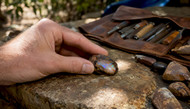
A Yowah nut opal is a precious opal that forms as a kernel inside an ironstone concretion mined from the Yowah opal field in southwest Queensland, Australia. The ironstone nodule looks like an ordinary rock on the outside. Crack it open, and you may find nothing — or you may find a blazing core of red, green, and blue fire that collectors travel across continents to own.
That “may find nothing” is the critical phrase. A very rare fraction of Yowah nuts contains a high-value full-crystal center. For buyers and collectors, that rarity means two things matter above everything else: verified provenance and a certificate of origin before any money changes hands.
- What it is: A precious opal kernel enclosed in an ironstone nodule from the Yowah field, Queensland.
- Why it’s rare: Only a small fraction of nuts contain gem-grade opal; most hold only potch or nothing at all.
- Buyer priority: Request a Queensland/Yowah field origin certificate, high-resolution photos from multiple angles, and a lab report for any specimen above entry-level pricing.
- Where to start: The Smithsonian National Museum of Natural History holds specimen NMNH G10650, a 29.83 ct Yowah nut, as a benchmark for what museum-grade looks like.
- Trusted retail path: Australianopaldirect sources directly from Australian miners and provides certification, making it a reliable starting point for new collectors.
Key Takeaways
Yowah nut opals are among the rarest gemstones on earth, and buying one safely comes down to provenance, documentation, and knowing exactly what to ask before you commit.
| Point | Details |
|---|---|
| Rarity benchmark | Roughly 1 in 10,000 nuts contains a high-value full-crystal kernel — verify rarity claims with documentation. |
| Authentication essentials | Request a Queensland/Yowah field origin certificate, lab report, and multi-angle photos for any purchase. |
| Value drivers | Red play-of-color, large intact kernels, dark ironstone contrast, and rare patterns command the highest prices. |
| Care priority | Use bezel settings, avoid ultrasonic cleaners, and store in padded boxes away from harder stones. |
| Australianopaldirect | Offers certified, direct-miner-sourced Yowah and Queensland opals with a 90-day warranty and provenance documentation. |
Table of Contents
- What is a Yowah nut opal and how does it form?
- Shapes, colors, and patterns: what Yowah nuts look like
- How rare are Yowah nut opals?
- What drives a Yowah nut opal’s value?
- How to identify authentic Yowah nut opals
- Where and how to buy Yowah nut opals safely
- Fossicking for Yowah nuts: permits and field basics
- How to care for and store Yowah nut opals
- Museum pieces and authoritative sources on Yowah nuts
- Why collectors prize Yowah nuts above almost any other opal
- Authentic Yowah nut opals from a source you can verify
- Useful sources for further reading
What is a Yowah nut opal and how does it form?
The Yowah opal field sits in the Paroo Shire of southwest Queensland, and its geology is unlike any other opal-producing region on earth. During the Cretaceous period, silica-rich groundwater percolated through sedimentary basins and seeped into cavities within ironstone concretions. Over millions of years, that silica gel slowly solidified into precious opal, creating a kernel suspended inside a hard ironstone shell.
The ironstone host is not incidental. It acts as a natural protective casing, and in many specimens it forms a partial or complete backing that enhances the opal’s color contrast — a geological accident that gem cutters would otherwise have to engineer. University of Queensland geological research on opal mining confirms that this sedimentary basin environment is what makes Queensland boulder and nut opals structurally distinct from the white-clay-hosted opals of Coober Pedy.
Queensland Government fossicking data documents the physical range of Yowah nuts:
| Property | Typical Range |
|---|---|
| Diameter | 5 mm – 200 mm |
| Depth found | Surface to 20 m |
| Host material | Ironstone concretion (nodule) |
| Opal kernel position | Central cavity or vein within nodule |
| Common kernel types | Full crystal, matrix, potch, or empty |
Miners split or saw the nuts to reveal what’s inside. Experienced fossickers often prefer sawing over splitting because a clean cut preserves the kernel intact and shows the full color face without fracturing it.
Shapes, colors, and patterns: what Yowah nuts look like
No two Yowah nuts look alike, which is part of their appeal. The ironstone exterior is typically rough, brown-gray, and unremarkable. The kernel inside is where the drama lives.
Common shapes and sizes
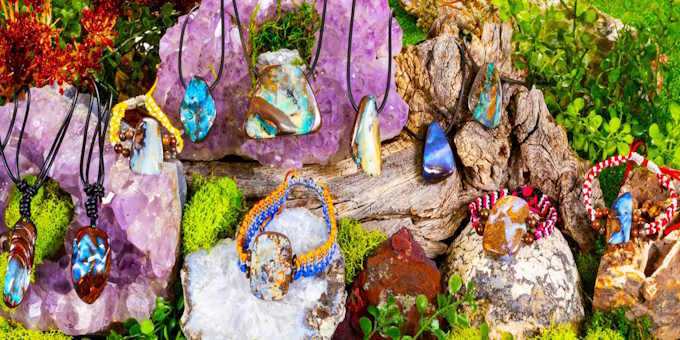
- Spherical to ellipsoidal, often resembling a walnut or small river stone
- Sizes range from very small marbles to larger specimens over several centimeters.
- Some nuts contain thin veins of opal rather than a central kernel, creating a matrix pattern throughout the ironstone
Kernel and color types
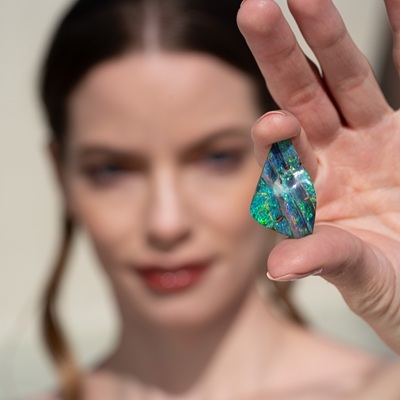
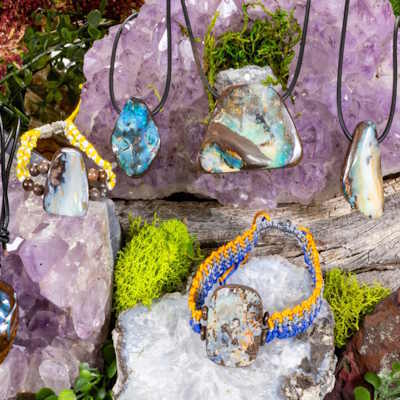
- Full crystal kernels show transparent to semi-transparent opal with vivid play-of-color visible from multiple angles
- Matrix kernels display opal interspersed through the ironstone, producing a speckled or web-like color pattern
- Potch kernels contain non-precious opal with no color play — common and of low gem value
- Color play ranges from electric red and orange (the rarest and most valuable) to green, blue, and violet flashes
- Picture opals show patterns resembling landscapes, figures, or abstract scenes — these command premium prices
The natural ironstone backing on matrix specimens acts like a built-in doublet. It deepens the body tone and makes color flashes appear more vivid against the dark host, a feature that boulder opal collectors recognize immediately as a durability and aesthetic advantage.
Pro Tip: Hold a Yowah nut specimen under a single-point light source and rotate it slowly. Genuine play-of-color will shift and flash at different angles. A stone that shows color only from one fixed angle deserves closer scrutiny.

How rare are Yowah nut opals?
A very small proportion of Yowah nuts contains a high-value full-crystal center — this rarity sets the odds in perspective for anyone heading to the field or evaluating a listing.
That figure, widely cited in opal literature, explains why gem-grade Yowah kernels command prices that surprise first-time buyers. For a hobbyist fossicker spending a weekend at the Yowah field, finding even a modest matrix nut is a genuine success. For commercial miners working the field systematically, the economics only work because volume and experience tilt the odds.
The Smithsonian National Museum of Natural History’s collection includes specimen NMNH G10650, a 29.83 ct Yowah nut with documented play-of-color and structural notes. Its presence in a major museum collection is not just a curiosity — it establishes a provenance benchmark that serious collectors reference when evaluating comparable specimens.
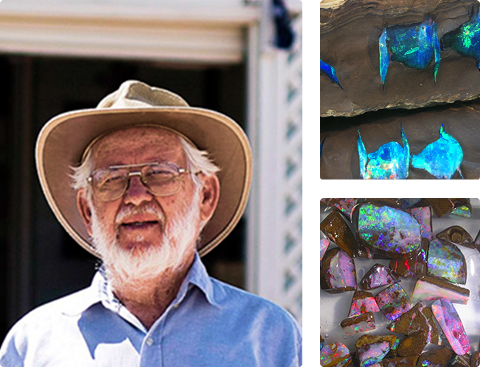
The most publicly celebrated recent find is the Yowah Moon opal, discovered by David Darby and reported by ABC News as a rare, museum-worthy specimen. Geoscience Australia sought funding to retain it within Australia rather than allow it to be sold privately overseas, a response that signals how seriously institutions treat exceptional Yowah finds. That kind of institutional attention has a secondary effect: it raises collector awareness and, with it, market prices for high-grade specimens.
What drives a Yowah nut opal’s value?
Gem-grade Yowah kernels can range from modest double-digit per-carat prices for small matrix pieces to several hundred dollars per carat for vivid full-crystal specimens with strong red play-of-color. Museum-quality or exhibition-grade pieces with documented provenance sit well above that range. The spread is wide, and understanding the drivers helps you avoid overpaying or, just as easily, undervaluing a genuine find.
Primary value drivers
- Color play brightness: The more vivid and directionally broad the flash, the higher the value. Red and orange are the rarest hues; blue and green are more common.
- Kernel size and completeness: A large, intact full-crystal kernel is exponentially rarer than a small matrix specimen.
- Body tone and contrast: Dark ironstone backing produces higher contrast and more dramatic color display.
- Pattern rarity: Harlequin, rolling flash, and picture patterns rank above pinfire or broad flash in collector preference.
- Condition: Cracks, crazing, or surface chips reduce value significantly. Ask specifically whether any fractures have been resin-filled.
- Treatment disclosure: Natural, untreated specimens command a premium. Any stabilization or filling must be disclosed.
- Provenance and certification: A Queensland/Yowah field origin certificate and a recognized lab report add measurable value, especially for resale.
For investment-oriented buyers, the complete guide to investing in Australian opals covers price history and long-term value signals in more depth.
Trust signals to require in any listing
- Lab report from GIA or a recognized Australian gemological lab
- High-resolution photographs from at least four angles, including under moving light
- Exact weight in carats, dimensions in millimeters, and body tone classification
- Seller return policy of at least 14 days with condition-on-return terms
- Written treatment disclosure (natural, stabilized, or resin-filled)
Pro Tip: Request a short video of the specimen rotating under a single light source. A video reveals directional color play that static photos can hide — and a seller who refuses this request is worth questioning.
How to identify authentic Yowah nut opals
Authentication starts before you open your wallet. The good news is that genuine Yowah nuts have physical characteristics that are difficult to fake convincingly — if you know what to look for.
Visual checks
- Examine the ironstone exterior for natural weathering, surface texture, and the characteristic brown-gray color of Queensland ironstone. Artificially assembled doublets often show a flat, uniform base that looks machined rather than natural.
- Look for the natural transition between ironstone and opal. In genuine matrix specimens, the boundary is irregular and organic. A clean, straight seam suggests an assembled doublet.
- Under magnification, natural opal shows a characteristic “pinfire” or rolling color structure. Synthetic opal often displays a columnar or “lizard skin” pattern under 10x loupe.
- Check for potch lines — bands of non-precious opal that naturally border the gem layer. Their presence confirms natural formation.
Physical and lab checks
- Genuine opal feels slightly warm to the touch compared to glass simulants, which feel cold.
- A UV lamp can reveal resin fills, which fluoresce differently from natural opal.
- GIA has conducted field research on Australian opal fields and can provide gemological context; for high-value specimens, a GIA report or report from a recognized Australian lab is the gold standard.
For a thorough walkthrough of documentation and seller validation, the guide on how to authenticate Australian opals covers the full process.
Red flags to watch for
- Origin described only as “Australian opal” with no field or region specified
- No treatment disclosure at all
- Photos taken only under studio lighting with no natural or moving-light images
- Seller unable or unwilling to provide weight and dimensions
- Price significantly below market for the claimed quality
Pro Tip: Ask the seller directly: “Has this specimen been treated, stabilized, or resin-filled in any way?” A reputable seller answers immediately and in writing. Hesitation or a vague answer is a red flag.
Where and how to buy Yowah nut opals safely
Buying a Yowah nut opal is not complicated when you follow a clear checklist. The challenge is that the market mixes genuine museum-grade finds with low-grade matrix pieces and, occasionally, misrepresented assembled doublets.
Where to source
- Reputable online retailers with direct-miner relationships and published certification policies
- Certified gemstone auctions with provenance documentation
- Established gem shows where sellers carry physical documentation
- Museum deaccessions (rare, but occasionally available through institutional sales)
Caution is warranted with unverified online marketplaces where origin claims are unverifiable and return policies are absent. The expert guide to buying Australian opals for collectors lays out the full evaluation framework.
Pre-purchase checklist
- Queensland/Yowah field origin certificate or equivalent provenance document
- Lab report (GIA or recognized Australian lab) for specimens above entry-level pricing
- High-resolution photos from at least four angles
- Video under moving light
- Exact carat weight and millimeter dimensions
- Written treatment disclosure
- Return policy of at least 14 days
- Shipping insurance confirmation
Pro Tip: For your first Yowah nut purchase, start with a matrix specimen in the $50–$200 range rather than chasing a rare full-crystal kernel. Matrix pieces are more forgiving to authenticate, easier to find in good condition, and still show the characteristic ironstone-backed color play that makes Yowah nuts special.
Fossicking for Yowah nuts: permits and field basics
If you want to find your own Yowah nut rather than buy one, the Yowah field is open to licensed fossickers. The Queensland Government issues fossicking licenses, and the Yowah area has designated public fossicking zones. Obtaining a license is straightforward and can be done through the Queensland Government’s resources and mining department.
Field methods
- Specking: Walking the surface slowly after rain, scanning for exposed opal or ironstone nodules that have weathered out of the ground
- Noodling: Sifting through previously mined mullock (waste) heaps for overlooked specimens
- Shallow digging: Focusing on the top 300–600 mm of soil, where nuts are most accessible without heavy equipment
Legal and conservation notes
- A fossicking license is required before you collect any specimens — collecting without one is illegal under Queensland law
- Respect designated permit boundaries and any area closures; Queensland WetlandInfo mapping identifies conservation zones near the Yowah area that are off-limits
- Do not disturb active mining leases; fossicking is restricted to designated public areas
- Pack out all waste and leave the site as you found it
How to care for and store Yowah nut opals
Opal rates 5.5–6.5 on the Mohs hardness scale, which makes it softer than quartz and susceptible to scratching and thermal shock. Yowah nuts with intact ironstone backing are more durable than loose crystal kernels, but both require thoughtful handling.
Daily care
- Wipe with a soft, lint-free cloth after handling; avoid paper towels, which can scratch
- Keep away from household chemicals, perfumes, and hairsprays
- Remove opal jewelry before swimming, washing dishes, or any activity involving prolonged water exposure
- Avoid sudden temperature changes — moving from a cold environment to direct heat can cause crazing
Setting recommendations
- Bezel settings protect fragile kernels far better than prong settings, which leave the stone exposed
- Ironstone-backed matrix specimens tolerate setting better than thin crystal kernels
- Avoid ultrasonic cleaners entirely; the vibration can fracture natural opal
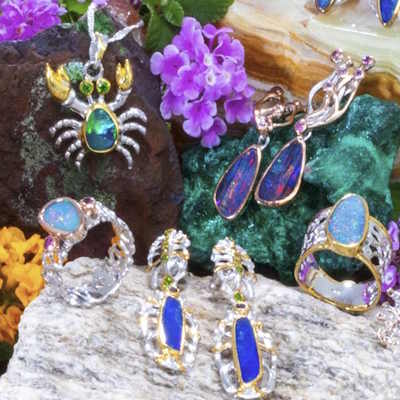
- For bridal or everyday-wear pieces, a protective bezel in yellow or rose gold complements the warm ironstone tones naturally; for inspiration on setting styles, Australian opal rings offer a useful comparison of setting approaches
Storage and display
- Store in a padded jewelry box or wrapped in a soft cloth, away from harder gemstones that can scratch the surface
- Maintain moderate humidity; extremely dry conditions can cause some opals to craze over time
- Photograph specimens from multiple angles under consistent lighting for insurance records and future resale documentation
Museum pieces and authoritative sources on Yowah nuts
The geological and cultural significance of Yowah nuts is well documented at the institutional level, which matters for collectors who want provenance that holds up to scrutiny.
The Smithsonian National Museum of Natural History’s specimen NMNH G10650 (29.83 ct) provides a concrete reference point for what exceptional play-of-color and structural integrity look like in a curated, documented Yowah nut. The Smithsonian’s descriptive notes on color and structure are among the most precise publicly available descriptions of a high-grade specimen.
ABC News coverage of the Yowah Moon opal, discovered by David Darby, documented Geoscience Australia’s effort to secure funding to keep the specimen in Australia. That institutional response confirms what collectors already sense: the rarest Yowah nuts are treated as national cultural assets, not merely gemstones.
Key sources for further reading
- Smithsonian National Museum of Natural History (specimen NMNH G10650): — Provenance benchmark and descriptive gemological notes
- GIA Australian opal field expedition notes: — Gemological context for formation, evaluation, and lab-based authentication
- Queensland WetlandInfo mapping: — Conservation zones and permitted fossicking boundaries near Yowah
Why collectors prize Yowah nuts above almost any other opal
The collector appeal of a Yowah nut goes beyond color play, though the color play is extraordinary. What makes these specimens genuinely different is the element of discovery built into their physical form. Every nut is a sealed mystery. The ironstone exterior gives nothing away. That moment of opening — sawing through the nodule and seeing what nature hid inside — is an experience no other gemstone replicates.
Collectors who have handled both loose crystal opals and Yowah nuts consistently describe the nut as feeling more complete: a self-contained geological event, not just a polished stone. The ironstone host is part of the story, not a flaw to be cut away. That perspective shifts how you evaluate a specimen. A matrix nut with vivid color threading through dark ironstone can be more compelling than a larger crystal opal with no geological context.
For new collectors, the practical advice is this: resist the temptation to chase the rarest full-crystal kernels immediately. Start with matrix pieces. They are more available, easier to authenticate, and they teach you what genuine ironstone-backed color play looks like before you spend serious money on a high-grade kernel. Once you can read a matrix specimen confidently, evaluating a full-crystal nut becomes far less daunting.
Australianopaldirect’s direct-miner relationships and certification process make it a credible first stop for collectors who want provenance they can verify without traveling to Queensland themselves.

Authentic Yowah nut opals from a source you can verify
Collectors who have done the research know what a trustworthy seller looks like: a clear origin certificate, high-resolution photos from multiple angles, written treatment disclosure, and a return policy that means something. Finding all of that in one place is rarer than the opals themselves.
Australianopaldirect sources directly from Australian miners across Queensland, Lightning Ridge, and Coober Pedy, which means every piece carries traceable provenance rather than a vague “Australian origin” label. Each specimen comes with certification, and the 90-day warranty and complimentary shipping insurance remove the two biggest risks of buying online. Custom jewelry services let you set a Yowah nut kernel in a protective bezel that suits the stone’s character rather than forcing it into a generic mount; for inspiration on selecting and styling these, see finding the best wedding jewellery online in Australia.
For collectors ready to add a verified Yowah nut opal to their collection, browse the full opal collection and request the origin documentation before checkout.
Useful sources for further reading
These sources provide the primary evidence behind the facts in this article and are worth bookmarking for ongoing research.
- Smithsonian National Museum of Natural History (NMNH G10650): — Search the Smithsonian’s online collections for specimen NMNH G10650 to see institutional-grade descriptive notes on a 29.83 ct Yowah nut — useful as a quality benchmark.
- GIA Australian opal field expedition notes: — GIA’s published research on Australian opal fields provides gemological context for formation and explains why lab reports matter for high-value specimens.
- Queensland WetlandInfo: — Maps conservation zones and permitted fossicking boundaries near Yowah — check before planning a field trip.
- Wikipedia — Yowah nut: — A useful starting point for general background and the commonly cited 1-in-10,000 occurrence estimate, though always cross-reference with primary sources for purchasing decisions.
Recommended
- How to Authenticate Australian Opals for Genuine Value - Australian Opal Direct
- Build a Gemstone Collection: The Expert Guide to Australian Opals - Australian Opal Direct
- Expert Guide to Buying Australian Opals for Collectors - Australian Opal Direct
- Genuine Australian opals: authenticity guide for collectors - Australian Opal Direct