Water content in opal: buying genuine Australian gems
Posted by AOD on 23rd Mar 2026
Water content in opal: buying genuine Australian gems
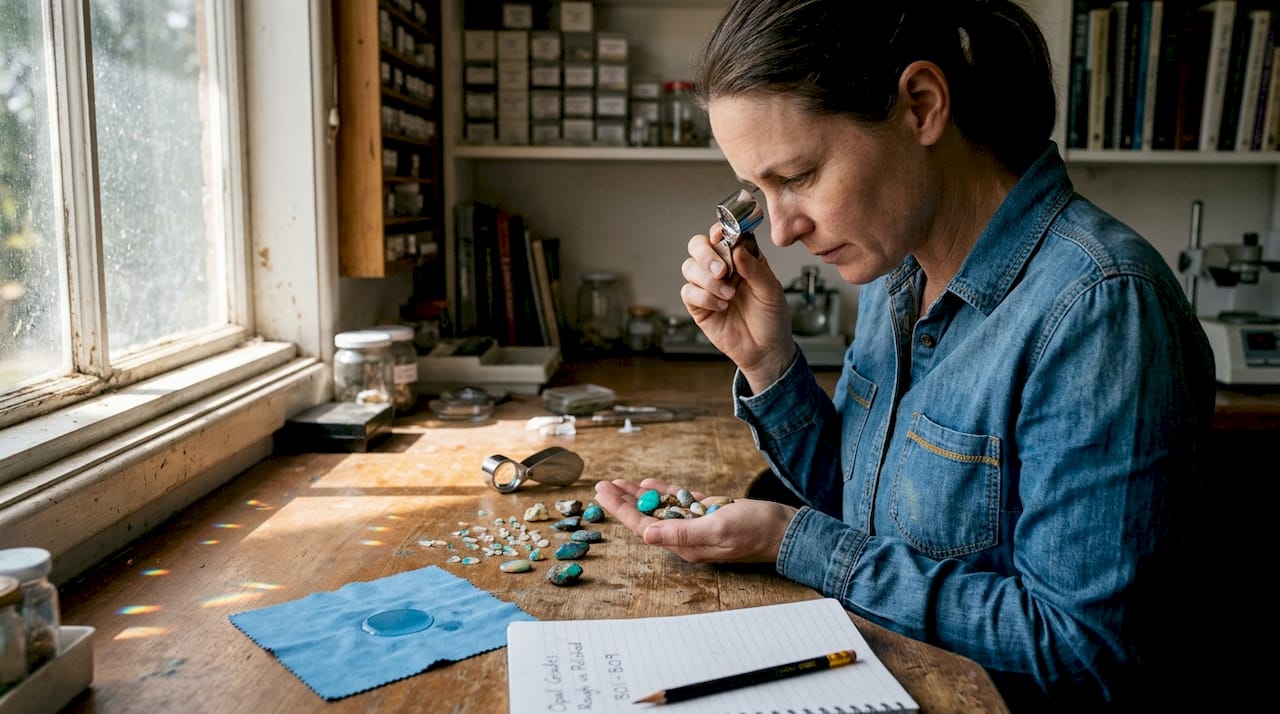
Many opal buyers assume all opals hold similar amounts of water, but that’s far from the truth. Water content in opals varies dramatically, ranging from as low as 3% to over 21%, and this variation directly impacts stability, beauty, and long-term value. Understanding how much water your opal contains is essential for identifying genuine Australian opals and making informed purchasing decisions. This article breaks down what water content means, how experts measure it, and why it matters when you’re investing in these extraordinary gemstones.
Table of Contents
- Key takeaways
- What is water content in opal and why does it matter?
- How is water content in opal measured?
- Variation in water content among Australian opals and its effects
- Practical guidance for buyers: Using water content knowledge for opal selection and care
- Explore genuine Australian opals and expert buying guides
- FAQ
Key Takeaways
| Point | Details |
|---|---|
| Water content range | Opals contain 3 to 21 percent water by weight, with precious opals typically 6 to 10 percent. |
| Australian opals moisture | Australian solid opals typically exhibit lower nonporous water content of about 3 to 10 percent. |
| Measurement methods | Thermogravimetric analysis is the gold standard for measuring water content, with other methods like near infrared and FTIR used as complements. |
| Impact on value | Water content influences stability, appearance, and long term value of opals. |
What is water content in opal and why does it matter?
Water content in opal refers to the percentage of water molecules chemically bound within the gemstone’s hydrated silica structure. Opal is made of hydrated silica (SiO2·nH2O) and contains 3-21% water, making it fundamentally different from other gemstones. This water isn’t sitting in pockets or bubbles; it’s integrated into the mineral’s molecular framework.
The range is surprisingly wide. Common opals can hold anywhere from 3% to 21% water, while precious opals with their signature play-of-color typically contain 6-10%. This variation isn’t random; it reflects the geological conditions during formation and directly influences how the stone looks and behaves over time.
Water contributes significantly to opal’s unique physical properties. It affects translucency levels, influences the intensity of color play, and determines how fragile or stable the stone will be. Higher water content often correlates with increased luminosity but also greater vulnerability to environmental changes.
Here’s how water content impacts your opal:
- Durability: Lower water content generally means more stable stones less prone to cracking or crazing
- Value: Collectors prize opals with optimal water levels that balance beauty with longevity
- Care requirements: High water content opals need careful humidity control and gentle handling
- Damage susceptibility: Stones with excessive water can dry out, leading to irreversible fractures
Pro Tip: Examining water content indicators helps you authenticate Australian opals and spot imitation or polymer-treated stones that may have abnormal water profiles.
Australian solid opals stand out in the marketplace because they tend to have lower, non-porous water content, typically ranging from 3-10%. This characteristic makes them exceptionally prized for durability and long-term wearability in jewelry. When you understand these fundamentals, you’re better equipped to evaluate quality and make confident purchasing decisions.
How is water content in opal measured?
Scientists use several sophisticated techniques to determine exactly how much water an opal contains. The gold standard method is thermogravimetric analysis (TGA), which provides precise measurements by tracking weight loss as the stone is heated. Water in opal measurements methods include TGA heating to 1000°C, along with near-infrared spectroscopy, Fourier-transform infrared spectroscopy, and refractive index testing.
Research confirms these methods work reliably. Meta-analysis of opal water content using TGA shows opal water content averages around 7% by weight, with a range of 0.5-18.1%, and TGA is the most commonly used measurement technique in gemological laboratories.
Here’s how the TGA process works step by step:
- Place a small opal sample in a precision balance inside a controlled heating chamber
- Gradually increase temperature from room temperature to 1000°C at a steady rate
- Continuously record the sample’s weight as water molecules are released and evaporate
- Calculate water content percentage based on total weight loss during heating
- Compare results against known standards to verify accuracy and identify any anomalies
Beyond TGA, gemologists employ complementary methods. Near-infrared spectroscopy detects water absorption bands in the spectrum. FTIR spectroscopy identifies specific molecular water vibrations. Refractive index measurements can correlate with water content because higher water levels typically lower the refractive index slightly.
| Measurement method | Typical range detected | Average value | Extreme values |
|---|---|---|---|
| Thermogravimetric analysis (TGA) | 3-18% | 7% | 0.5-18.1% |
| Near-infrared spectroscopy | 4-16% | 8% | 2-21% |
| Refractive index correlation | 3-12% | 6.5% | 3-15% |
| FTIR spectroscopy | 5-14% | 7.5% | 4-17% |
Pro Tip: Understanding these measurement techniques helps you interpret laboratory reports when distinguishing opal origins and verifying authenticity claims from sellers.
Laboratory certification often includes water content data alongside other gemological properties. When you see a TGA measurement on a certificate, you’re looking at scientifically validated information that supports the stone’s identity and expected performance characteristics. This knowledge empowers you to ask informed questions and recognize quality documentation.
Variation in water content among Australian opals and its effects
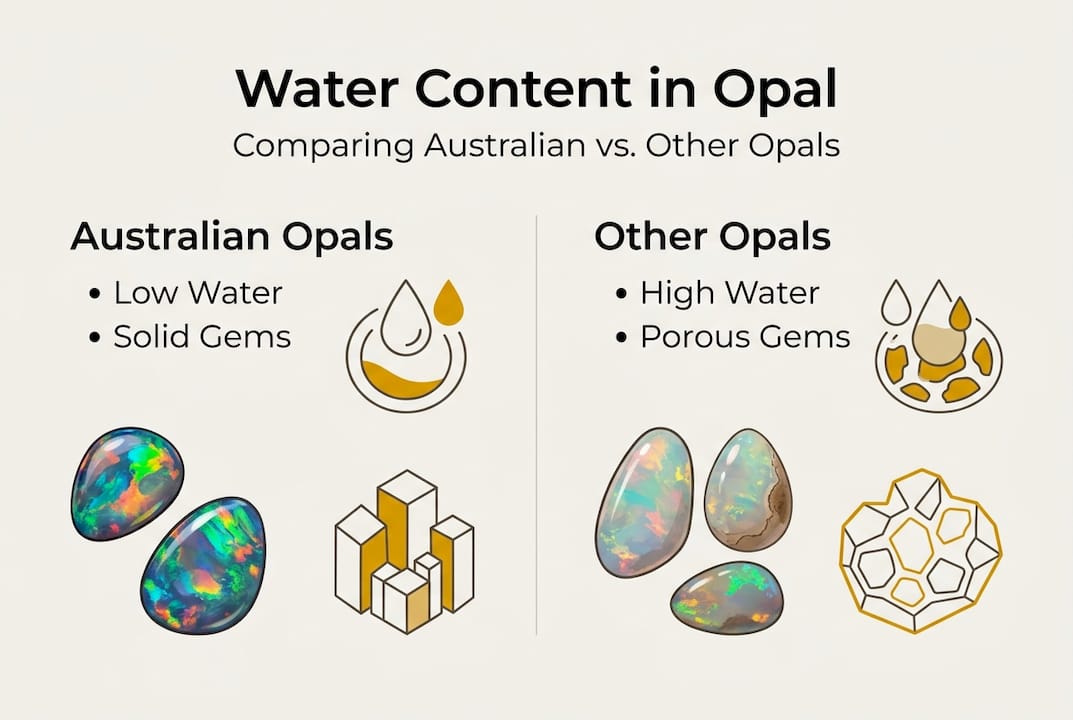
Australian solid opals occupy a special category in the gemstone world, partly because of their distinctive water content profile. Australian solid opal characteristics confirm these stones are non-porous with 3-10% water content, setting them apart from other opal varieties. This lower range contributes to their reputation for exceptional durability and stability.
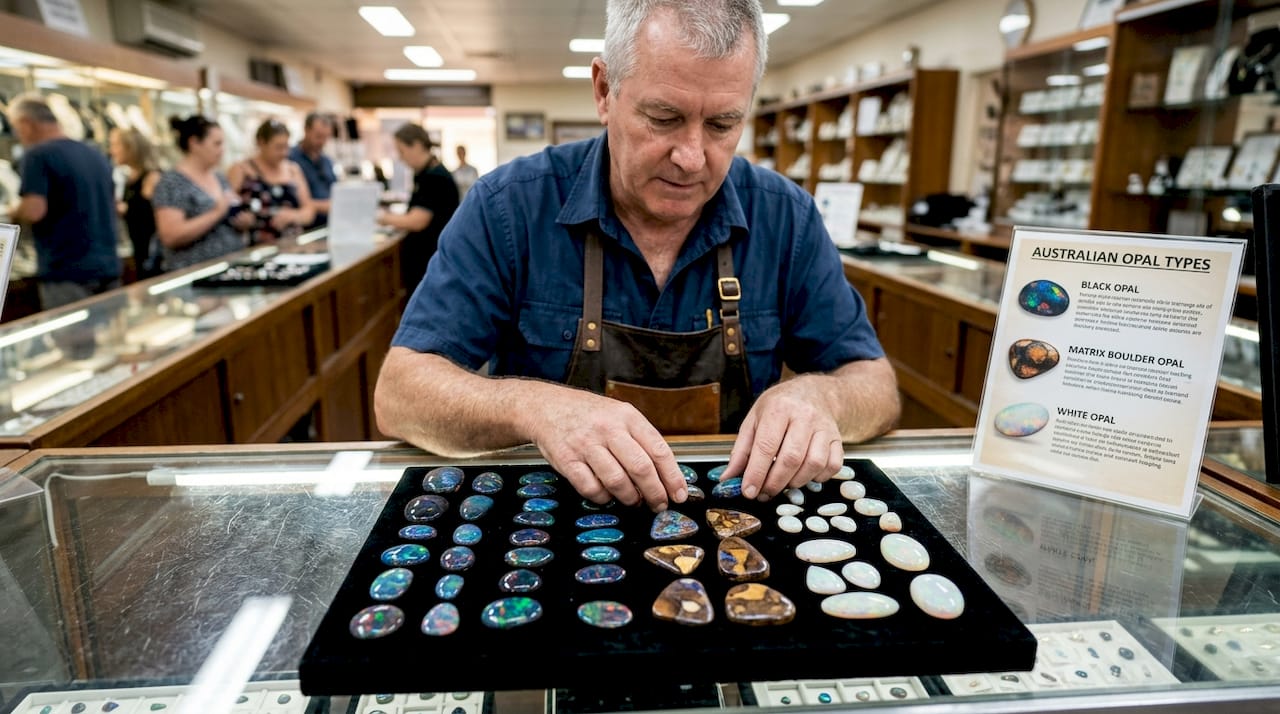
Compare this to broader opal categories. Water content ranges in opal types show common opal contains 3-21% water, while precious opal holds 6-10%. Australian specimens consistently fall in the lower, more stable portion of these ranges, reflecting the unique geological conditions in regions like Lightning Ridge, Coober Pedy, and Queensland.
| Opal type | Water content range | Porosity level | Durability rating |
|---|---|---|---|
| Australian solid opal | 3-10% | Non-porous | Excellent |
| Precious opal (general) | 6-10% | Low to moderate | Good to very good |
| Common opal | 3-21% | Variable | Fair to good |
| Ethiopian opal | 8-21% | High porosity | Fair |
Water content profoundly influences how opals look and perform:
- Luster quality: Moderate water levels enhance surface brilliance without compromising structural integrity
- Play-of-color intensity: Optimal water content supports the diffraction structure that creates color flashes
- Long-term stability: Lower water percentages reduce risk of dehydration crazing over decades
- Environmental sensitivity: High water content stones react more dramatically to humidity and temperature changes
- Cutting and polishing response: Stones with stable water levels are easier to work and finish beautifully
Research exploring water content correlation with refractive index reveals important insights. As water content increases, refractive index typically decreases slightly, affecting how light interacts with the stone. Collectors often prefer the optical properties associated with lower water content because they indicate denser, more stable silica networks.
This scientific understanding directly impacts what affects opal value in the marketplace. Australian solid opals command premium prices partly because their water content profile predicts excellent longevity and minimal maintenance concerns. When you invest in stones from established Australian fields, you’re typically acquiring opals with naturally optimized water levels.
Pro Tip: Knowing the typical water ranges for Australian opals helps you identify authentic specimens and avoid fragile or unstable stones that may disappoint over time, especially if you’re building a serious collection.
The practical difference becomes clear when comparing care requirements. A Lightning Ridge black opal with 5% water content needs far less environmental babying than a high-porosity Ethiopian opal with 18% water content. Understanding these distinctions transforms how you select, insure, and maintain your gemstone investments.
Practical guidance for buyers: Using water content knowledge for opal selection and care
Armed with water content knowledge, you can make smarter purchasing decisions and protect your investment for decades. Here’s how to apply this information when selecting and caring for Australian opals:
- Verify water content indicators by requesting laboratory certificates that include TGA or spectroscopy measurements
- Handle opals gently, avoiding sudden temperature changes that cause expansion and contraction in water-bearing structures
- Store opals in stable humidity environments, ideally 40-60% relative humidity, to prevent drying or excessive moisture absorption
- Clean opals with lukewarm water and soft cloth only, never ultrasonic cleaners or harsh chemicals that disrupt water balance
- Rotate wear if you own multiple pieces, giving each opal rest periods to stabilize after body heat and moisture exposure
- Choose settings that protect edges and surfaces, especially for higher water content stones more vulnerable to impact damage
Opal care based on water content recognizes that Australian solid opals with 3-10% water content require less intensive maintenance than varieties with higher percentages. This practical reality affects everything from daily wear decisions to long-term storage strategies.
Water content knowledge also correlates with proper insurance coverage. When you understand your opal’s water percentage, you can better communicate its vulnerability profile to insurers and ensure adequate coverage that recognizes specific care requirements. Stones with lower water content may qualify for standard jewelry policies, while high water content specimens might need specialized gemstone insurance.
Pro Tip: Use water content knowledge to spot red flags when evaluating bargain opals; stones offered at suspiciously low prices may have unstable water levels that lead to rapid deterioration, making them poor long-term investments.
The opal gemstone selection process becomes more confident when you factor in water content. Ask sellers about the opal’s origin and typical water ranges for that region. Request any available testing data. Compare prices relative to water stability; a slightly higher upfront cost for a low water content Australian solid opal often represents better value than a cheaper, fragile alternative.
Understanding water content enhances your confidence in authentic Australian opal purchases because you recognize the scientific markers that distinguish quality specimens. You’re no longer relying solely on appearance; you’re evaluating fundamental structural characteristics that predict how the stone will age and perform. This knowledge maximizes both the lifespan of your opals and your satisfaction as a collector, transforming you from a casual buyer into an informed enthusiast who truly appreciates these remarkable gemstones.
Explore genuine Australian opals and expert buying guides
Now that you understand how water content shapes opal quality and longevity, you’re ready to explore stones with confidence. Browse a curated collection of authentic Australian opals where each piece comes from established mining regions known for optimal water content profiles. Every opal is ethically sourced directly from miners, ensuring you receive genuine stones with naturally stable characteristics.

Detailed buying and authentication guides are available to empower your purchasing decisions with scientific insights and practical expertise. The opal authentication guide walks you through verification techniques, while the opal gemstone selection process guide applies water content knowledge to real-world buying scenarios. Expert support is available to help you select and care for your opals based on their specific water content characteristics, ensuring your investment remains beautiful for generations.
FAQ
What is water content in opal?
Water content is the amount of water chemically bound within the opal’s hydrated silica structure, usually expressed as a percentage of the stone’s total weight. It affects the gemstone’s appearance, structural strength, and care requirements. Opals can contain anywhere from 3% to 21% water, with precious opals typically holding 6-10%. This water isn’t liquid trapped in pockets; it’s integrated into the molecular framework of the stone itself.
How does water content affect opal durability?
Higher water content often correlates with increased fragility and greater risk of cracking, crazing, or structural failure over time. Lower water content, especially in Australian solid opals that typically contain 3-10%, generally indicates more stable and durable stones that resist environmental damage. Stones with excessive water are more sensitive to humidity changes, temperature fluctuations, and physical impacts. Choosing opals with moderate to low water content provides better long-term wearability and reduces maintenance concerns.
Can water content indicate if an opal is genuine or fake?
Water content ranges help distinguish natural opals from synthetic stones, polymer imitations, or treated specimens that may have abnormal water profiles. Genuine Australian opals typically fall within predictable water content ranges based on their origin, while synthetics often show unusual measurements. Checking typical water percentages alongside other gemological tests like refractive index and specific gravity assists in verifying authenticity. Laboratory certificates that include water content measurements provide valuable confirmation of a stone’s natural origin.
What are the best practices to care for opals with higher water content?
Store opals in stable humidity environments between 40-60% relative humidity to prevent drying and cracking from moisture loss. Avoid exposure to harsh chemicals, ultrasonic cleaners, and sudden temperature changes that can shock the stone’s water-bearing structure. Keep high water content opals away from prolonged direct sunlight and heat sources that accelerate dehydration. Consider insurance coverage that recognizes the specific care needs and vulnerability of high water content opals, ensuring adequate protection for these more delicate specimens.
Recommended
- Ethical opal sourcing: your guide to authentic Australian gems - Australian Opal Direct
- How to Authenticate Australian Opals for Genuine Value - Australian Opal Direct
- How to Distinguish Opal Origins for Authentic Jewelry - Australian Opal Direct
- Opals From Australia vs. Other Regions: True Value Unveiled - Australian Opal Direct