Do Opals and Water Mix? A Care Guide That Cuts Through the Myths
Posted by AOD on 24th Aug 2026
Do Opals and Water Mix? A Care Guide That Cuts Through the Myths
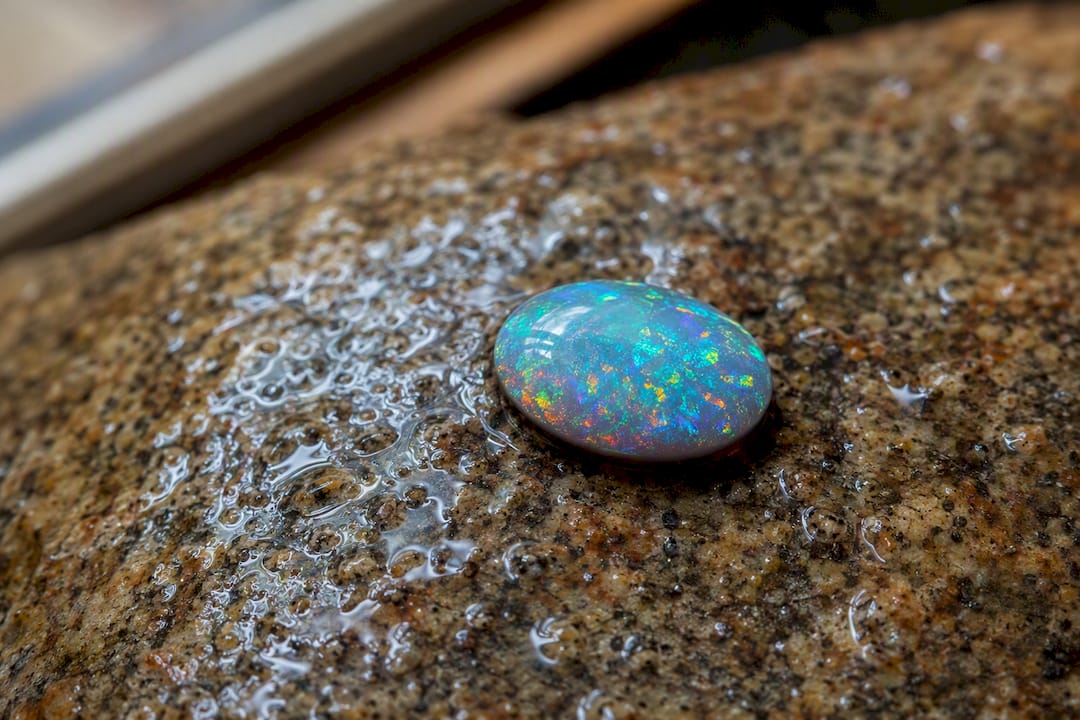
Short answer: most solid opals tolerate brief contact with water just fine. Earth-mined Australian opal already carries a small to moderate percentage of water locked inside its silica structure, so a splash from the sink or a quick shower rinse rarely does harm. The exceptions matter, though. Hydrophane opals soak up moisture and can cloud or crack as they dry out again, and doublets or triplets, built with glued layers, can fog or delaminate when water sneaks behind the adhesive.
What to do right now:
- Safe: brief rinsing under lukewarm water, wiping with a soft, damp cloth.
- Avoid: long soaks, ultrasonic cleaners, hot tubs, and chlorinated pools.
- When in doubt: treat any stone you haven’t had identified as hydrophane until a jeweler confirms otherwise.
Key Takeaways
Solid Australian opal tolerates brief water exposure because its internal moisture content is already stable, while hydrophane and layered stones need identification-first, conservative care.
| Point | Details |
|---|---|
| Know your opal type first | Solid, hydrophane, and doublet/triplet stones each react differently to moisture, so identify before you clean. |
| Rinse briefly, never soak | Short contact with lukewarm water is fine for solid opals; prolonged soaking risks layered stones and adhesives. |
| Skip ultrasonic and heat | Use warm soapy water only; avoid ultrasonic cleaners, steam, chlorine, and strong chemicals entirely. |
| Dry gently, never force it | Pat dry with a soft cloth and air-dry at room temperature rather than using heat sources. |
| Storage humidity is optional insurance | A glass of water near storage helps mainly in dry climates; it isn’t proven necessary for most owners. |
Further Reading on Opal Care and Water Content
- GIA’s opal care and cleaning guide and its FAQ on storing opal in water
- The University of Technology Sydney’s academic research on water in opal
- Wikipedia’s overview of opal’s general composition and properties
Table of Contents
- Opals and Water: How Different Types Actually Behave
- Does Water Actually Damage Opals?
- How to Clean and Wear Opal Jewelry Safely
- Storing Opals: The Glass of Water, Explained
- What Water Does to Opals: A Practical Verdict
Opals and Water: How Different Types Actually Behave
Opal isn’t quartz with a party trick. It’s a hydrated, amorphous form of silica, chemically written as SiO2·nH2O, which is a technical way of saying water is part of the mineral’s actual recipe, not just something that sits on its surface. Gemstone trade guides say solid Australian precious opal typically contains a modest proportion of water, locked into the stone’s microscopic silica sphere structure since formation.
Research into water in opal, including a peer-reviewed academic study out of the University of Technology Sydney, breaks that internal moisture into distinct categories: bulk water pooled in larger pores, adsorbed water clinging to internal surfaces, and cage water trapped inside the silica framework itself. Each behaves differently under heat or added moisture, and pore size determines whether water inside the stone acts like ordinary liquid or stays bound and resistant to freezing.
Three opal categories matter for care:
- Solid opal (the kind Australian Opal Direct sources from Lightning Ridge, Coober Pedy, and Queensland) is dense and largely impervious to short-term wetting.
- Hydrophane opal, common in some Ethiopian and Mexican material, absorbs water readily and turns temporarily more transparent when wet, then can craze or fog as it dries.
- Doublets and triplets are engineered stones, thin opal slices bonded to backing material with resin or glue, which water can degrade over time.
Does Water Actually Damage Opals?
Rarely, for solid Australian opal, but the risk isn’t zero and the failure modes are worth knowing before they surprise you.
- Thermal shock, not moisture, causes most crazing. GIA’s opal care guidance notes opal sits around 5 to 6.5 on the Mohs scale and is genuinely vulnerable to sudden temperature swings. Jumping from a hot shower into cold air, or the reverse, stresses the stone more than the water itself.
- Hydrophane opals suffer from repeated wet-dry cycles. Soaking, drying, soaking again forces the stone to expand and contract internally. Do that enough times and you risk permanent clouding or fine surface cracks, even though a single wetting looks harmless in the moment.
- Doublets and triplets fail at the seam. Water that seeps between the opal layer and its backing can fog the adhesive or trigger delamination, where the layers visibly separate.
- Certain exposures are flatly risky for any opal: ultrasonic cleaners, boiling or steaming water, strong acids or alkalis, and chlorinated pool water all accelerate damage far faster than a sink rinse ever would.
Pro Tip: If you’re not sure whether your stone is solid, hydrophane, or layered, ask the retailer or a gemologist before you clean it. Treating an unidentified opal like solid Australian material is the single most common mistake owners make.
How to Clean and Wear Opal Jewelry Safely
Cleaning an opal doesn’t need special equipment. GIA’s opal care guidance recommends warm, soapy water as the only method worth trusting, applied with a soft cloth and followed by gentle air drying.
- Fill a bowl with warm water and a drop of mild dish soap.
- Wipe the stone gently with a soft cloth. Don’t scrub.
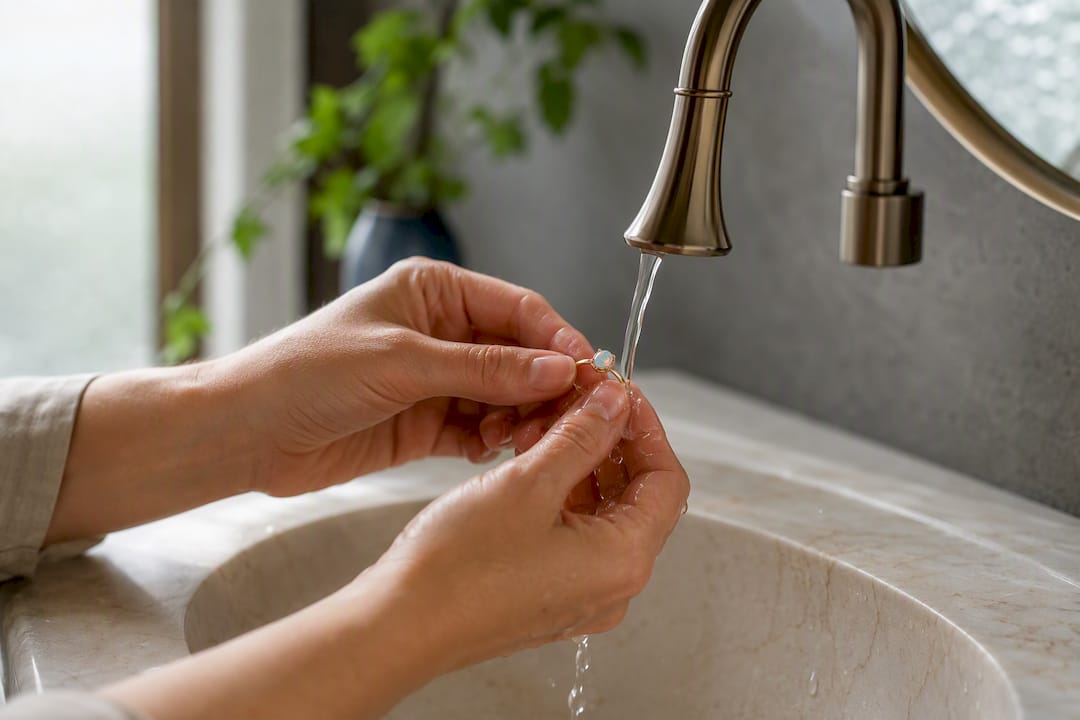
- Rinse briefly under lukewarm running water.
- Pat dry with a soft cloth, then let the piece air-dry at room temperature. Never blast it with a hair dryer or set it near a heater.
If a solid opal gets accidentally soaked, the same rule applies: pat it dry and let it rest. Forcing the moisture out with heat is what actually causes trouble, not the water itself.
For wearing, a quick shower is usually fine for solid stones, but skip the hot tub, the chlorinated pool, and any heavy manual work where the ring might take a knock. For a full weekly routine, Australian Opal Direct’s opal jewelry care routine walks through the details. If you spot visible crazing, persistent fogging inside a doublet, or any sign the layers are separating, that’s your cue to see a jeweler rather than keep wearing the piece.
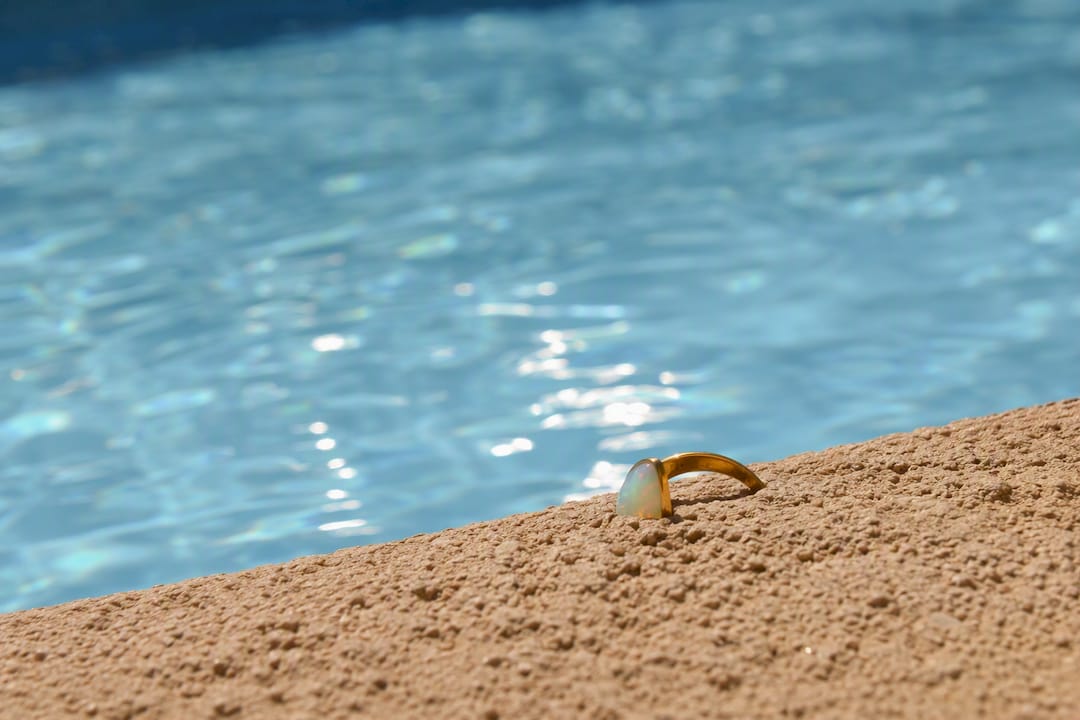
Pro Tip: Remove any opal piece before swimming, not because a quick dip destroys it, but because pool chemicals combined with repeated exposure are exactly the slow-damage scenario worth avoiding entirely.
Storing Opals: The Glass of Water, Explained
The “glass of water in the display case” trick isn’t folklore, but it’s also not the requirement some sellers make it sound like. GIA’s own guidance is direct on this: storing opal in water isn’t proven to prevent drying out, though keeping ambient humidity up can help in genuinely dry climates and won’t hurt in normal ones.
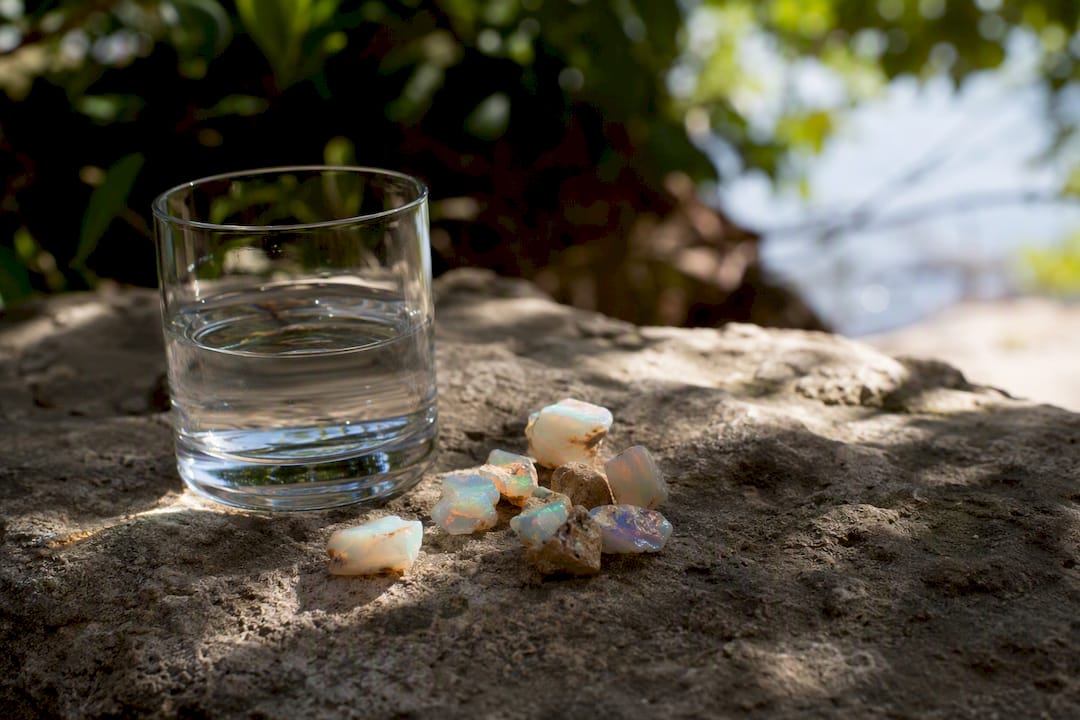
What isn’t backed by evidence, and can actively harm layered stones, is continuous soaking. Some owners soak opals for days at a time believing it “recharges” the stone. It doesn’t, and for a doublet or triplet, prolonged wet exposure is precisely how adhesive breaks down. Oiling or applying glycerin to boost shine is another myth worth retiring; neither treatment is recommended by gemological authorities and both can leave residue that traps grit.
Practical storage looks like this:
- A padded jewelry box or pouch, kept away from direct heat and strong display lighting, which dries stones out over time.
- Stable room humidity rather than a bone-dry safe or vault.
- If you’re storing valuable pieces long-term, a proper in-home jewelry safe with humidity control beats a drawer.
Pro Tip: Living somewhere arid? A small dish of water near (not touching) your opal storage is a reasonable, low-effort precaution. Anywhere with normal humidity, skip it.
What the Experts and the Retailer Recommend
GIA’s opal care guidance strikes a deliberately cautious balance: warm soapy water for cleaning, humidity management as optional insurance rather than a strict rule. Australian Opal Direct follows the same conservative logic with every piece it sells, source-verified solid Australian opal from Lightning Ridge, Coober Pedy, and Queensland, backed by a 90-day warranty that covers exactly this kind of question when something seems off.
Know your opal type before you clean or store it. A solid Lightning Ridge boulder opal and an Ethiopian hydrophane stone need entirely different handling, and confusing the two is where most avoidable damage happens.
For deeper reading, the water content explainer covers formation science, and the five-step care checklist is worth bookmarking. If a stone shows fogging, dullness, or a crack that wasn’t there before, professional polishing or an inspection under warranty is the right next move, not a home remedy.
What Water Does to Opals: A Practical Verdict
The conventional advice on opals and water tends to swing too far in one direction, either “never let it near water” or “soak it, it needs hydration.” Both are wrong for the vast majority of stones people actually own. Solid Australian opal already contains the water it needs, sealed into its silica structure since formation, and brief contact with tap water changes nothing about that balance.
Where the real advice gap sits is identification, not chemistry. Most care disasters happen because an owner doesn’t know whether their piece is solid, hydrophane, or a layered doublet, and applies one-size-fits-all rules to a stone that needed the opposite treatment. If you take one thing from this guide, make it that: find out what you’re wearing before you decide how to treat it. The water isn’t usually the enemy. Guesswork is.
— Renee
Recommended
- Water content in opal: buying genuine Australian gems - Australian Opal Direct
- Opals and Pearls: A 2026 Guide to Care and Design - Australian Opal Direct
- Opal polish explained: master care and shine for your gems - Australian Opal Direct
- Opal jewelry care routine: keep Australian opals vibrant - Australian Opal Direct