Opal vs Garnet: Bezel or Prong? What Jewelry Buyers Need
Posted by AOD on 20th Sep 2026
Opal vs Garnet: Bezel or Prong? What Jewelry Buyers Need
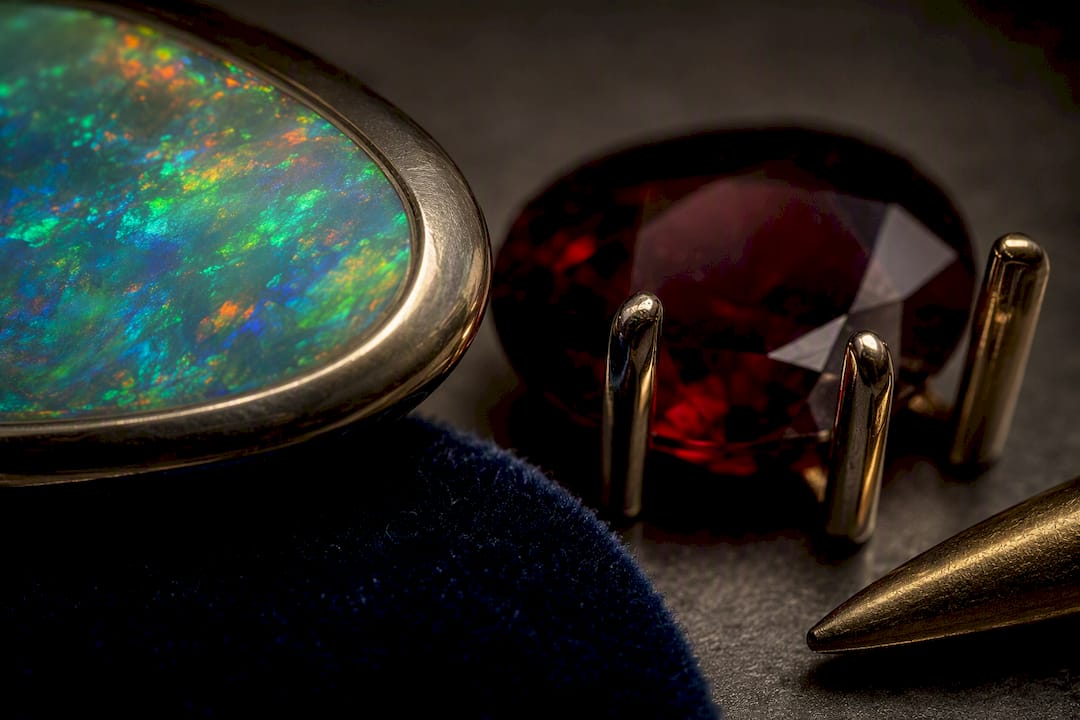
For everyday durability, garnet is the clear choice. It shrugs off scratches thanks to a higher Mohs hardness, and it costs less to insure against careless bumps. Opal wins on sheer visual wonder, its play-of-color unlike anything else in the mineral kingdom, but it demands gentler settings, careful storage, and a wearer willing to treat it as a treasure rather than a daily-wear stone.
TL;DR:
- Garnet offers higher scratch resistance and better toughness, making it more suitable for daily wear, especially in rings and bracelets.
- Opal requires gentle handling, with bezel settings recommended to protect against impact and crazing caused by water loss and temperature changes.
- Rarity and origin significantly influence prices, with black opal and demantoid garnet commanding premium values in their respective categories.
- Solid opal has greater long-term value potential than doublets or triplets, which are less expensive but also less collectible.
- Buyers should verify treatment, sourcing, and stone type, and request certified, natural stones for investment or high-value purchases.
Table of Contents
- Opal vs Garnet Comparison: Hardness, Uses, and Care at a Glance
- What Hardness and Toughness Actually Mean for Wear
- Opal’s Play-of-Color vs Garnet’s Family of Hues
- How to Clean and Store Opal and Garnet Without Ruining Them
- Choosing Between Opal and Garnet for Your Lifestyle
- Buying Checklist: Questions to Ask Before You Buy Opal or Garnet
- A Note on Provenance and Responsible Buying
- Find Your Opal at Australian Opal Direct
- Sources for Hardness, Care, and Quality Claims
- FAQ
Opal vs Garnet Comparison: Hardness, Uses, and Care at a Glance
The two stones sit on nearly opposite ends of the practicality spectrum, even though both have earned devoted followings among collectors for centuries.
- Hardness: Garnet typically has a higher Mohs hardness than opal, which means garnet generally resists everyday scuffs better.
- Best jewelry types: Garnet suits rings, bracelets, and anything that meets doorknobs and keyboards all day. Opal shines in pendants, earrings, and rings reserved for special occasions.
- Appearance: Garnet offers deep, saturated color that stays constant in every light. Opal delivers shifting flashes of color that change with the angle of view, a phenomenon no other gem duplicates.
- Care in one line: Garnet tolerates warm soapy water and most standard cleaning methods. Opal needs a soft cloth, lukewarm water, and a hard no to ultrasonic cleaners.
What Hardness and Toughness Actually Mean for Wear
A Mohs number only measures scratch resistance, not overall toughness, and that distinction matters more than most buyers realize. Garnet’s hardness range generally protects it from abrasion by household dust, which contains quartz of hardness 7. Stones softer than 7 can pick up fine scratches from dusty cloth. Opal’s hardness places it in a more vulnerable category.
Toughness adds another layer. Garnet has good toughness and clean cleavage behavior, meaning it resists chipping under normal impact. Opal is amorphous, meaning it lacks a crystal structure altogether, and that structure holds significant water by volume. Sudden temperature swings, extended dry heat, or a hard knock can cause crazing, a network of fine surface cracks that permanently dulls the stone’s fire.
Setting choice makes a real difference here.
- Bezel settings enclose the opal’s edge completely, shielding it from the side impacts that cause chipping.
- Raised prongs work well for garnet, since the stone can handle exposed edges without added risk.
- Solid backings on opal rings help protect the stone by reducing moisture loss and buffering against pressure.
Pro Tip: If you love opal but have an active lifestyle, consider a bezel-set pendant instead of a ring to enjoy its colors while minimizing exposure to impact.
Opal’s Play-of-Color vs Garnet’s Family of Hues
Opal’s defining trait is play-of-color, the shifting rainbow flash that moves as the stone turns. Gemological grading weighs both the intensity of that flash and the stone’s body tone, ranging from black opal (the rarest and most valuable) to lighter white and crystal opal. Common opal, which lacks play-of-color entirely, sells for a fraction of precious opal’s price.
Garnet tells a different story. It is a mineral family, not a single species, spanning:
- Pyrope and almandine: deep red to brownish red, tough and widely available.
- Rhodolite: a purplish pink prized for its clarity.
- Demantoid: a rare green garnet collectors chase for its fire, though it needs gentler handling than red varieties.
- Spessartine: vivid orange, valued for saturation but softer in some specimens.
Rarity drives price in both camps. A vivid black opal from a limited find can rival fine colored gemstones in value, while demantoid garnet commands premiums well above common red garnet despite the family’s overall reputation for affordability.
How to Clean and Store Opal and Garnet Without Ruining Them
Opal’s biggest enemy is dehydration.
- Clean opal with lukewarm water and mild soap only. Skip ultrasonic and steam cleaners entirely; the vibrations and heat both threaten the stone’s water balance.
- Wipe garnet with a soft cloth and warm soapy water. Most red garnet varieties tolerate ultrasonic cleaning, but ask your jeweler first if you own demantoid or spessartine pieces, since some cutting styles and inclusions make them more brittle.
- Store opal away from direct heat and extreme dryness. A jewelry box away from radiators or windowsills protects the water content that gives the stone its life.
- Separate stones in soft pouches so garnet’s harder surface never scratches opal or other softer gems sharing a drawer.
- If crazing or a chip appears, stop wearing the piece and consult a jeweler immediately. Early intervention can sometimes stabilize a stone that continued wear would only worsen.
6% to 10%. That is the water content locked inside every genuine opal, the reason it behaves nothing like the harder, drier crystal structure of garnet.
Choosing Between Opal and Garnet for Your Lifestyle
Think through four questions before you commit: How often will you wear the piece? How much maintenance are you genuinely willing to do? Do you want a stone that looks the same every day, or one that surprises you? And what is your budget ceiling?
- Daily-wear ring: Choose garnet, ideally pyrope or almandine, set with raised prongs for easy cleaning access.
- Statement pendant or earrings worn occasionally: Opal excels here, since less frequent handling reduces impact risk while still showing off play-of-color.
- Collector’s specimen or investment piece: A solid black or crystal opal, properly certified, holds long-term appeal that doubles and triplets cannot match.
Solid opal is cut entirely from natural material. A doublet backs a thin opal slice with a dark base for contrast, and a triplet adds a protective dome on top. Doublets and triplets cost less and offer some added durability, but they never carry the same collector value as solid stone. For garnet, stick with pyrope or almandine for anything worn daily, and reserve demantoid or spessartine for pendants and earrings where knocks are rare.
Buying Checklist: Questions to Ask Before You Buy Opal or Garnet
A few sharp questions separate a confident purchase from an expensive regret.
- Ask whether the opal is solid, doublet, or triplet, as different types have different durability and value; sellers should disclose this information clearly.
- Ask about treatments. Some garnets are heat-treated to improve color; opals are sometimes stabilized. Either is fine if disclosed.
- Ask about origin and sourcing practices, especially for opal, where mine location affects both value and ethical sourcing claims.
- Request a written warranty or return policy before paying for anything above a modest price point.
- Ask for a mounting recommendation suited to how you plan to wear the piece daily or occasionally.
Red flags include vague answers about treatment, a flimsy or exposed setting on an opal, and no certification offered on a high-value stone. Our opal quality checklist walks through the specific indicators worth checking before you commit.
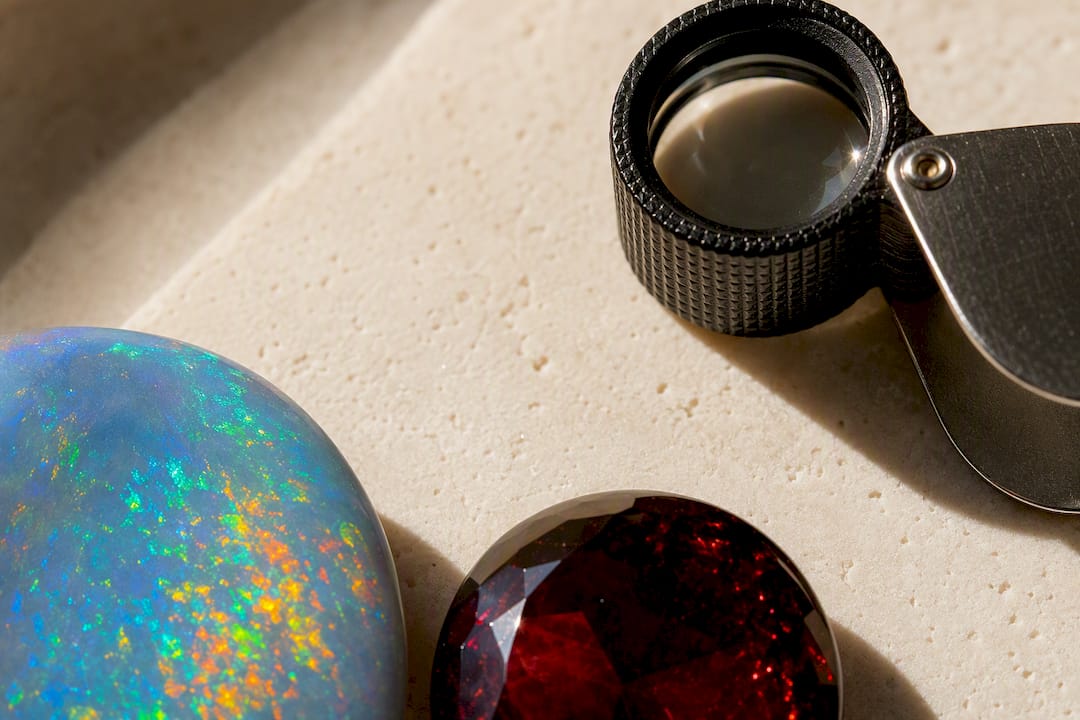
Pro Tip: Always request close-up photos in natural daylight, not studio lighting. Play-of-color and true body tone show up honestly outdoors, and studio lights can flatter a mediocre stone.
A Note on Provenance and Responsible Buying
Provenance changes everything about how an opal feels to own. When a stone traces back to a known mine and a direct relationship with the miner, authenticity stops being a matter of trust and becomes a matter of record. That transparency is worth demanding, whether you buy from us or elsewhere. Explore our opal jewelry selection guide to see what responsible sourcing looks like in practice.
— Renee
Find Your Opal at Australian Opal Direct
If garnet’s everyday resilience is not what draws you, and you are chasing the kind of color that shifts with every tilt of the wrist, genuine Australian opal is the stone worth pursuing directly from source. Australianopaldirect highlights relationships with miners to provide authenticity and competitive pricing compared to other sources.

Every piece in our opal collection comes with a detailed sourcing story, and additional services such as shipping, insurance, and warranty options are provided for customer assurance. Browse opal rings set in protective bezels built for the everyday-occasional wearer, or explore opal pendants and necklaces if you want a lower-risk way to wear precious opal daily. Ready for something entirely your own? Reach out about a custom-designed piece and we will help you build it around a stone that fits your life.
Sources for Hardness, Care, and Quality Claims
- GIA — for opal quality factors, including play-of-color and body tone grading.
- International Gem Society — for opal wearability guidance, protective setting advice, and cleaning warnings.
- Australian Museum — for garnet family classification and variety-specific durability notes.
FAQ
Is Opal or Garnet More Durable for Daily Wear?
Garnet is more durable for daily wear, with a Mohs hardness of roughly 6.5 to 7.5 compared to opal’s 5.5 to 6.5. That gap means garnet resists everyday scratches from dust and rough surfaces far better than opal does.
Can You Wear Opal Every Day?
You can, but it requires a protective setting like a bezel and a habit of avoiding rough contact and sudden temperature changes.
Does Australian Opal Direct Sell Garnet Jewelry?
No, Australianopaldirect specializes exclusively in genuine Australian opal sourced from well-known Australian mining regions. Additional customer service features include shipping, insurance, and warranty options.
How Much Does Custom Opal Jewelry Cost?
Pricing for custom-designed opal pieces depends on the stone, metal, and design complexity, and current pricing is available directly on the opal collection page. Reach out with your preferences and a team member can quote your specific piece.
Which Gemstone Holds Its Value Better Over Time?
Rare black opal and demantoid garnet both hold strong collector value, but the deciding factor is condition and provenance rather than the species alone. A well-cared-for solid opal with documented origin often retains value comparably to a fine garnet of similar rarity.








