Opal Pattern Guide: Types, Rarity, and Design Value
Posted by AOD on 12th Jul 2026
Opal Pattern Guide: Types, Rarity, and Design Value
TL;DR:
- An opal pattern is the unique arrangement of color flashes caused by the gemstone’s internal silica sphere structure.
- It is a key factor in determining an opal’s beauty, rarity, and market value, with patterns like Harlequin being the most rare and valuable.
An opal pattern is defined as the unique visual arrangement of color flashes across a gemstone’s face, produced by its internal silica sphere structure and the phenomenon gemologists call play-of-color. No two opals share the same arrangement. That individuality makes pattern one of the most powerful factors in determining a stone’s beauty, rarity, and market value. The Gemological Institute of America and the Australian Opal Industry Association both recognize pattern classification as a core grading criterion, alongside body tone, brightness, and color. For designers and collectors, understanding these arrangements unlocks a richer appreciation of every stone, from a Lightning Ridge black opal blazing with red fire to a delicate pinfire stone shimmering like scattered stars.
What causes opal patterns?
The play-of-color in opals arises from light diffraction through silica spheres arranged in an orderly three-dimensional grid inside the stone. When light enters the opal, it bends around these microscopic spheres and splits into spectral colors, much like a prism. The result is the kaleidoscopic dance of color that makes opals unlike any other gemstone on earth.
Sphere size controls which colors appear. Smaller spheres produce blues and violets, while larger spheres generate the rarer, more prized red and orange spectrums. This is why red-dominant opals command higher prices. The size difference involved is measured in nanometers, yet it produces a visual effect visible across a room.
The regularity of the grid matters just as much as sphere size. When spheres align in a tight, uniform lattice, the color play is vivid and consistent. Irregularities in spacing create patchy or muted effects. This structural precision is what separates a mesmerizing stone from a dull one, and it cannot be replicated by cutting or polishing alone.
- Sphere size: Smaller spheres (150–200 nanometers) produce blue and violet; larger spheres (250–350 nanometers) produce red and orange.
- Grid regularity: Uniform arrangements create sharp, defined patterns; irregular grids produce diffuse or broken color.
- Stone thickness: Thicker opal layers allow more light interaction, intensifying pattern visibility.
- Body tone: Dark backgrounds, as found in black opals, amplify color contrast and make patterns appear more vivid.
Pro Tip: When examining a stone for the first time, tilt it slowly under a single light source. The way the color pattern shifts, holds, or disappears tells you more about sphere regularity than any static photograph can.
What are the major opal patterns and how do they differ?
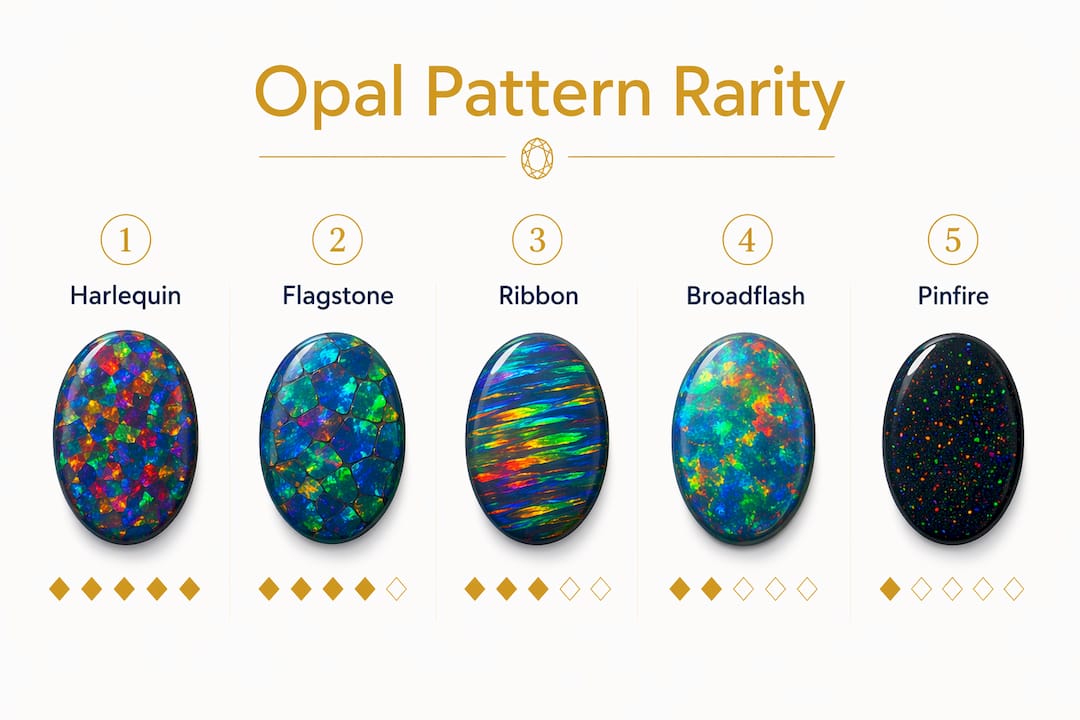
Play-of-color patterns are ranked by rarity, with Harlequin at the top, followed by Flagstone and Ribbon, then Broad Flash, Rolling Flash, Peacock, and Pinfire as the most common. That hierarchy directly shapes value. A stone with a true Harlequin pattern can be worth multiples of a comparable stone showing only pinfire.
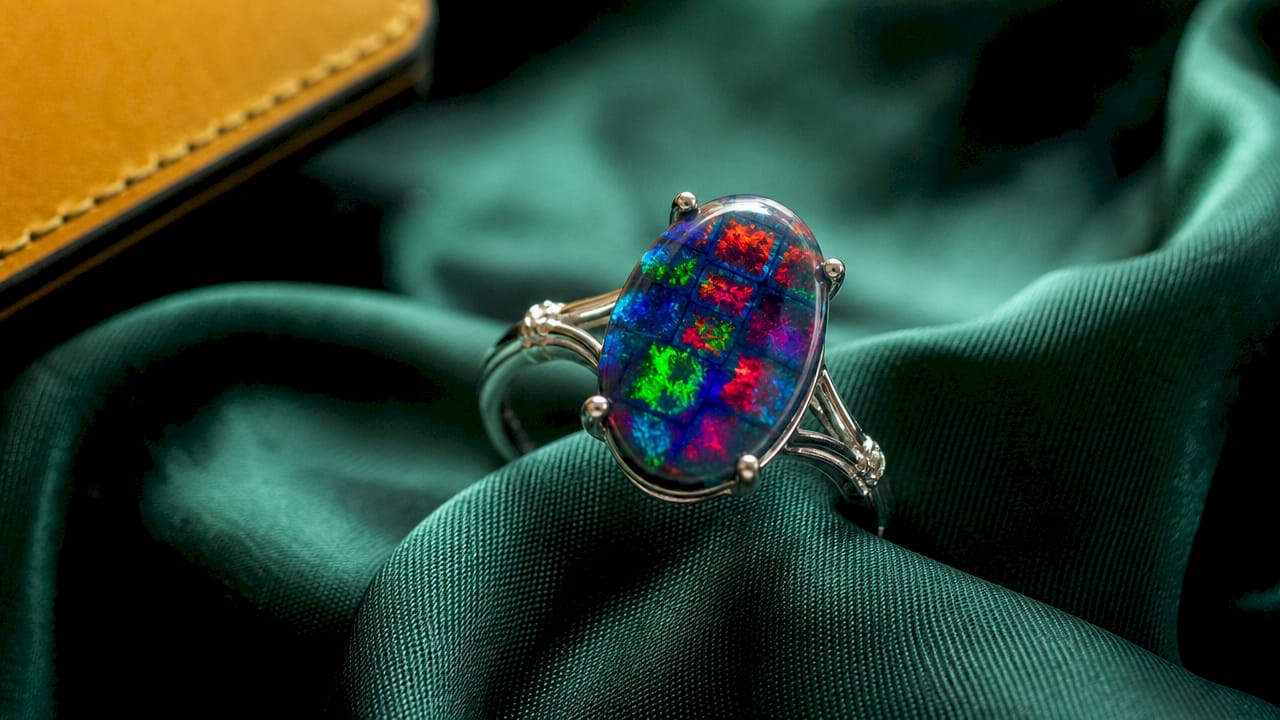
Harlequin
The opal harlequin pattern displays large, geometric, tessellated squares spread evenly across the entire stone face, resembling a mosaic or stained glass window. True Harlequin is extraordinarily rare. Most stones labeled “Harlequin” in the market show only irregular patches of color, which is a different and less valuable arrangement. A genuine Harlequin stone commands the highest prices in the opal world, particularly when the dominant color is red.
Broadflash and rolling flash
Broadflash shows large, sweeping sheets of color that cover most of the stone face. Rolling Flash produces similar broad color movement, but the sheets appear to roll or wave as the stone tilts. Both patterns are bold and visually dramatic, making them popular choices for statement jewelry pieces like cocktail rings and pendants.
Pinfire and peacock
Pinfire presents as a dense field of tiny, brilliant color points scattered uniformly across the stone. It is the most common pattern, yet a high-quality pinfire stone with vivid red points still carries real beauty. Peacock pattern combines blue and green tones in a broad, shimmering display, evoking the iridescent feathers of its namesake bird.
Flame, ribbon, and Chinese writing
Flame pattern shows streaks of color radiating from one side of the stone, like fire spreading across a dark sky. Ribbon pattern displays parallel bands of color running across the face. Chinese Writing presents fine, angular lines resembling brushstroke characters, a pattern that collectors find particularly captivating for its organic intricacy.
Pro Tip: Ask any seller to confirm which specific pattern name applies and why. If they cannot describe the geometric arrangement in detail, treat the label with skepticism.
Mislabeling is widespread, with many sellers applying “Harlequin” to stones that show only broad flash or patchy color. This leads buyers to overpay for lower-tier arrangements. Knowing the visual criteria for each pattern protects both your wallet and your design integrity.
How do you evaluate and identify opal patterns for jewelry?
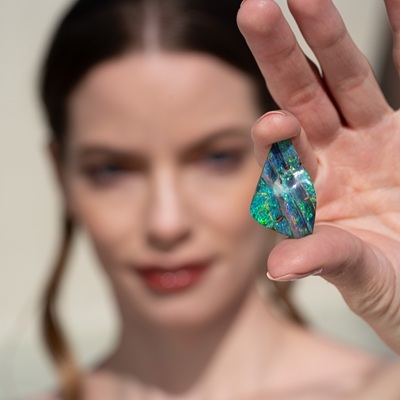
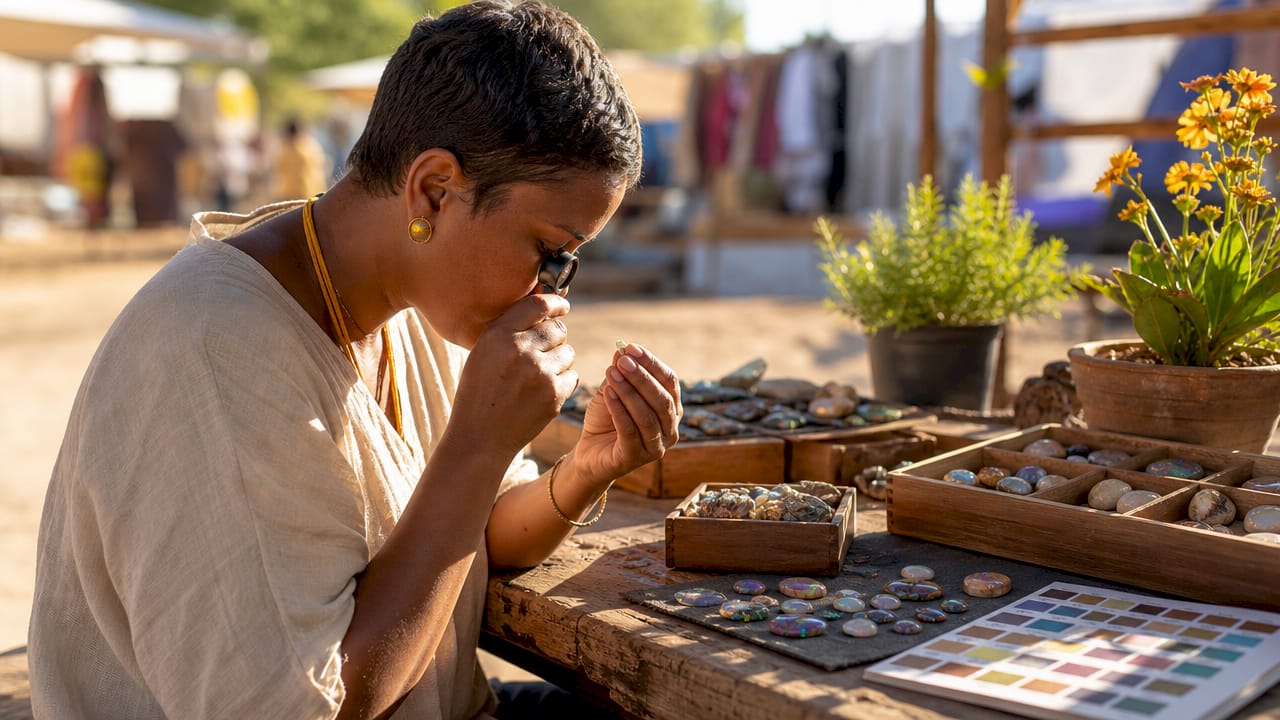
Evaluating an opal pattern requires more than a glance at a photograph. Video footage under multiple lighting conditions is more effective than static images for assessing pattern consistency, brightness, and coverage. Static photos frequently hide dead spots, areas where color vanishes entirely, misleading buyers and designers alike.
Follow these steps when assessing any stone:
- Check body tone first. Black opals from Lightning Ridge carry a dark body tone, rated N1 (jet black) on the industry scale, which intensifies color contrast and makes patterns appear more vivid. A pattern that looks spectacular on a dark stone may appear washed out on a lighter base.
- Assess full-face coverage. A high-quality pattern covers the entire stone face without large dead zones. Partial coverage reduces both aesthetic appeal and resale value.
- Watch the stone move. Roll the stone slowly under a single light source and observe whether the pattern holds its shape or fragments. Rolling Flash should flow; Harlequin blocks should remain distinct.
- Examine the girdle. Viewing the stone from the side reveals whether it is a solid natural opal, a doublet, or a triplet. Doublets and triplets show visible layers at the girdle edge. This step is the most reliable way to confirm you are buying a solid stone.
- Look for synthetic indicators. Synthetic opals often display a regular “lizard skin” pattern lacking the organic variation of natural stones. If the color grid looks too perfect and uniform, request a gemological certificate.
- Request a certificate for high-value stones. For any stone priced above a few hundred dollars, a GIA or Australian Opal Industry Association certificate confirms authenticity and pattern classification.
Pro Tip: Always ask for a short video clip of the stone rotating under natural daylight and again under a single artificial light. The two clips together reveal more than a dozen photographs.
Understanding opal value factors like pattern, brightness, and body tone together gives you a complete picture before any purchase decision.
How do opal patterns shape jewelry design?
Different patterns evoke entirely different moods, and matching the right arrangement to the right jewelry form is one of the most rewarding decisions a designer makes. A bold Harlequin or Broadflash stone carries enough visual weight to anchor a solitaire ring or a large pendant without any additional ornamentation. The pattern itself is the statement.
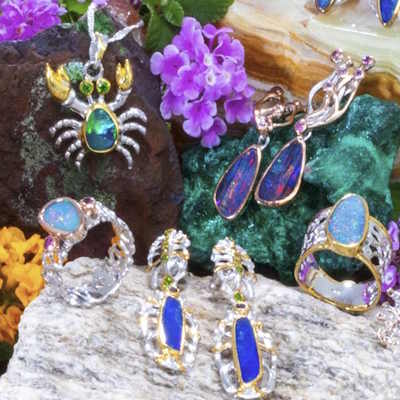
Pinfire and Chinese Writing patterns suit smaller settings beautifully. Their fine detail reads well in earrings and delicate pendants, where a large sweeping flash might feel overwhelming at that scale. The significance of opal in jewelry extends beyond aesthetics. Pattern rarity communicates exclusivity, making a piece feel genuinely one-of-a-kind to the wearer.
Designers working with Ethiopian hydrophane opals face a specific challenge. Hydrophane opals are porous and absorb water or oils, temporarily turning transparent or shifting color when wet. That “living” behavior is enchanting in theory but demands careful consideration in jewelry meant for daily wear. Rings and bracelets expose stones to moisture constantly. Pendants and earrings offer more protection.
Key design considerations by pattern type:
- Harlequin and Broadflash: Best in bezel or low-profile prong settings that protect the stone face while keeping the full pattern visible.
- Rolling Flash: Thrives in oval and freeform cuts that allow the color wave to travel across the stone’s natural contours.
- Pinfire: Works in any setting size; its fine detail remains visible even in small stones, making it ideal for accent stones in multi-gem designs.
- Flame and Ribbon: Directional patterns that reward careful orientation in the setting. Align the flame or ribbon to run along the length of a pendant for maximum visual impact.
Caring for opal jewelry preserves pattern brilliance over time. Proper opal care keeps the silica structure stable and the color play as vivid as the day the stone was set.
Key Takeaways
The opal pattern is the single most visually defining quality of any opal, and understanding its hierarchy, causes, and design applications separates informed collectors from casual buyers.
| Point | Details |
|---|---|
| Pattern drives value | Harlequin ranks highest in rarity and value; Pinfire is the most common and least prized. |
| Silica spheres create color | Sphere size and grid regularity determine which colors appear and how sharply patterns form. |
| Video beats photos | Always evaluate pattern consistency and coverage through video under multiple light sources. |
| Mislabeling is common | Many “Harlequin” stones are actually Broadflash; verify geometric criteria before purchasing. |
| Design match matters | Bold patterns suit large statement pieces; fine patterns like Pinfire excel in delicate settings. |
Why I think most buyers underestimate the pattern
People obsess over opal color, and color absolutely matters. But in my experience, pattern is the quality that determines whether a stone holds your attention for thirty seconds or thirty years. A vivid red flash on a patchy stone fades from memory quickly. A true Harlequin, even in muted tones, stays with you.
The market reflects this, though not always honestly. I have seen stones labeled Harlequin that were, at best, irregular Broadflash. The mislabeling is not always intentional, but it is pervasive enough that I recommend every serious buyer learn to identify the geometric criteria themselves rather than relying on a seller’s description alone.
Video evaluation changed how I assess stones entirely. A photograph can make a mediocre stone look spectacular and a spectacular stone look flat. Two minutes of video under daylight and a single lamp tells the real story. If a seller refuses to provide video, that is itself useful information.
One more thing: do not dismiss the emotional response a pattern creates. Rarity and geometry matter for valuation, but the stone you will treasure most is the one whose color play genuinely moves you. Rare opal patterns are worth studying not just for investment reasons but because they represent something nature produces once and never repeats. That is a profound thing to hold in your hand.
— Renee
Authentic opal patterns, sourced directly from Australia
Australianopaldirect works directly with miners from Lightning Ridge, Coober Pedy, and Queensland, which means the stones in their collection carry verified origins and honest pattern descriptions. No middlemen, no inflated labels.
Whether you are searching for a bold Broadflash stone for a statement ring or a delicate Pinfire gem for a pendant, Australianopaldirect’s curated selection spans the full spectrum of rare opal patterns and body tones. Each listing includes detailed photography and expert notes on pattern type and coverage. For collectors and designers who want to buy with confidence, their team offers personalized guidance on pattern selection, stone authenticity, and custom jewelry options. Browse the full collection at Australianopaldirect and find the arrangement that speaks to you.
FAQ
What is an opal pattern?
An opal pattern is the specific visual arrangement of play-of-color across a stone’s face, shaped by the internal silica sphere structure. Common pattern types include Harlequin, Broadflash, Rolling Flash, and Pinfire.
What is the rarest opal pattern?
The Harlequin pattern is the rarest, defined by large, geometric, mosaic-like squares covering the entire stone face. True Harlequin stones are rarely found on the market and command the highest prices.
How do black opal colors affect pattern visibility?
Black opals from Lightning Ridge carry a dark body tone that intensifies color contrast, making patterns appear sharper and more vivid. Stones rated N1 on the body tone scale produce the most dramatic color play.
How can I tell if an opal pattern is natural or synthetic?
Synthetic opals display a regular “lizard skin” pattern that lacks the organic variation of natural stones. Requesting a gemological certificate from the GIA or the Australian Opal Industry Association confirms authenticity.
Why is video better than photos for evaluating opal patterns?
Static photos often hide dead spots and limit visible play-of-color, while video under multiple lighting conditions reveals pattern consistency, brightness, and full-face coverage accurately.
Recommended
- What Is Opal Pattern? Complete Guide to Types and Value - Australian Opal Direct
- Rare Opal Patterns: Value, Identification, and Appeal - Australian Opal Direct
- Value Factors of Opal: What Drives Worth - Australian Opal Direct
- Meaning of Opal Colors: Complete Guide for Collectors - Australian Opal Direct