Protect Your Opal: Bracelet Sizing for Buyers, 1/4–3/4 Inch Ease
Posted by AOD on 27th Sep 2026
Protect Your Opal: Bracelet Sizing for Buyers, 1/4–3/4 Inch Ease

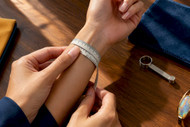
The number that matters is your wrist’s inside circumference, not its diameter, measured with a soft tape just below the wrist bone. Add a quarter inch for a snug fit, half an inch for a standard fit, or three quarters of an inch for a loose, drapey feel, though tennis and line bracelets prefer a closer quarter to half inch so the stones stay put. Because opal carries a softer, more delicate nature than diamond or sapphire, favor bezel or other protective settings, and never force a fit that presses or bends against the stone.
TL;DR:
- Opal’s softer, more delicate nature requires slightly larger sizing to prevent pressure points and reduce the risk of chips or cracks.
- Protective settings like bezels are essential for opal bracelets, especially for irregular or solid stones, to shield the edges from everyday impacts.
- Accurate wrist measurement involves measuring the inside circumference just below the wrist bone with a soft tape or string, avoiding diameter-based shortcuts.
- For tennis and line bracelets, adding only a quarter to half inch of ease improves stone alignment and minimizes stone rotation, while cuffs and bangles need to pass over the hand comfortably.
- If a bracelet slips off easily or requires significant force to remove, it should be resized or returned to ensure proper fit and protection for the opal.
Table of Contents
- How to measure your wrist for a bracelet
- Turning your wrist measurement into a bracelet length
- How the bracelet style changes your ideal size
- What makes opal sizing different from other gemstones
- Measuring your hand for bangles and cuffs
- Quick fit checks if something feels off
- Getting the balance right between fit and protection
- How Australian Opal Direct helps you get the fit right
- Where these sizing and durability facts come from
- FAQ
How to measure your wrist for a bracelet
Two simple tools will get you an accurate number: a soft tailor’s measuring tape, or a length of string paired with a ruler. Either works, provided you read the correct measurement and resist the urge to rush.
- Wrap the tape just below your wrist bone, toward the hand, where a bracelet would naturally rest.
- Keep your wrist relaxed, not flexed or tensed, since a clenched wrist reads smaller than a resting one.
- If using string, mark where it meets itself, then lay it flat against a ruler to get an exact inch or millimeter reading.
- For a bracelet you already own and love the fit of, close the clasp, lay the piece flat in a circle, and measure the inside edge from end to end, clasp included.
The most common mistake is measuring the diameter across the wrist and doubling it. Band thickness, clasp hardware, and the natural curve of a wrist all throw that shortcut off, so an inside-loop reading is the only reliable path to an accurate opal jewelry sizing tip. Read the inner loop, not the outer edge of the tape, and you will land close to true every time.
Turning your wrist measurement into a bracelet length
Once you have a wrist number, the next step is matching it to a listed bracelet length, and this is where a simple opal size chart earns its keep. Product listings usually show inches, sometimes millimeters, so having both on hand avoids guesswork at checkout.
A 6.5 inch wrist calling for a standard fit lands at 7 inches, which happens to be the benchmark length most women’s bracelets are built around, the same way 8 inches anchors most men’s standard sizing. One detail the chart cannot capture on its own: band height changes how a bracelet actually feels. A wide, chunky band sits tighter against the wrist than a slim chain of the same inside circumference, so if your opal piece has a substantial setting or a thick band, lean toward the next size of ease rather than the smallest.

How the bracelet style changes your ideal size
Not every bracelet wears its length the same way, and opal pieces in particular reward a little extra thought about construction before you settle on a number.
- Chain and clasp bracelets follow the straightforward rule: measure inside circumference, then add your chosen ease, snug, standard, or loose.
- Tennis and line bracelets, where stones sit edge to edge, do best with a closer quarter to half inch of ease, since too much slack lets the piece rotate and grind stone against skin.
- Cuffs are sized by their opening, and the goal is a piece that slips over the hand without any bending of the metal, since forcing a cuff open stresses both the setting and any opal it holds.
- Bangles are sized to the hand, not the wrist, with the thumb tucked in to find the widest point it must clear, a detail covered fully below.
- Wider bands of any style read tighter than slim ones at the same circumference, so add a touch more ease when the setting has real presence.
What makes opal sizing different from other gemstones
Opal asks for a gentler approach than harder stones, and its own mineral makeup explains why. On the Mohs scale opal typically falls between 5 and 6.5, and its toughness, how well it resists chipping and cracking under impact, is generally rated fair to poor by gemological standards. That combination means a bracelet sized too tightly, or knocked against a hard surface, puts real stress on a stone that cannot always absorb it.
- Protective settings such as bezels shield the stone’s edges and table from the everyday bumps a bracelet inevitably takes.
- Solid opals are frequently cut in irregular shapes and often call for a setting custom-built around that particular stone, rather than a standard mounting.
- Triplets, thin laminated slices of opal bonded to a backing and topped with a dome, are far more often cut to calibrated dimensions, which lets them fit mass-produced settings with less custom work.
- When a setting is delicate or a stone unusually shaped, sizing slightly larger reduces the contact and pressure points that lead to chips over time.
- Fit and care go hand in hand: a bracelet that presses against the wrist or catches on doorframes puts an opal at far more risk than one that moves freely.
Opal’s toughness is generally rated fair to poor on gemological hardness scales, which is the practical reason protective settings matter more here than with harder gemstones.
Measuring your hand for bangles and cuffs
Bangles and cuffs do not follow wrist sizing at all. They need to clear your hand, so the hand itself is what you measure.
- Tuck your thumb into your palm and wrap a tape around the widest part of your hand, across the knuckles.
- Record that number and compare it against a bangle’s stated inner circumference or inner diameter, since it must be equal to or slightly larger than your hand measurement to pass over comfortably.
- To check a bangle you already own, measure its inner diameter directly, then note whether it currently fits with room to spare or barely slides on.
- For cuffs, test the opening against your wrist before buying, and never bend the metal to force a fit, since that stresses both the band and any stone it carries.
When you are between two sizes, size up. A bangle that is a touch loose is far safer for an opal than one you have to coax over your knuckles.
Quick fit checks if something feels off
A few fast tests tell you whether a bracelet is sized right, and each style has its own version of the check.
- The one-finger test: for chain bracelets, you should be able to slide one finger comfortably between the band and your wrist.
- The movement test: the bracelet should shift slightly when you move your hand, not spin freely or dig in.
- If a tennis or line bracelet is between sizes, choose the snugger option to stop stones from rotating against each other.
- If a bangle is between sizes, size up for a safe, comfortable pass over the hand.
- Temporary fixes like extenders or removable links buy you flexibility, while a rigid cuff or bangle usually needs a jeweler’s professional resizing instead.
Pro Tip: If a bracelet slips off on its own or needs real force to remove, treat that as a return or resizing situation rather than something to “wear in.”
Getting the balance right between fit and protection
Every recommendation here comes back to one idea: measure the inside loop carefully, then let opal’s softer nature guide how much ease and protection you choose. A calibrated triplet in a well-made setting tolerates standard sizing rules just fine, but a rare solid opal, irregular and one of a kind, is often worth a conversation with a jeweler before it goes on a bracelet at all. Custom settings and thoughtful sizing protect a stone that took millions of years to form.
— Renee
How Australian Opal Direct helps you get the fit right
Fit matters more with opal than with almost any other gemstone, and that is exactly where working directly with people who handle these stones every day pays off. Custom hand-crafted opal jewellery services build settings around the individual stone rather than forcing a solid opal into a standard mount, which matters most for irregularly cut pieces that need room to breathe.

- Custom settings designed around each opal’s shape, reducing the pressure points that cause chips over time.
- Insurance and a warranty on pieces you buy.
- Free shipping on orders, with a curated range of ready-to-wear opal bracelets in standard lengths for those who want an easier starting point.
If your opal is a calibrated triplet, browse the bracelet collection directly. If you are working with a rare solid stone that needs a bespoke fit, start with custom hand-crafted opal jewellery and let the setting be built around your stone, not the other way around.
Where these sizing and durability facts come from
- GIA’s opal guidance on hardness, toughness, and protective settings.
- Geoscience Australia’s mineral facts on opal construction and calibration.
- Sizely and Jewelers Mutual bracelet measurement guides.
- Related reading: doublet vs. triplet opal and opal jewelry care.
FAQ
How do I know which size bracelet to get?
Measure your wrist’s inside circumference with a soft tape, then add a quarter inch for snug, half an inch for standard, or three quarters of an inch for a loose fit. Tennis and line bracelets fit best with less ease, closer to a quarter to half inch, so the stones stay aligned.
Who should not wear opal?
Opal suits most wearers, but anyone with a very active lifestyle involving frequent impacts, heavy manual work, or contact sports should be extra cautious with any opal bracelet, given the gem’s fair to poor toughness rating. Choosing a protective bezel setting and removing the piece before rough activity lets far more people wear opal safely.
Should I get a 6.5 or 7 inch bracelet?
That depends on your measured wrist size and desired ease, not a universal rule. A 6.5 inch wrist typically calls for a 7 inch bracelet at a standard fit, while a smaller wrist closer to 6 inches would land at 6.5 inches for that same standard feel.
What is the normal wrist size for a bracelet?
Most bracelet lines are built around a 7 inch standard length for women and an 8 inch standard length for men, since those figures reflect common wrist measurements plus standard ease. Your own wrist may fall above or below that, so a direct measurement is always more reliable than assuming the average applies to you.








