Gemological Reports Explained for Gem Collectors
Posted by AOD on 30th Jun 2026
Gemological Reports Explained for Gem Collectors
TL;DR:
- A gemological report is an independent document that details a gemstone’s physical and chemical traits, ensuring objectivity. It includes information on species, measurements, color, clarity, and treatments, which directly impact a stone’s value. Verifying the report through the issuing lab’s database is essential for accurate identification, valuation, and fraud prevention.
A gemological report is an independent laboratory document that details a gemstone’s physical and chemical attributes, including species, weight, color, clarity, and any treatments applied. The industry deliberately uses the word “report” rather than “certificate” to avoid implying a warranty or price guarantee. This distinction matters deeply for collectors and buyers who need objective facts, not marketing language. Understanding what a gemological report contains, how it is produced, and what it cannot tell you is the foundation of confident gemstone ownership.
What does a gemological report include?
A gemological report documents the objective, measurable facts about a stone. It does not rate beauty or assign a price. Every reputable report covers a consistent set of parameters that allow buyers, insurers, and resellers to speak the same language about a gemstone.
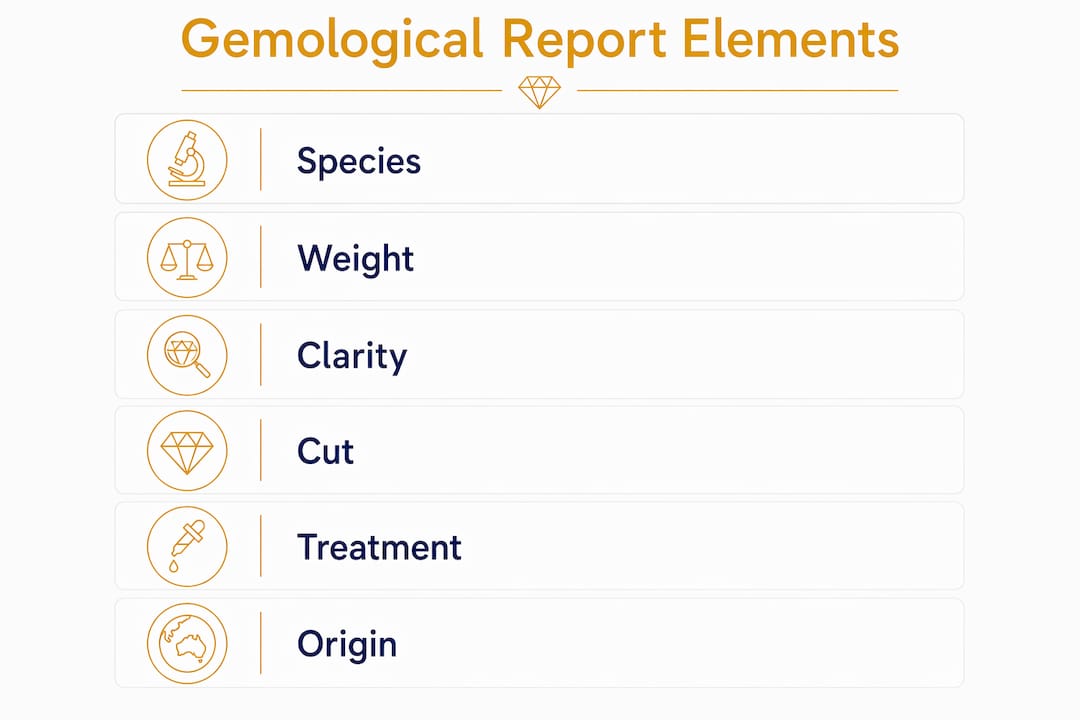
The core contents of a standard report include:
- Species and variety: The scientific identification of the stone, such as “corundum, variety ruby” or “opal, variety black opal.”
- Measurements: Length, width, and depth recorded in millimeters.
- Carat weight: The precise mass of the stone, measured to two decimal places.
- Color description: A neutral, technical description of hue, tone, and saturation.
- Clarity observations: Notes on inclusions, fractures, or surface features observed under magnification.
- Treatment disclosure: Any heat treatment, fracture filling, coating, or other enhancement applied to the stone.
- Geographic origin (select reports): Some high-end reports include a country of origin determination, which carries significant price implications for rubies, sapphires, and emeralds.
Treatment disclosure is arguably the most consequential section. Treatment status can drive price variation of up to 800% between an untreated stone and a heavily treated one of the same species. That figure alone explains why collectors should never purchase a significant stone without a current, verified report.
Pro Tip: Ask the seller whether the report covers origin determination. For stones like Kashmir sapphires or Burmese rubies, origin can double or triple the price. For Australian opals from Lightning Ridge or Coober Pedy, provenance documentation from a trusted source like Australianopaldirect carries equivalent weight.
| Report element | What it tells you |
|---|---|
| Species and variety | Confirms the stone is what the seller claims it is |
| Carat weight | Establishes the precise mass for pricing and insurance |
| Treatment disclosure | Reveals any enhancements that affect value and durability |
| Color description | Provides a neutral reference for comparison and resale |
| Geographic origin | Indicates provenance, which affects premium pricing for select species |
How are gemstones examined and verified in gemological reports?
Laboratory verification is a multi-step forensic process. No single test identifies a gemstone completely. Reputable labs combine several methods to build a complete picture of the stone’s identity and history.
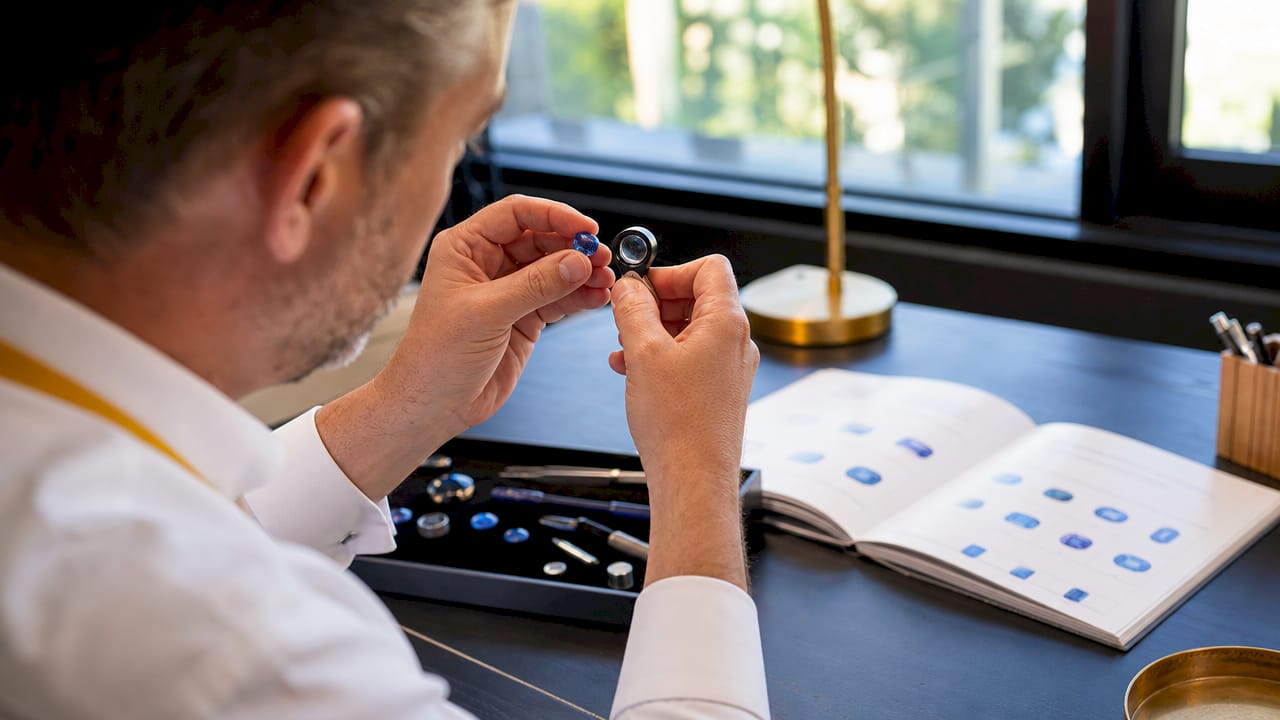
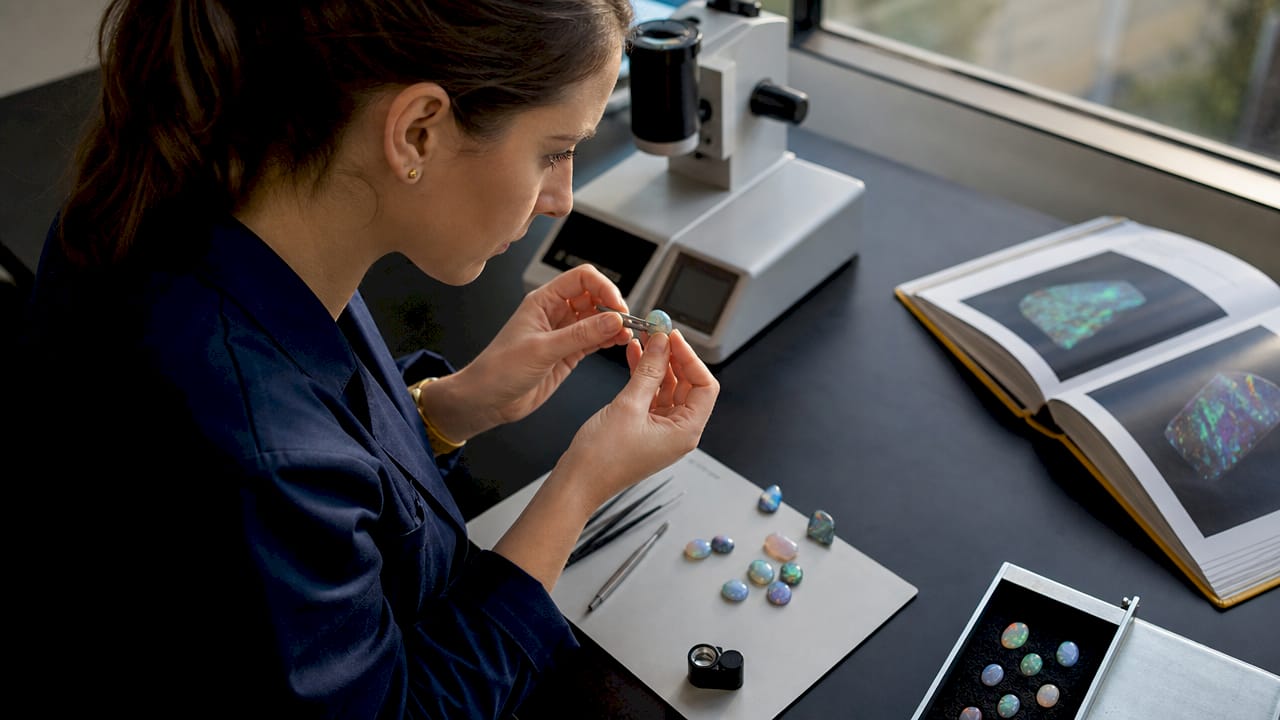
Standard gemological procedures involve measuring carat weight, analyzing inclusions under microscopes, and assessing optical properties with specialized instruments. Each method targets a different aspect of the stone’s character.
The primary examination tools include:
- Microscope analysis: Gemologists study inclusions, growth structures, and fracture patterns at magnifications of 10x to 60x. Natural stones, synthetics, and simulants each leave distinct internal fingerprints.
- Refractometer: This instrument measures the refractive index, which is the speed at which light bends through the stone. Every gem species has a characteristic refractive index range, making this one of the most reliable identification tools.
- Spectroscope: Spectral analysis reveals how a stone absorbs light at specific wavelengths. This identifies the chromophores responsible for color and can detect certain treatments, such as beryllium diffusion in sapphires.
- Inclusion mapping: Some labs produce detailed diagrams or photographs of a stone’s internal features. This creates a unique fingerprint that can confirm the stone matches its report years later.
- Specific gravity measurement: The density of a stone, measured by comparing its weight in air to its weight in water, provides another species confirmation data point.
The Gemological Institute of America (GIA) is widely recognized for standardizing these methodologies across the industry. Labs like GIA apply rigorous, repeatable protocols that make their reports trusted anchors in high-value transactions. Lesser-known labs may use fewer instruments or less experienced staff, which is why the issuing laboratory’s reputation matters as much as the report itself.
Pro Tip: When reviewing a report, check whether the lab lists the specific instruments used. A credible report names the methods applied, not just the conclusions reached. Vague language like “examined by qualified gemologists” without instrument details is a warning sign.
Why is a gemological report important for buyers and collectors?
A gemological report serves four concrete purposes for anyone acquiring a significant gemstone.
- Fraud prevention. A report from an independent lab confirms the stone’s identity and treatment status before money changes hands. Independent lab reports are one of the few honest anchors in the gemstone trade, objectively proving identity and treatment status where seller claims cannot be verified.
- Pricing accuracy. Treatment status, species confirmation, and origin data directly affect market value. A report gives buyers the factual basis to evaluate whether a price is fair.
- Insurance and resale support. Insurers require documented evidence of a stone’s identity and quality to write a policy. Resellers and auction houses use reports to establish provenance and set reserve prices. Opal insurance coverage depends on accurate documentation of the stone’s characteristics.
- Counterfeit detection. Forged reports exist. Verifying a report number on the issuing laboratory’s official website is the only reliable method to rule out forged or invalid documents.
“Buyers are encouraged to use reports as objective anchors and confirm the report matches the stone and lab entry before finalizing a transaction.” — gemological industry guidance
The verification step is non-negotiable. A report that cannot be confirmed on the lab’s database is worthless, regardless of how official it appears. Collectors who authenticate Australian opals before purchase protect both their investment and their peace of mind.
Common misconceptions and cautions about gemological reports
Several persistent misunderstandings cause buyers to either over-rely on reports or dismiss them entirely. Neither response serves the collector well.
The most common misconceptions include:
- Reports assess beauty. They do not. Gemological reports are strictly factual and neutral. A report will not tell you whether a stone’s color is attractive or whether its proportions are pleasing. Those judgments remain entirely subjective.
- Reports and appraisals are the same document. They are not. A certificate describes objective facts while an appraisal estimates monetary value. Confusing them leads to misunderstanding of what a document actually proves. An appraisal without a report is an opinion. A report without an appraisal is a fact sheet.
- Any lab report is trustworthy. Lab credibility varies significantly. Reports from lesser-known labs may lack the rigor needed for investment-grade stones. GIA, along with a small number of other internationally recognized labs, sets the standard that serious collectors rely on.
- Every stone needs a report. Certification costs should be weighed against the stone’s value. A mass-market stone worth less than a few hundred dollars may not justify the expense. Reports make the most sense for stones where treatment or identity significantly affects price.
Pro Tip: Always cross-reference the report number with the issuing lab’s online verification database before completing a purchase. This single step eliminates the risk of counterfeit documentation and takes less than two minutes.
One additional caution applies to collectors who distinguish opal origins for provenance purposes. Origin claims on reports for opals are less standardized than for rubies or sapphires. Buyers should seek sellers with direct-miner relationships and transparent sourcing records to supplement what a report can confirm.
Key takeaways
A gemological report is a forensic identity document, not a valuation or beauty assessment, and verifying it against the issuing lab’s database is the only way to confirm its authenticity.
| Point | Details |
|---|---|
| Reports describe facts, not value | A gemological report states species, weight, and treatments. It does not assign a price or rate beauty. |
| Treatment disclosure drives price | Treatment status can shift a stone’s price dramatically, making this the most consequential section of any report. |
| Lab reputation matters | Reports from internationally recognized labs like GIA carry far more market credibility than those from unknown sources. |
| Verify the report number | Always confirm the report number on the issuing lab’s official database before completing a purchase. |
| Reports support insurance and resale | Documented gemstone identity is required for insurance policies and strengthens resale and auction transactions. |
My take on using gemological reports as a collector
Collectors often treat gemological reports as the final word on a stone’s worth. I understand the impulse. After years of working with gemstones, I have seen how a crisp, official-looking document can create a sense of certainty that the stone itself cannot always provide. But a report is a starting point, not a verdict.
The most useful thing a report does is narrow the conversation. When you know a stone is an untreated natural opal from a verified source, you can focus your attention on the qualities that matter to you personally: the play-of-color, the depth of the fire, the way light moves across its surface. The report handles the forensic work so you can engage with the stone as a collector, not a detective.
What I have found is that the combination of a credible report and a personal inspection is far more powerful than either alone. A report tells you what a stone is. Your own eyes tell you whether it moves you. Neither replaces the other. For collectors building a serious collection, smart collecting practices always pair objective documentation with personal discernment.
One thing I push back on is the idea that a report from a lesser-known lab is “better than nothing.” In some cases, it is actively misleading. A report that uses vague language, omits treatment disclosures, or cannot be verified online gives buyers false confidence. That is worse than having no report at all, because it stops you from asking the right questions.
Use reports from labs you can name and verify. Treat them as the floor of your due diligence, not the ceiling.
— Renee
Authentic gemstones, transparent sourcing at Australianopaldirect
Collectors who understand gemological reports know that documentation is only as good as the source behind it.

Australianopaldirect sources its opals directly from miners in Lightning Ridge, Coober Pedy, and Queensland, cutting out intermediaries and maintaining full transparency about each stone’s origin. Every piece in the collection reflects a commitment to authenticity that no amount of paperwork alone can substitute. Collectors can explore genuine Australian opals with the confidence that provenance, quality, and ethical sourcing are built into every transaction. For buyers who want both the beauty of a world-class opal and the peace of mind that comes from verified origins, Australianopaldirect is the place to start.
FAQ
What is a gemological report in simple terms?
A gemological report is an official document from an independent laboratory that describes a gemstone’s species, weight, color, clarity, and any treatments applied. It confirms what a stone is but does not assign a market price.
How is a gemological report different from a jewelry appraisal?
A gemological report states objective physical facts about a stone, while an appraisal estimates its monetary value. These are separate documents that serve different purposes and should not be used interchangeably.
Can a gemological report be faked?
Yes, forged reports exist. The only reliable way to confirm a report’s authenticity is to verify the report number directly on the issuing laboratory’s official website before completing any purchase.
Do all gemstones need a gemological report?
Not every stone justifies the cost of certification. Reports are most valuable for stones where treatment status or species identity significantly affects price, such as high-value opals, rubies, sapphires, and emeralds.
Which labs produce the most trusted gemological reports?
The Gemological Institute of America (GIA) is the most widely recognized laboratory for standardized gemological reporting. A small number of other internationally respected labs meet comparable standards for investment-grade stones.
Recommended
- Explaining Gemstone Diversity: A Collector’s Guide - Australian Opal Direct
- Luxury gemstone standards explained: Expert guide for collectors - Australian Opal Direct
- Master opal collector terminology: 5 essential terms - Australian Opal Direct
- Top gemstone collecting tips for ethical and smart choices - Australian Opal Direct