What is opal carat weight? A guide to opal value
Posted by AOD on 21st Mar 2026
What is opal carat weight? A guide to opal value
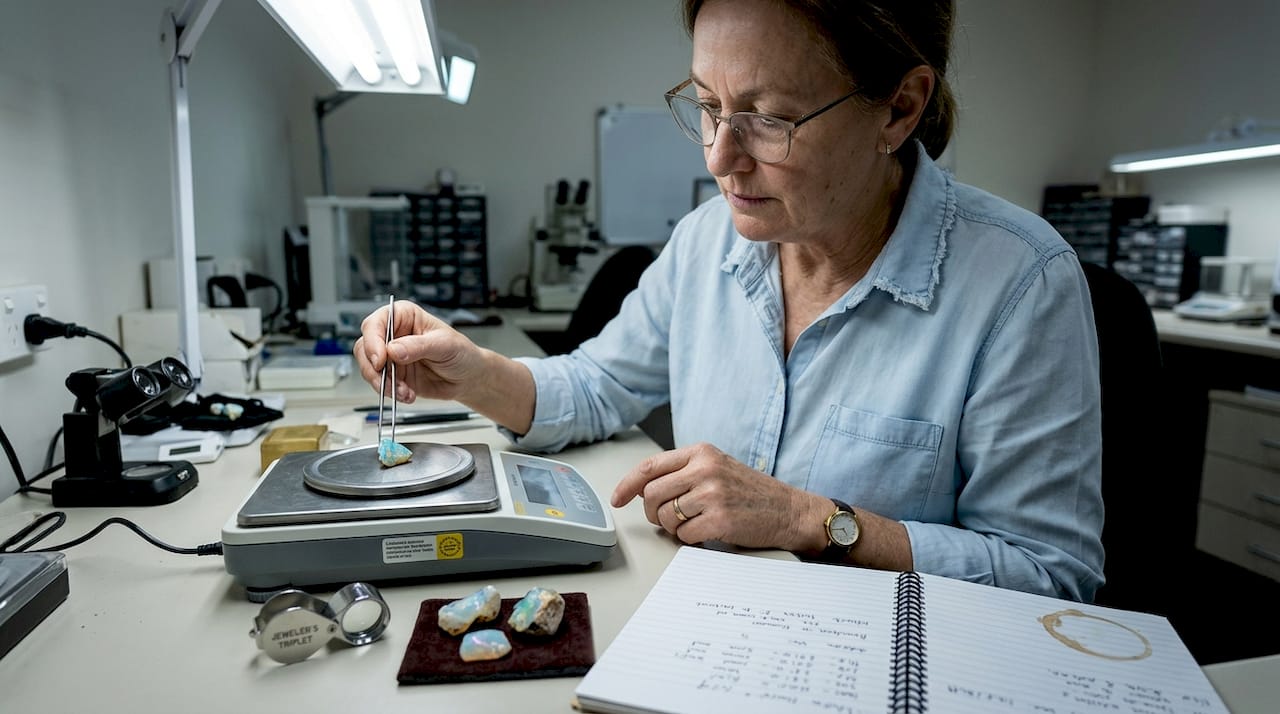
Many collectors assume a heavier opal automatically means a larger, more valuable gemstone. This misconception leads to confusion when evaluating Australian opals, where two stones with identical carat weights can differ dramatically in size and price. Carat weight measures mass, not dimensions, and understanding this distinction is essential for authenticating and valuing high-quality opals. This guide demystifies opal carat weight, explaining how it relates to size, density, and true market value. You’ll learn to assess Australian opals like a connoisseur, avoiding common pitfalls and recognizing genuine quality beyond simple weight measurements.
Table of Contents
- Key takeaways
- Understanding opal carat weight: measurement and basics
- Why opal carat weight and size don’t always match visually
- How carat weight impacts Australian opal valuation
- Authenticating opal carat weight and avoiding valuation pitfalls
- Explore genuine Australian opals with confidence
- Frequently asked questions
Key Takeaways
| Point | Details |
|---|---|
| Carat measures mass | Carat weight measures mass, not dimensions, so two stones of identical carats can look very different in size. |
| Density drives size | Two opals with the same carat can have different face up sizes due to internal water content and porosity affecting density. |
| Certification matters | Always verify weight on calibrated scales and request documents showing precise carat weight and millimeter dimensions for transparency. |
| Type density differences | Density varies by formation and host rock, so a 3 carat black opal can appear smaller than a 3 carat boulder opal. |
| Cut affects apparent size | Shape and dome height change face up size, so two equal weight opals can look different based on cut. |
Understanding opal carat weight: measurement and basics
Opal carat weight measures mass in carats, where 1 carat equals exactly 200 milligrams or 0.2 grams. Gemological laboratories and dealers use precision digital scales calibrated to 0.01 carat increments, ensuring accuracy for valuation and certification. This standardized measurement system allows collectors worldwide to compare opals objectively, regardless of their visual appearance or cutting style.
The critical distinction separating carat weight from size confuses many buyers. Weight measures only mass, while size refers to physical dimensions measured in millimeters. An opal’s density and specific gravity determine how much space a given mass occupies. Two opals weighing exactly 2.5 carats can measure dramatically different dimensions depending on their internal structure and water content. A typical 10x8 mm oval opal ranges around 2 to 3 carats by weight, but this varies based on dome height and density.
Density variations stem from opal’s unique formation process. Australian opals form when silica-rich water permeates underground cavities, creating structures with varying water content and porosity. Precious opal contains 3 to 21 percent water by weight, affecting its specific gravity between 1.98 and 2.25. Denser opals with lower water content weigh more for their size, while more porous specimens appear larger at equivalent weights.
Pro Tip: When assessing an authentic Australian opal, always verify weight on calibrated scales and never rely on visual size estimates alone. Request certification documents showing precise carat weight alongside millimeter dimensions for complete transparency.
Why opal carat weight and size don’t always match visually
Specific gravity differences create surprising size variations among opals with identical carat weights. Black opals from Lightning Ridge typically exhibit higher density than lighter boulder opals from Queensland, meaning a 3-carat black opal appears noticeably smaller than a 3-carat boulder opal. This density variation stems from different formation environments and host rock interactions during the opals’ creation millions of years ago.
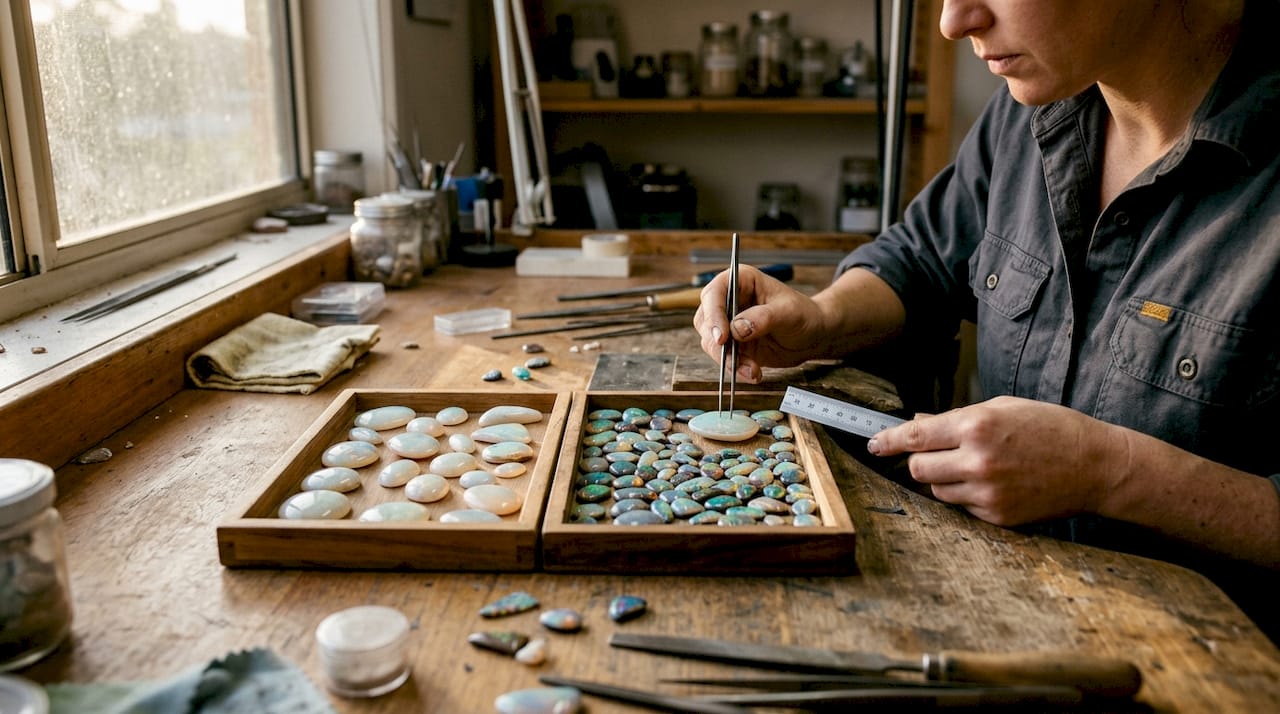
Shape and cutting style dramatically influence face-up size perception beyond actual weight. A shallow-cut opal with a low dome spreads its mass across a wider surface area, appearing larger than a high-domed stone of equal weight. Calibrated cuts designed to specific millimeter dimensions sacrifice some weight for standardized sizing, while freeform natural shapes maximize carat weight retention. Cutters balance these factors based on the rough opal’s characteristics and intended market.
The relationship between dimensions and weight varies significantly across opal types:
| Opal type | Typical density | 10x8mm oval weight range | Visual characteristics |
|---|---|---|---|
| Black opal | 2.10-2.20 | 2.8-3.2 carats | Compact, high dome, smaller face-up |
| Crystal opal | 2.00-2.10 | 2.3-2.7 carats | Moderate dome, balanced proportions |
| Boulder opal | 2.15-2.25 | 3.0-3.5 carats | Includes ironstone, variable thickness |
| White opal | 1.98-2.08 | 2.2-2.6 carats | Lower density, larger appearance |
These variations matter significantly when evaluating opal value factors beyond simple weight. A buyer expecting a certain visual size based solely on carat weight may receive a smaller-appearing stone if it’s denser. Conversely, a larger-looking opal might weigh less than anticipated due to lower density or shallow cutting.
Pro Tip: Compare both weight and millimeter dimensions when purchasing opals. A 3-carat stone measuring 12x10mm offers different value than a 3-carat stone measuring 10x8mm, even though the weights match exactly. Request detailed measurements for informed decisions.
How carat weight impacts Australian opal valuation
Price per carat increases exponentially rather than linearly as opal size grows, assuming consistent quality. A flawless 5-carat black opal commands far more than five times the price of a comparable 1-carat stone because larger high-quality specimens are exponentially rarer. Common Australian opals range from 1 to 3 carats, while stones exceeding 5 carats enter rare territory. Museum-quality collector pieces over 30 carats represent extraordinary finds commanding premium multiples.
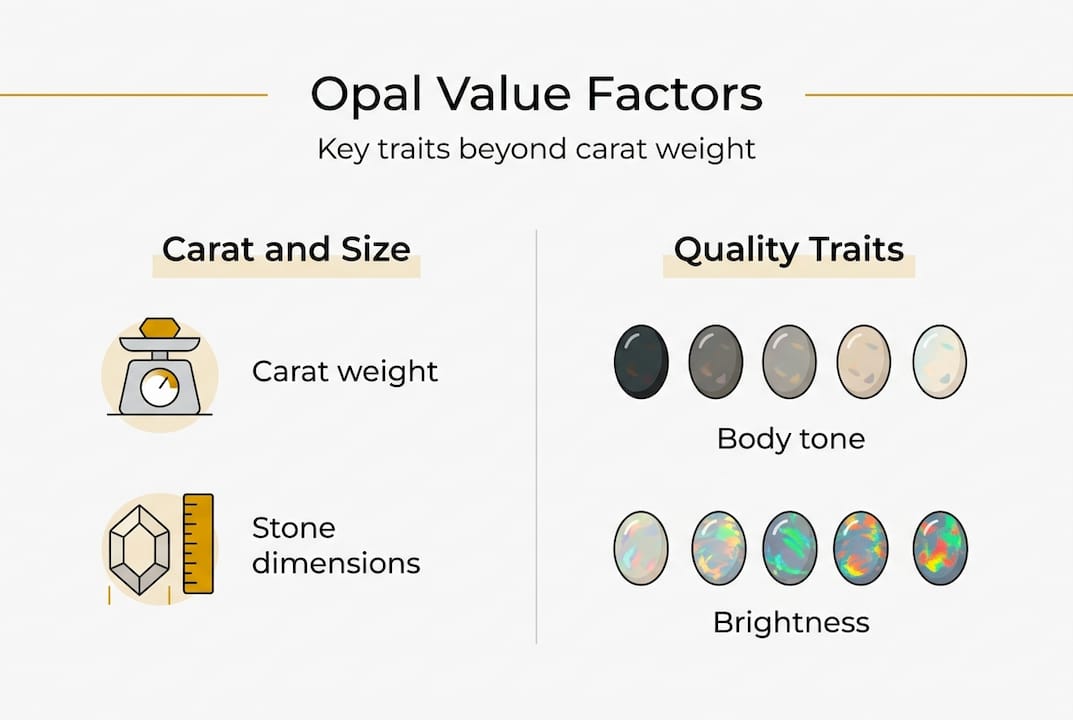
Body tone forms the foundation of opal valuation alongside carat weight. The N1 through N9 scale rates darkness, with N1 representing jet black and N9 indicating white or milky tones. Darker body tones typically command higher prices because they provide superior contrast for color play. A 2-carat N1 black opal generally outvalues a 2-carat N7 light opal by substantial margins, even with identical brightness and pattern.
Brightness measures color play intensity using the B1 through B7 scale, where B1 indicates the most brilliant fire. This factor multiplies base value significantly because vivid color play defines precious opal’s appeal. Pattern rarity adds another valuation layer, with harlequin, Chinese writing, and ribbon patterns commanding premiums over common pinfire. Provenance from renowned fields like Lightning Ridge or Coober Pedy further influences pricing through collector demand and historical significance.
| Quality grade | 1-2 carat range | 3-4 carat range | 5-10 carat range | Premium factors |
|---|---|---|---|---|
| Investment (N1-N2, B1-B2) | $2,000-$5,000/ct | $4,000-$12,000/ct | $10,000-$30,000/ct | Rare pattern, provenance |
| Premium (N3-N4, B2-B3) | $800-$2,000/ct | $1,500-$4,000/ct | $3,500-$10,000/ct | Good brightness, minimal flaws |
| Quality (N5-N6, B3-B4) | $300-$800/ct | $500-$1,500/ct | $1,200-$3,500/ct | Attractive color, standard patterns |
| Commercial (N7-N9, B4-B7) | $50-$300/ct | $100-$500/ct | $250-$1,200/ct | Basic color play, common patterns |
Professional opal valuation follows a systematic methodology combining all factors:
- Measure precise carat weight using calibrated scales to establish base mass
- Assess body tone on the N-scale under standardized lighting conditions
- Evaluate brightness and color play intensity using the B-scale classification
- Identify pattern type and calculate rarity multipliers for exceptional formations
- Inspect for flaws including cracks, crazing, potch lines, or sand inclusions
- Verify provenance and authentication to confirm natural Australian origin
- Calculate base price per carat using quality grade and size rarity factors
- Multiply price per carat by total carat weight for preliminary valuation
- Apply market adjustments for current demand, rarity premiums, and collector interest
- Document all factors affecting final value for certification and resale transparency
This comprehensive approach prevents overvaluation based solely on weight while capturing the full spectrum of quality attributes that distinguish exceptional Australian opals from ordinary specimens.
Authenticating opal carat weight and avoiding valuation pitfalls
Water-soaked opals represent a deceptive practice artificially inflating weight measurements. Unscrupulous sellers immerse porous opals in water before weighing, temporarily increasing mass by 5 to 15 percent while simultaneously masking surface cracks and improving color appearance. This absorbed water evaporates over weeks or months, reducing the stone’s actual weight and revealing previously hidden flaws. Collectors who purchase based on inflated weights discover they overpaid once the opal reaches equilibrium moisture content.
Crazing and cracking devastate opal value regardless of carat weight. Surface cracks reduce value by 80 to 90 percent even in otherwise high-quality stones because they compromise structural integrity and aesthetic appeal. These flaws often develop from dehydration, thermal shock, or mechanical stress during cutting. A 5-carat opal with visible crazing may sell for less than a flawless 2-carat specimen of similar quality, demonstrating how condition overrides weight considerations.
Doublets and triplets combine thin precious opal layers with backing materials, creating composite stones with deceptive total carat weights. A doublet bonds opal to a dark backing like black potch or vitrolite, while triplets add a protective crystal or glass cap. The total weight includes all layers, but only the thin opal slice provides actual value. A 3-carat triplet might contain just 0.5 carats of precious opal, making the weight measurement misleading for valuation purposes.
Small flawless opals frequently command higher total prices than larger flawed specimens despite lower carat weights. A pristine 2-carat N2 black opal with brilliant B1 color play outvalues a 4-carat N4 stone with visible inclusions and moderate brightness. Quality trumps quantity in the premium opal market, where connoisseurs prioritize perfection over size. This principle protects collectors from the misconception that heavier automatically means more valuable.
Authentication and weight verification require multiple checks:
- Examine under 10x magnification for composite construction, glue lines, or backing materials
- Test with immersion in water to identify doublets (backing visible) versus solid opals
- Weigh on precision scales calibrated to 0.01 carat increments before and after cleaning
- Inspect for crazing using bright lighting at multiple angles to reveal fine surface cracks
- Verify natural color play by rotating the stone and observing consistent internal diffraction
- Request certification from recognized gemological laboratories documenting weight and authenticity
- Check provenance documentation linking the opal to specific Australian mining regions
- Compare weight to dimensions using density calculations to identify anomalies
Pro Tip: Use magnification and immersion testing alongside weight verification to confirm natural solid opals. Reputable dealers provide detailed specifications including pre-sale weight, post-cleaning weight, and millimeter dimensions, ensuring transparency throughout the authentication process.
Explore genuine Australian opals with confidence
Understanding opal carat weight empowers you to evaluate gemstones with the discernment of an experienced collector. Australian Opal Direct offers a curated selection of verified genuine Australian opals, each accompanied by detailed specifications including precise carat weight, millimeter dimensions, and quality grading. Every stone undergoes rigorous authentication to ensure you receive natural, solid opals free from artificial treatments or composite construction.
Apply your knowledge to choose opals confidently based on the complete quality picture rather than weight alone. Browse collections featuring black opals from Lightning Ridge, boulder opals from Queensland, and crystal opals from Coober Pedy, all sourced directly from miners with transparent provenance. Benefit from expert guidance and comprehensive product information that respects your expertise as a connoisseur:
- Certified natural Australian opals with documented provenance and authentication
- Detailed specifications including carat weight, dimensions, body tone, and brightness ratings
- High-resolution imagery and video showing true color play and pattern characteristics
- Secure shopping experience with complimentary insurance, 90-day warranties, and free shipping
- Custom jewelry options allowing you to design pieces showcasing your selected opals
Explore the collection at Australian Opal Direct and discover opals that meet your exacting standards for quality, authenticity, and value. Your understanding of carat weight nuances positions you to recognize exceptional stones that less informed buyers might overlook.
Frequently asked questions
What is an opal carat?
An opal carat is a unit of mass measuring 200 milligrams or 0.2 grams, used universally in gemology to quantify opal weight. This standardized measurement enables consistent valuation and comparison across different opal types, origins, and markets. Carat weight differs fundamentally from size or dimensions, measuring only the stone’s mass regardless of its visual appearance or physical proportions.
How do weight and size relate in opals?
Weight measures an opal’s mass in carats, while size refers to physical dimensions in millimeters, and these metrics don’t correlate directly due to density variations. Two opals weighing identical amounts can measure dramatically different sizes depending on their specific gravity, water content, and internal structure. Collectors should evaluate both weight and dimensions together, understanding that denser opals appear smaller at equivalent weights while less dense specimens look larger.
Why do larger opals have exponentially higher value per carat?
Larger flawless Australian opals are exponentially rarer in nature, making them dramatically more valuable per carat than smaller stones of equivalent quality. Mining yields decrease sharply as size increases, with gem-quality opals over 5 carats representing exceptional finds and those exceeding 10 carats entering museum-collection territory. This scarcity drives exponential rather than linear price increases, where a 5-carat stone might command ten times the per-carat price of a 1-carat stone with identical quality characteristics.
How can you verify an opal’s authenticity and accurate carat weight?
Authentication requires examining the stone under 10x magnification to identify composite construction, surface treatments, or structural flaws that affect both authenticity and value. Use precision scales calibrated to 0.01 carat increments to measure weight accurately, testing before and after cleaning to detect water absorption. Immersion testing reveals doublets and triplets by making backing materials visible, while provenance documentation and expert gemological certification provide additional confidence in both natural origin and accurate weight measurements.