Step by Step Opal Color Enhancement: A Hobbyist's Guide
Posted by AOD on 20th Jun 2026
Step by Step Opal Color Enhancement: A Hobbyist’s Guide
TL;DR:
- Step-by-step opal color enhancement involves treatments like sugar-acid carbonization to improve brightness and play-of-color. Proper safety precautions and material preparation are essential for effective and safe application of these treatments. Recognizing treated opals through magnification helps protect collection value and ensures ethical trading practices.
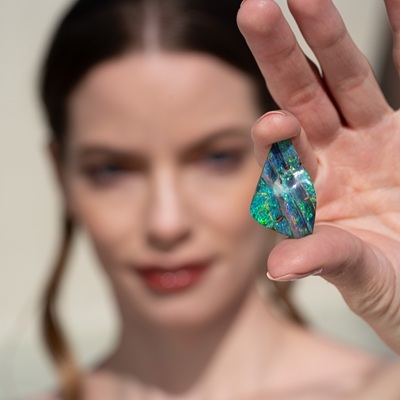
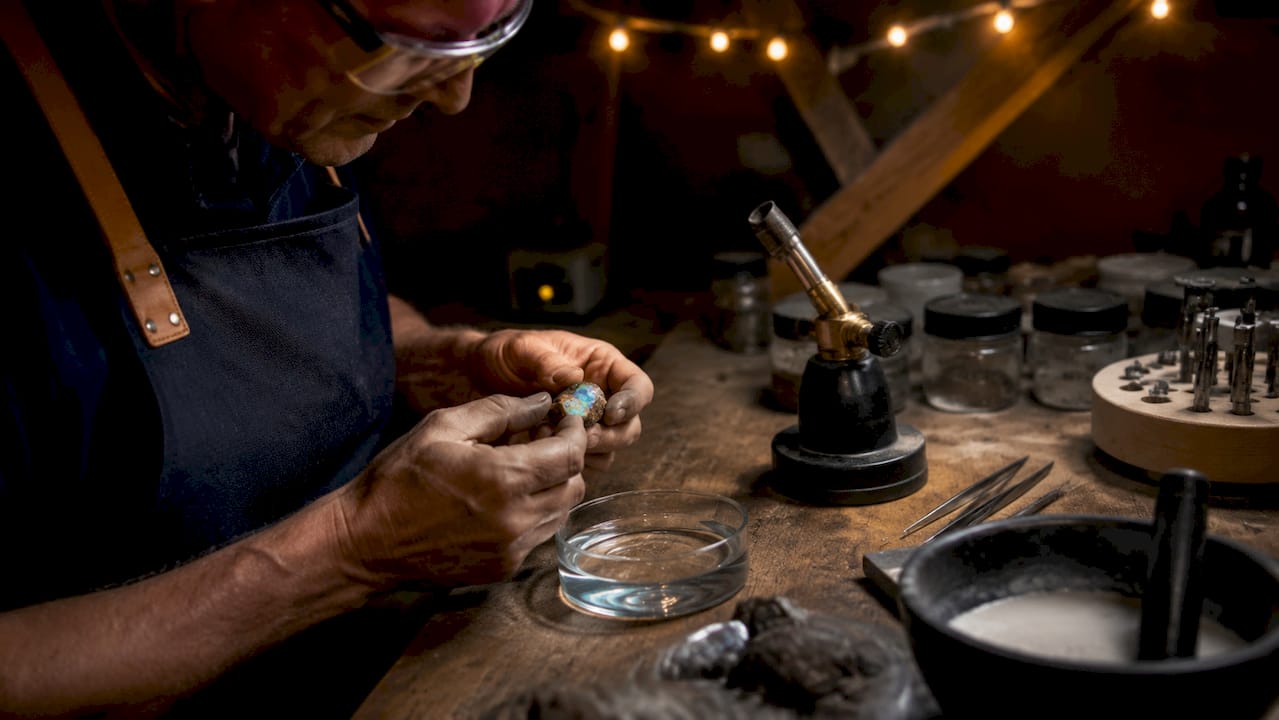
Step by step opal color enhancement is the process of improving an opal’s visual brightness and play-of-color through targeted treatments such as sugar-acid carbonization, smoke treatment, and surface coatings. Gemologists formally call this practice opal color treatment or opal enhancement. Whether you collect Lightning Ridge black opals, Coober Pedy crystal opals, or Ethiopian Welo opals, understanding each phase of the opal color treatment process gives you control over results and protects the stone’s long-term value. This guide walks through every stage, from materials to maintenance, so you can work with confidence.
What materials do you need for opal color enhancement?
The right tools make the difference between a beautifully deepened stone and a damaged one. Gathering your materials before you begin any stepwise opal enhancement prevents costly interruptions mid-process.
Chemicals and solutions:
- Granulated white sugar and distilled water for the soaking solution
- Concentrated sulfuric acid for the carbonization step (handle with extreme care)
- Acetone or isopropyl alcohol for pre-treatment cleaning
- Polymer resin, if you plan to stabilize fragile stones before treatment
Tools and equipment:
- A 10x jeweler’s loupe or magnifying glass for pre- and post-treatment inspection
- Glass or ceramic containers (never metal) for acid baths
- Soft polishing cloths and a rotary polishing tool with cerium oxide compound
- Tweezers or non-metal tongs for moving stones safely
Safety gear:
- Chemical-resistant nitrile gloves
- Safety goggles rated for acid splash
- A well-ventilated workspace, ideally outdoors or under a fume hood
Sulfuric acid is hazardous and demands strict safety protocols. Skipping protective equipment risks serious injury and ruins the stone if acid contacts unprotected skin and then the opal. Never work alone when handling concentrated acid.
Pro Tip: Keep a container of baking soda solution nearby to neutralize any acid spills immediately. This is standard lab practice and takes seconds to prepare.
How to perform sugar-acid treatment step by step
Sugar-acid treatment is the most widely practiced permanent opal color improvement method. Sugar soaks fill internal pores, which then react with sulfuric acid to create black carbon deposits inside those pore spaces, intensifying the body tone and amplifying play-of-color.
Step 1: Clean the opal thoroughly. Wipe the stone with acetone or isopropyl alcohol to remove oils, dust, and surface residue. Any contamination blocks sugar absorption and produces uneven results.
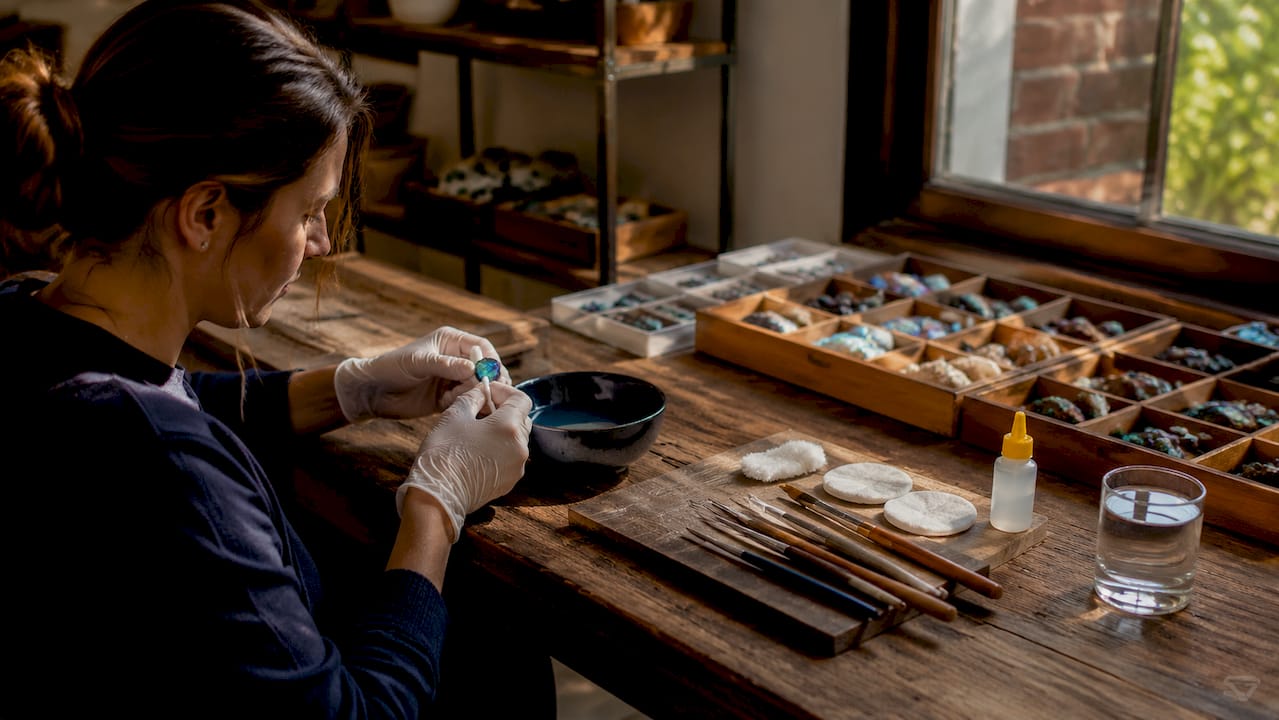
Step 2: Prepare the sugar solution. Dissolve granulated sugar in warm distilled water at a ratio of roughly one part sugar to two parts water. Stir until fully dissolved and allow to cool to room temperature.
Step 3: Soak the opal. Submerge the stone completely in the sugar solution. Soak time varies by stone porosity. Lighter, more porous stones like Ethiopian opals typically absorb sugar faster than denser Australian material. A minimum soak of 24 hours is standard; some practitioners extend this to 48–72 hours for deeper penetration.
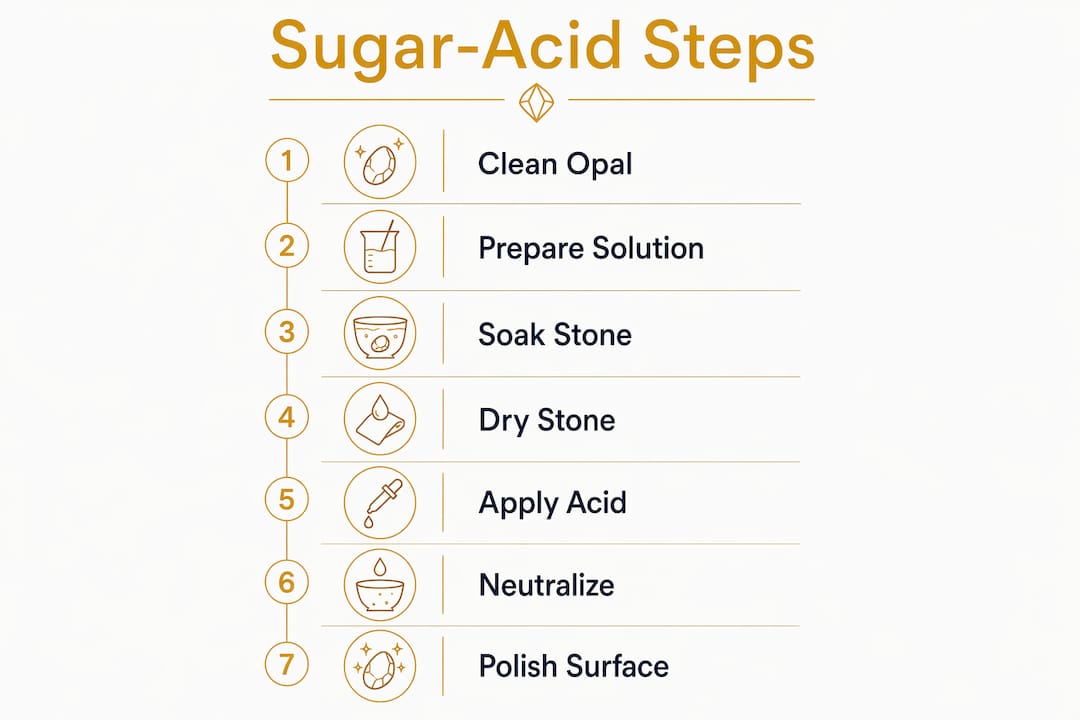
Step 4: Remove and dry the stone. Lift the opal with non-metal tongs and pat it dry with a soft cloth. Allow it to air dry completely for several hours. Any residual moisture reacts unpredictably with sulfuric acid.
Step 5: Apply sulfuric acid. Place the dried opal in a glass container. Carefully pour enough concentrated sulfuric acid to submerge the stone. The acid carbonizes the sugar trapped in the pores, turning it black. This reaction is visible as a darkening of the stone’s body tone. Monitor the process closely. Most stones reach the desired tone within 30–60 minutes, though denser material may take longer.
Step 6: Neutralize and clean. Remove the opal with non-metal tongs and place it immediately in a baking soda solution to neutralize residual acid. Rinse thoroughly with distilled water. Allow the stone to dry fully before inspection.
Step 7: Polish the surface. Use cerium oxide on a soft polishing cloth or rotary tool to restore surface brilliance. Work gently to avoid removing the newly darkened surface layer.
Pro Tip: Test the sugar-acid process on a low-value or damaged opal first. The reaction is permanent, and body tone changes cannot be reversed once carbonization occurs.
Opal’s play-of-color depends on body tone, color range, pattern, and clarity. Darker body tones amplify color contrast. This is exactly why the sugar-acid method produces such dramatic visual results on pale or milky stones.
What are alternative enhancement techniques?
Sugar-acid treatment is not the only path to improving opal color. Smoke treatment and surface coatings each offer distinct effects, with different levels of permanence and suitability depending on the stone type.
Smoke treatment
Smoke treatment darkens an opal’s body tone by exposing it to carbon-rich smoke from burning organic material such as paper or wood. The carbon particles penetrate the stone’s surface, creating a darker background that makes play-of-color appear more vivid. Smoking creates a carbon layer that enhances play-of-color temporarily. This method works best on porous Ethiopian opals but fades over time, particularly with cleaning or exposure to moisture.
Surface coatings
Surface coatings apply vaporized metal oxides to the stone’s exterior to darken its appearance. Modern vaporized metal oxide coatings mimic the effect of older metal foil backings but are less durable. Coatings wear off with regular handling and cleaning, making them the least permanent of the three main methods.
| Method | Permanence | Best for | Key limitation |
|---|---|---|---|
| Sugar-acid treatment | Permanent | Porous Australian and Ethiopian opals | Requires hazardous chemicals |
| Smoke treatment | Semi-permanent | Porous Ethiopian opals | Fades with moisture and cleaning |
| Surface coatings | Temporary | Display stones, short-term enhancement | Degrades with wear |
Identifying treated stones:
- Smoke-treated opals often show a slightly sooty or gray surface haze under magnification
- Coated stones may show peeling or uneven color at the edges under a loupe
- Both methods produce a more uniform darkening than natural body tone variation
Polymer impregnation fills fissures and stabilizes fragile opal cracks, improving durability. This is a stabilization technique, not a color enhancement method, though hobbyists sometimes confuse the two.
How can you identify treated opals vs. natural ones?
Knowing how to spot an enhanced opal protects your collection and your wallet. The opal matching process for jewelry often requires distinguishing treated stones from natural ones to maintain consistent quality across a piece.
Under 10x magnification, treated opals show a peppery pattern of black carbon dots. This “pepper-pot” effect is the hallmark sign of carbonized sugar trapped in the stone’s pores. Natural black opals do not show this pattern.
Visual cues to look for:
- Pepper-pot pattern: Tiny black dots scattered across the stone’s interior, visible under a 10x loupe
- Honeycomb or patchy color: Treated opals often show disconnected, mosaic-like patterns because carbon dye settles only where pores exist
- Uniform darkness: Natural black opals from Lightning Ridge show layered, organic variation in body tone; treated stones tend toward flat, even darkness
- Surface haze: Smoke-treated or coated stones may show a thin, slightly cloudy layer at the surface
“Collectors must differentiate natural opal play-of-color from enhanced colors. Using magnification to spot carbon dye’s peppery pattern helps authenticate the stone.” — Jewea Gemstone Treatments Guide
Distinguishing opal origins is equally important. An Ethiopian Welo opal treated with sugar-acid can visually resemble a natural Lightning Ridge black opal, but the two carry very different market values. Treatment disclosure is not optional in the gemstone trade. Transparency is critical in the gemstone market to maintain buyer trust and accurate pricing.
How do you maintain enhanced opal color over time?
Enhanced opals require thoughtful care to preserve their color and surface integrity. The treatment may be permanent in the case of sugar-acid carbonization, but the stone itself remains sensitive to physical and chemical damage.
Cleaning:
- Clean with a soft, damp cloth and mild soap only
- Avoid harsh chemicals and moisture exposure, particularly for doublets and triplets
- Residues like lotion, sunscreen, or soap film dull opal’s brilliance over time; frequent light cleaning prevents buildup
Storage:
- Store each opal separately in a soft pouch or lined compartment to prevent scratching
- Avoid airtight containers for untreated opals, which need slight ambient humidity to prevent crazing
- Treated opals are generally more stable but still benefit from consistent storage conditions
Handling:
- Remove opal jewelry before swimming, showering, or applying cosmetics
- Avoid ultrasonic cleaners and steam cleaners, which can fracture the stone or strip surface treatments
- Handle stones by their edges to minimize oil transfer to the surface
Pro Tip: If a treated opal begins to look dull after years of wear, a gentle re-polish with cerium oxide on a soft cloth can restore surface brightness without repeating the full treatment process.
When to seek professional help: if a treated stone develops cracks, loses significant color uniformity, or shows signs of crazing, consult a professional lapidary before attempting home re-treatment.
Key Takeaways
The most effective opal color treatment combines proper stone selection, the sugar-acid carbonization method, and consistent post-treatment care to produce lasting, vivid play-of-color.
| Point | Details |
|---|---|
| Sugar-acid is permanent | Carbon deposits form inside pores, darkening body tone and amplifying play-of-color for life. |
| Safety is non-negotiable | Sulfuric acid requires gloves, goggles, ventilation, and a neutralizing agent on hand. |
| Smoke and coatings fade | Both methods enhance color temporarily and degrade with moisture, cleaning, and wear. |
| Magnification reveals treatment | A 10x loupe exposes the pepper-pot carbon pattern that distinguishes treated from natural opals. |
| Disclosure protects value | Undisclosed treatments affect appraisal and market pricing; transparency is the ethical standard. |
Why I think hobbyists underestimate the ethics side of opal enhancement
Most guides focus entirely on technique. The part that gets glossed over is what you do with the result.
I have seen collectors spend hours perfecting a sugar-acid treatment on a pale Ethiopian opal, achieve a stunning near-black body tone, and then list it without mentioning the treatment. That is not a gray area. It is misrepresentation. The gemstone market depends on trust, and undisclosed treatments affect appraisal and value in ways that ripple through every subsequent sale.
The good news is that a well-disclosed treated opal is still a beautiful, desirable stone. Buyers who understand what they are purchasing appreciate the craftsmanship involved. Transparency does not reduce value. It builds the kind of reputation that makes collectors come back.
For hobbyists, the hands-on process of enhancement is genuinely rewarding. There is something remarkable about watching a pale, unremarkable stone transform under treatment into something that catches light from across a room. But the craft earns its full meaning only when it is practiced honestly. Know what you have, say what you did, and let the stone speak for itself.
— Renee
Discover exceptional opals at Australianopaldirect

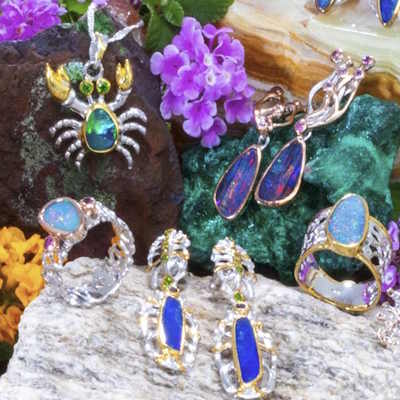
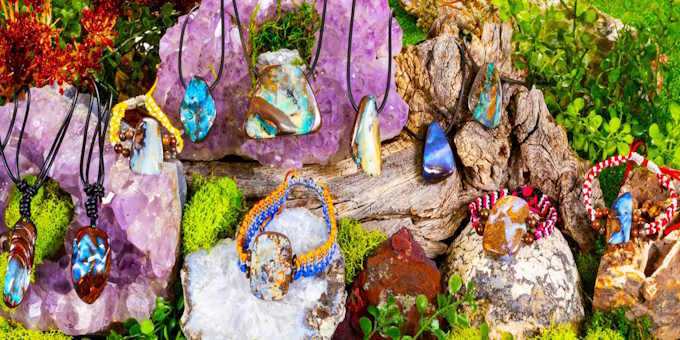
Australianopaldirect sources genuine earth-mined opals directly from Lightning Ridge, Coober Pedy, and Queensland, offering collectors and hobbyists access to stones with documented origins and natural character. Whether you are selecting a stone for your next enhancement project or searching for a finished piece that showcases opal’s kaleidoscopic brilliance, the collection spans rings, earrings, and pendants crafted in gold and silver. Each piece comes with free shipping, complimentary insurance, and a 90-day warranty. For those ready to take their appreciation of opal further, Australianopaldirect also offers custom jewelry options and expert guidance on working with Australian opal material.
FAQ
What is the most permanent opal color enhancement method?
Sugar-acid treatment is the most permanent method. It creates carbon deposits inside the stone’s pores that do not fade with cleaning or wear.
Can all opals be treated with the sugar-acid process?
Porous opals, including Ethiopian Welo and some Australian material, respond best. Dense, non-porous opals absorb little sugar and show minimal results.
How do I spot a sugar-acid treated opal?
Under a 10x loupe, look for a peppery pattern of tiny black carbon dots inside the stone. Natural black opals do not show this scattered dot pattern.
Does opal enhancement affect the stone’s value?
Treatment affects market value when undisclosed. A disclosed treated opal is priced accordingly; an undisclosed one risks incorrect appraisal and buyer disputes.
Is smoke treatment suitable for Australian opals?
Smoke treatment works best on porous Ethiopian opals. Most Australian opals from Lightning Ridge and Coober Pedy are denser and absorb smoke carbon less effectively.
Recommended
- Step by Step Opal Matching Process for Jewelry Makers - Australian Opal Direct
- Opal Gemstone Selection Process: A Step-by-Step Guide - Australian Opal Direct
- Master the Opal Jewelry Design Process Step by Step - Australian Opal Direct
- How Opals Get Their Color: Science and Rarity Revealed - Australian Opal Direct