Role of Miners in Opal Sourcing: 2026 Guide
Posted by AOD on 17th Jun 2026
Role of Miners in Opal Sourcing: 2026 Guide
TL;DR:
- Miners are the essential source of Australian opals, personally extracting and restoring each site they disturb. They combine traditional skill with modern accountability, ensuring high traceability and environmental responsibility. Their efforts sustain remote communities and support a transparent, ethical gemstone industry.
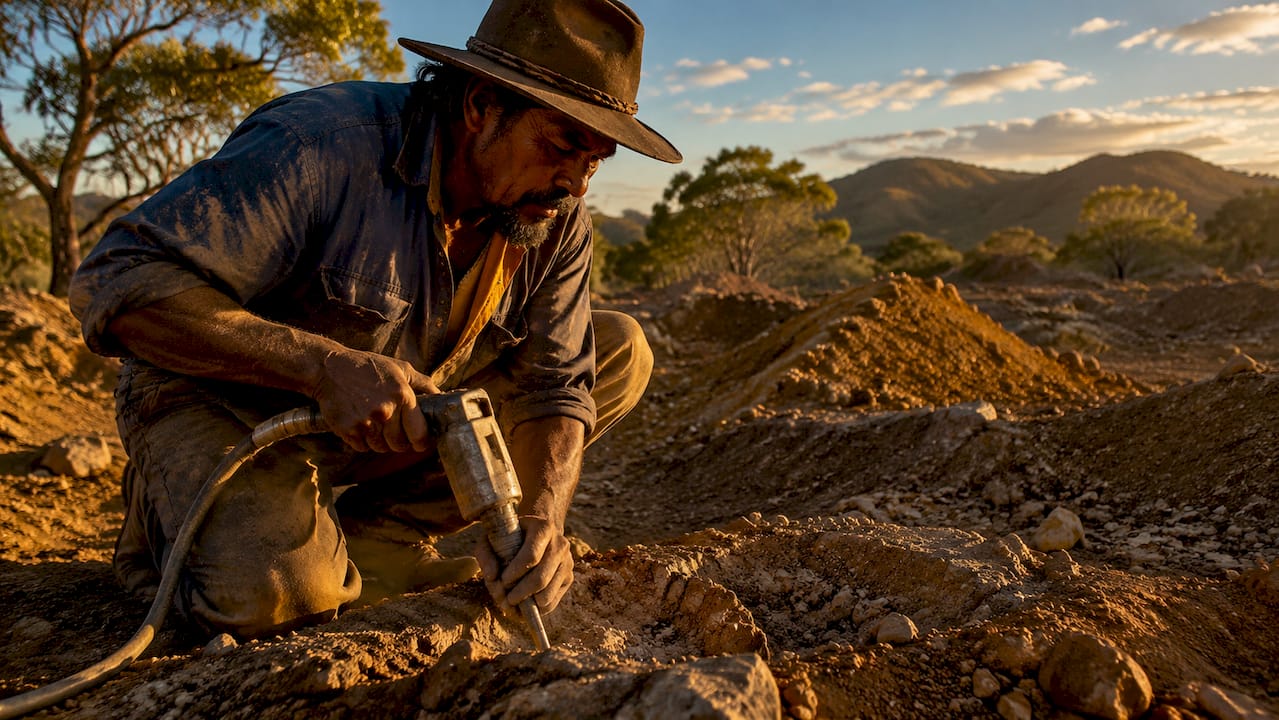
Miners are the primary agents in opal sourcing, personally extracting gemstones from the earth through artisanal, small-scale operations that combine traditional skill with modern accountability. Australia produces around 95% of the world’s opal, with Coober Pedy, Lightning Ridge, and Queensland supplying the vast majority of global stock. That dominance rests almost entirely on individual miners who sink shafts by hand, read the earth through sound and touch, and carry legal responsibility for restoring every site they disturb. The role of miners in opal sourcing is not a background function. It is the foundation on which the entire industry stands.
How do miners source opals: techniques and processes
The opal mining process begins long before a gem sees daylight. Miners first identify promising ground by studying geological surveys, local knowledge, and the color of exposed rock. Once a site is selected, the work becomes intensely physical and methodical.
The standard extraction sequence follows these steps:
- Shaft sinking. Miners drill or dig vertical shafts, typically 10–30 meters deep, to reach the opal-bearing rock layer known as the “opal level.”
- Horizontal tunneling. From the base of the shaft, miners cut horizontal drives following the opal level, expanding outward to cover the claim area.
- Mechanical extraction. Mechanized drills loosen material, while industrial vacuums called blowers pull loosened rock to the surface for sorting.
- Auditory detection. Experienced miners listen for a pitch change in the blower’s sound, a subtle shift that signals the transition from waste rock to an opal seam. This sensory skill, refined over years, is one of the most remarkable aspects of artisanal opal extraction.
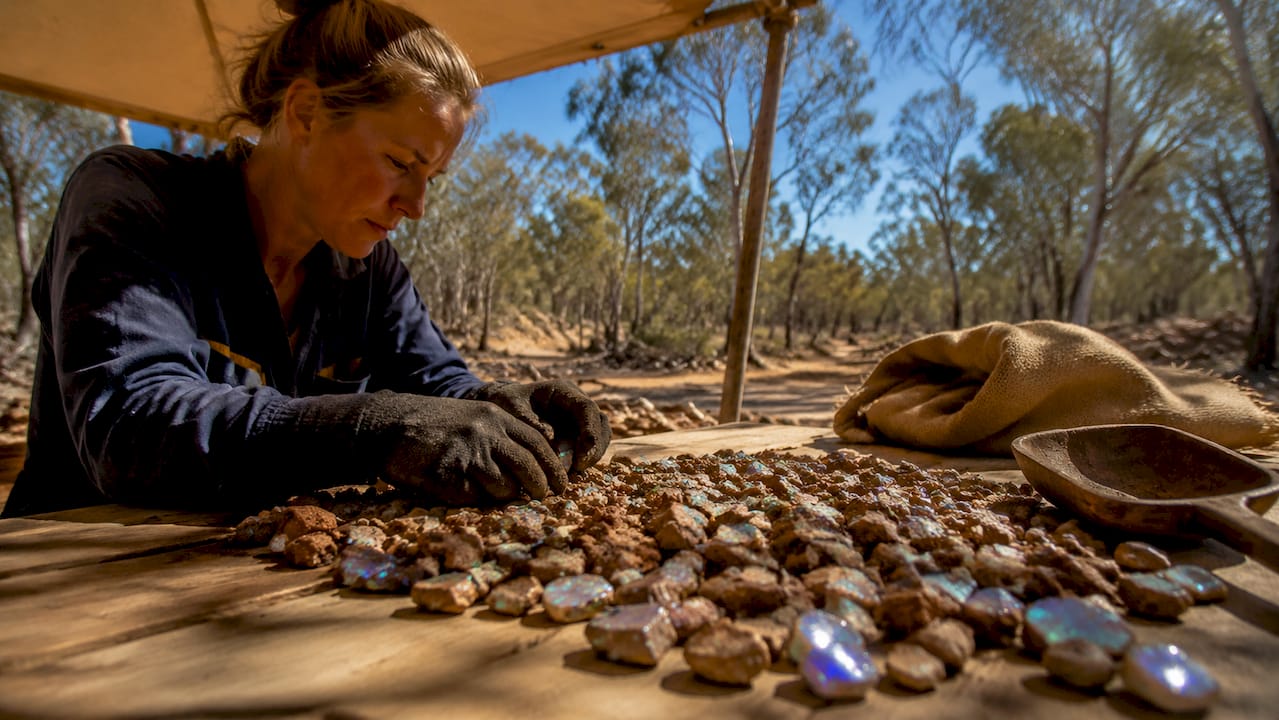
- Noodling. After primary extraction, miners and community members sift through the waste mullock heap by hand, searching for overlooked stones. It requires no machinery and costs nothing but time.
- Open-cut mining. On flatter terrain, particularly in Queensland’s boulder opal fields, miners strip surface layers with small excavators to expose ironstone boulders that host opal veins.
Artisanal mining integrates auditory and tactile feedback with mechanical tools in a way that large industrial operations cannot replicate. The human element is not a limitation. It is the defining quality that makes each stone traceable to a specific person and place.
Pro Tip: If you are researching opal provenance, ask sellers whether the stone was extracted via shaft mining or open-cut methods. Boulder opals from Queensland are almost always open-cut, while black opals from Lightning Ridge are shaft-mined. The method tells you a great deal about the stone’s origin and character.
What ethical and environmental responsibilities do miners uphold?
Australian opal mining operates under a regulatory framework that places direct environmental accountability on each individual miner. This is not voluntary. It is legally enforced and financially incentivized.
Key obligations miners must fulfill include:
- Security deposits. Before beginning work, miners lodge a financial deposit with state authorities. Miners must backfill shafts and rehabilitate sites to receive that deposit back. The financial incentive ensures restoration is completed, not promised.
- License area limits. Mining licenses are constrained in area and duration to prevent large-scale land disruption. A single miner cannot hold an unlimited claim, which naturally caps environmental impact.
- Community rehabilitation associations. In towns like Coober Pedy and Lightning Ridge, miner associations coordinate collective land restoration efforts, pooling resources to address areas where individual miners have already moved on.
- Traceability standards. Because each claim is individually owned and licensed, every opal can be traced to a specific miner, lease number, and location. This level of provenance is rare in the global gemstone trade.
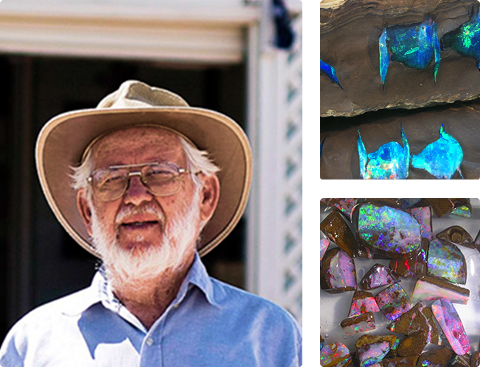
“The small-scale, artisanal mining model is ethically strong due to the personal connection each miner has to the land and the gemstone.” — Second-generation miner Oscar Cheal, as cited by Robinson’s Jewelers
That personal connection is not sentimental. It is structural. When a miner owns the claim, they bear the legal and financial consequences of how the land is treated. That accountability produces behavior that corporate mining structures rarely achieve. For consumers and researchers evaluating ethical opal sourcing, the artisanal model offers a level of transparency that is genuinely difficult to match.
What economic and social roles do miners play in australian communities?
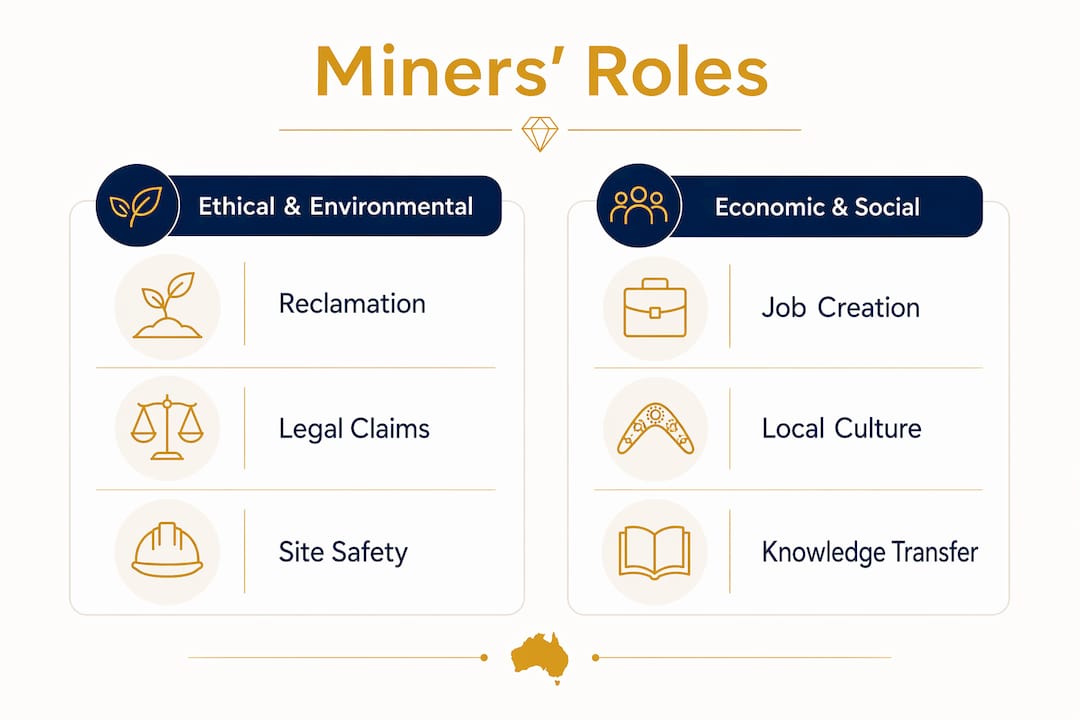
Opal mining is the economic and social lifeblood of remote outback towns, providing jobs, tourism income, and cultural identity to communities that would otherwise have little economic foundation. The NSW Government formally recognizes this, noting that opal mining sustains economic and social life in towns like White Cliffs, Lightning Ridge, and Broken Hill’s surrounding region. That recognition carries policy weight, shaping land access decisions and regulatory support.
The economic contribution of miners extends well beyond the value of the stones they pull from the ground. Miners support local suppliers, fuel stations, equipment dealers, and hospitality businesses. Tourism built around opal mining, including underground home tours in Coober Pedy and fossicking experiences in Lightning Ridge, generates revenue that multiplies through the local economy.
Generational miner families carry something equally valuable: knowledge. Techniques for reading rock formations, identifying opal-bearing ground, and processing rough stones are passed down through families over decades. This oral and practical tradition cannot be replicated by a corporate training manual. Second and third-generation miners like Oscar Cheal represent a living archive of expertise that sustains the industry’s quality and character.
In 2026, Queensland expanded exploration land for small-scale miners by over 592,000 hectares to support regional mining and preserve artisanal traditions. That expansion signals government recognition that the miners’ economic role is worth protecting through active policy, not just passive tolerance.
Pro Tip: When evaluating an opal’s investment value, consider the mining region. Stones from Lightning Ridge’s black opal fields or Coober Pedy’s white opal seams carry regional provenance that collectors and auction houses recognize. Provenance from a named miner or family operation adds further value.
The industry does face real challenges. The miner population is aging, and fewer young Australians are entering the field. Land access restrictions in some regions limit new exploration. These pressures make the preservation of existing miner knowledge and the support of new entrants a genuine priority for the long-term health of the opal supply chain.
How do miners shape the opal supply chain and jewelry market?
The miners’ impact on opal extends far beyond the mine site. Their choices, practices, and relationships directly determine what reaches the global jewelry market and at what standard.
| Factor | Industrial Mining Model | Artisanal Miner Model |
|---|---|---|
| Traceability | Limited, batch-level | High, individual claim level |
| Environmental accountability | Corporate policy-driven | Legally enforced, personally financial |
| Supply chain transparency | Multiple intermediaries | Direct miner-to-retailer possible |
| Cultural knowledge | Absent | Embedded in generational practice |
| Consumer confidence | Moderate | High, when provenance is documented |
Individual ownership of mining claims produces a level of stewardship and traceability that industrial mining rarely achieves. That traceability is the foundation of the ethical jewelry market’s credibility. When a retailer like Australianopaldirect can document that a specific black opal came from a named miner at Lightning Ridge, the stone carries a story that resonates with collectors and conscious consumers alike.
Consumer demand for ethically sourced opals is a real market force. Buyers who understand the mine-to-market journey are willing to pay a premium for documented provenance. That premium flows back to miners, reinforcing the financial viability of small-scale, ethical operations. The relationship is circular: miners uphold standards, retailers communicate those standards, and consumers reward them with purchasing decisions.
The role of artisanal miners in shaping market reputation is also defensive. Because Australian opals are so closely associated with individual, ethical extraction, the industry is largely insulated from the labor and environmental controversies that affect other gemstone categories. That reputation is an asset, and miners are its primary custodians.
Key takeaways
The role of miners in opal sourcing is inseparable from the ethical, economic, and cultural integrity of the entire industry, from shaft to showcase.
| Point | Details |
|---|---|
| Miners are the sourcing foundation | Individual artisanal miners extract, sort, and trace every Australian opal from claim to market. |
| Auditory skill defines extraction | Experienced miners detect opal seams by listening for pitch changes in industrial blowers, combining machinery with human expertise. |
| Regulations enforce restoration | Security deposits and license limits legally require miners to rehabilitate every site, ensuring environmental accountability. |
| Economic impact runs deep | Miners sustain remote outback towns through employment, tourism, and generational knowledge that no corporate model replicates. |
| Traceability drives market value | Individual claim ownership produces provenance documentation that supports ethical jewelry pricing and consumer confidence. |
Why the human story behind every opal deserves more attention
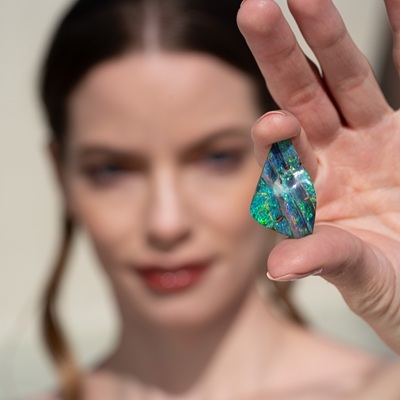
I have spent years studying the gemstone supply chain, and the Australian opal industry consistently surprises me. Not because of the stones, though their play-of-color is genuinely unlike anything else in the mineral world. What surprises me is how thoroughly the artisanal miner model has resisted the industrialization that has overtaken nearly every other gemstone category.
Most people who buy an opal ring have no idea that the stone was likely extracted by a single person, working a claim smaller than a city block, who is legally required to restore the land before collecting their security deposit. That level of personal accountability is extraordinary. It is the kind of environmental stewardship that large mining corporations spend millions on marketing campaigns trying to simulate.
The aging workforce is the issue I find most underreported. When a third-generation miner retires in Lightning Ridge or Coober Pedy, they take decades of sensory knowledge with them. The ability to hear an opal seam in a blower’s pitch change is not something you learn from a manual. It is learned by standing next to someone who already knows. The industry needs mentorship programs, land access reform, and consumer awareness working together to keep that knowledge alive.
What consumers can do is straightforward. Choose retailers who document provenance. Ask where the stone came from and who mined it. That question, asked often enough, creates market pressure that reaches all the way back to the mine site. The average miner earns approximately AUD $40,000 annually with the possibility of significant windfalls on discovery days. Consumer choices that support ethical sourcing help make that livelihood more stable and more respected.
The opal’s kaleidoscopic brilliance is nature’s work. The fact that it reaches you with its story intact is the miner’s.
— Renee
Discover authentic australian opals sourced directly from miners
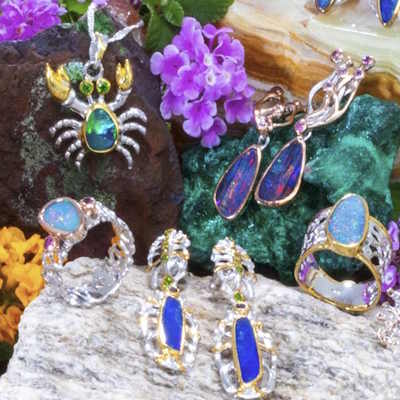
Australianopaldirect was built on one principle: every opal should arrive with its story intact. The brand works directly with miners from Lightning Ridge, Coober Pedy, and Queensland, cutting out intermediaries to offer genuine, earth-mined stones with documented provenance.

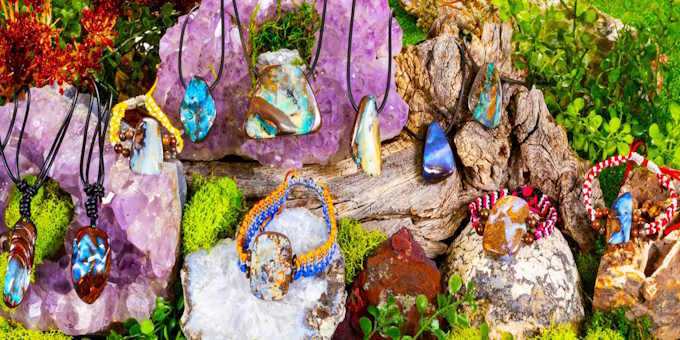
When you purchase from Australianopaldirect, you are not buying a gemstone of unknown origin. You are buying a stone whose journey from shaft to setting is traceable, whose miner operated under strict Australian environmental regulations, and whose play-of-color was coaxed from the earth by skilled hands. Explore the full collection of ethically sourced opal jewelry including rings, pendants, earrings, and custom pieces, each accompanied by free shipping, complimentary insurance, and a 90-day warranty.
FAQ
What is the role of miners in opal sourcing?
Miners are the primary extractors of opals, personally sinking shafts, operating blowers, and sorting rough stones on individual licensed claims. Their direct ownership of each claim ensures traceability and ethical accountability from the point of extraction.
How are opals mined by hand and machine?
Miners combine mechanized drills and industrial vacuum blowers with hand tools and sensory detection to locate and extract opal seams. Noodling, the hand-sorting of waste rock, is a complementary technique that requires no machinery at all.
What environmental rules do opal miners follow?
Australian miners must backfill shafts and fully rehabilitate their sites to recover their government-held security deposit. License area limits also prevent any single miner from causing large-scale land disruption.
How much do opal miners typically earn?
The average Australian opal miner earns approximately AUD $40,000 per year, though earnings vary widely depending on discovery frequency. A single significant find can produce income that far exceeds the annual average.
Why does the artisanal mining model matter for jewelry buyers?
The artisanal model produces individual-level traceability that industrial mining cannot match. Buyers who choose opals from named miners and documented regions receive both a gemstone and a verifiable ethical record.
Recommended
- Opal supply chain: Australian sourcing & ethics 2026 - Australian Opal Direct
- Discover Australia’s most famous opal mines for collectors - Australian Opal Direct
- Ethical opal sourcing: your guide to authentic Australian gems - Australian Opal Direct
- Mine-to-Market Opal: How Authentic Australian Gems Reach You - Australian Opal Direct