Opal Size vs Carat: What Buyers Need to Know
Posted by AOD on 22nd Aug 2026
Opal Size vs Carat: What Buyers Need to Know
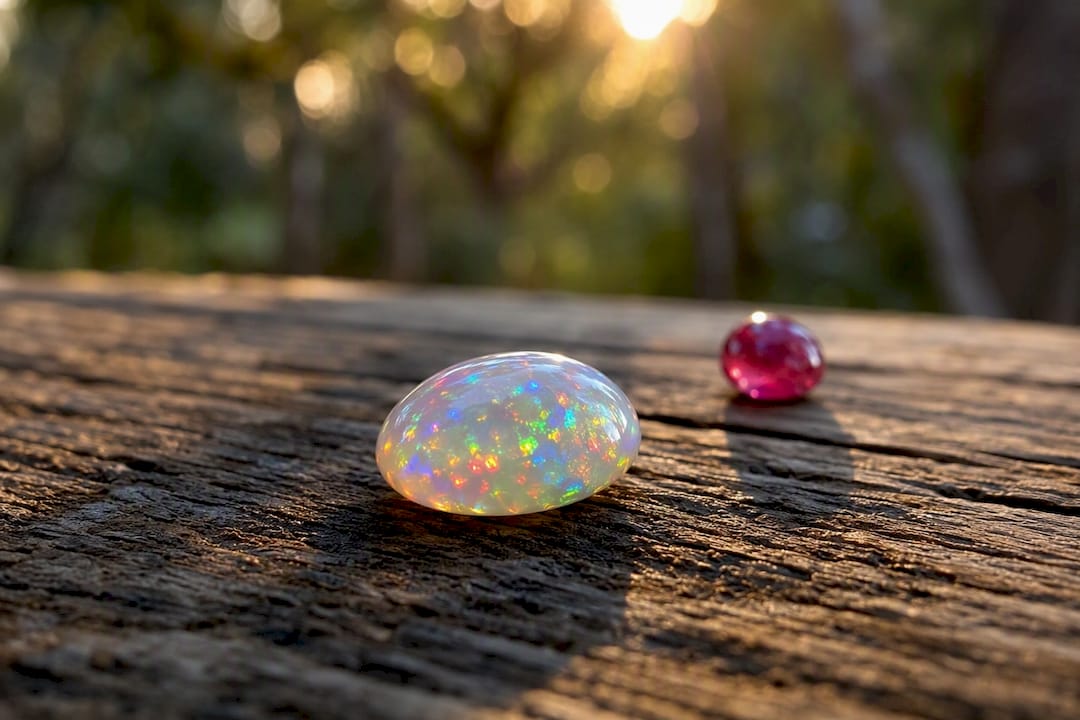
Carat measures weight, not size: one carat equals exactly 0.2 grams. Because opal has a notably low density and is almost always cut as a smooth-domed cabochon rather than faceted, an opal will typically look larger than a diamond or sapphire of the same carat weight. That single fact explains most of the confusion buyers feel when comparing listings, and it means size alone should never be the deciding factor in an opal’s value.
Opal’s specific gravity runs roughly 2.10 to 2.20, well below diamond’s 3.52 or even quartz’s 2.65. Lower density means a given weight of opal occupies more physical volume, so it spreads wider and appears more generous face-up.
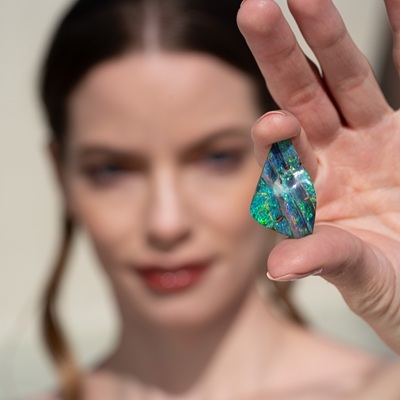
- A one-carat opal typically measures around 7.7 mm in diameter, noticeably larger than a one-carat diamond or sapphire.
- A smaller opal typically measures around 6 mm, while a larger stone measures close to 10 mm, though cut style and dome height shift these figures.
- Color, pattern, and play-of-color usually matter more to value than raw carat weight, especially once a stone clears the size needed for a comfortable setting.
Key Takeaways
Carat weight measures mass, not size, and opal’s low density means it looks larger than denser gems at equal carat weight, so color and pattern should guide value judgments more than raw size.
| Point | Details |
|---|---|
| Carat is weight, not size | One carat equals 0.2 grams; opal’s lower density makes it appear larger than diamonds or sapphires of equal weight. |
| Depth drives carat surprises | Dome height, often missing from listings, explains why similar-looking stones can weigh very differently. |
| Color beats carat count | Play-of-color, pattern, and brightness typically outweigh sheer size in determining an opal’s price per carat. |
| Assembled stones need scrutiny | Doublets and triplets are marketed by millimeter size because backing and caps inflate apparent size without adding genuine opal. |
| Request full measurements | Ask sellers for carat, all three dimensions, construction type, and photos before comparing two stones. |
Table of Contents
- Why Opal Looks Larger Than Many Other Gemstones
- Common Opal Sizes and Their Approximate Carat Ranges
- How Carat Weight Affects Opal Value (and When It Doesn’t)
- How to Estimate Carat Weight From Measurements
- Doublets, Triplets, and Why Assembled Opals Break the Size-to-Carat Rule
- A Practical Checklist for Comparing Opal Size and Carat Before You Buy
- How Australian Opal Direct Applies These Principles
- Sources for Further Reading
- Why Measurement, Not Marketing, Should Drive Your Opal Purchase
Why Opal Looks Larger Than Many Other Gemstones
The physics here comes down to one property: specific gravity, or how much a material weighs relative to an equal volume of water. Diamond sits at about 3.52, sapphire around 4.0, and quartz near 2.65. Opal, by comparison, typically falls between 2.10 and 2.20. Lighter material means more volume packed into every carat, which is why a 1-carat opal cabochon can look almost twice the size of a 1-carat sapphire sitting next to it in a display case.
Cutting style compounds the effect. Opal is almost never faceted the way diamonds and sapphires are. Instead, cutters shape it into a cabochon, a smooth polished dome that maximizes the visible surface where light plays across the stone’s pattern. A taller dome adds weight without adding much to the diameter, while a shallow, flat cabochon spreads the same carat weight across a wider face. Two opals with identical carat weights can present very differently depending on how the cutter balanced dome height against surface area.
Specific gravity in practice: Opal’s SG of roughly 2.10 to 2.20 means a 1-carat opal commonly measures close to 7.7 mm across, compared to a noticeably smaller diameter for a 1-carat diamond or sapphire of the same weight. That gap is the entire reason opal listings can look deceptively large on a jewelry counter.
Common Opal Sizes and Their Approximate Carat Ranges
Jewelry manufacturers rely on calibrated sizes so opals fit standard mountings without custom bezels. The most common calibrated cabochon dimensions in the trade are 6×4 mm, 7×5 mm, and 8×6 mm, and each corresponds to a rough carat range rather than a fixed number.
- 6×4 mm oval cabochon: usually a small carat weight, depending on dome height.
- 7×5 mm oval cabochon: typically medium-small carat weight.
- 8×6 mm oval cabochon: generally medium carat weight.
- Round 7 mm cabochon: usually a moderate carat weight since round shapes carry more volume than ovals.
- Round 8 mm cabochon: commonly a moderate to larger carat weight.
Treat every one of these ranges as a starting estimate, not a guarantee. A shallow-cut 8×6 mm stone might weigh under a carat, while a thick, high-domed version of the same footprint can weigh nearly double. Depth is the variable most listings leave out, and it’s the one that matters most.
How Carat Weight Affects Opal Value (and When It Doesn’t)
Carat weight is one input among several, and it rarely wins the argument on its own. Gemologists and grading references, including the GIA (Gemological Institute of America), point to a consistent set of factors that determine an opal’s worth: type of opal (black, crystal, boulder, white), body tone, play-of-color, pattern, brightness, clarity or transparency, and whether the stone has been treated or assembled. Carat weight sits alongside these, not above them.
A larger stone adds real value when it’s also rare in quality terms. High-quality black opal with vivid red and green flash commands a premium precisely because stones with that intensity of color rarely surface. Size and quality reinforcing each other is where the biggest price jumps happen.
But a smaller stone frequently outperforms a larger one on price per carat. A tight 0.75-carat opal with a dense, even pattern and strong brightness can sell for more than a 2-carat stone with a dull body tone and patchy color. Retailers who track this space, including the AOEA’s opal classification standards used across the trade, consistently rank color and pattern above sheer weight when setting price tiers.
A few practical heuristics help when you’re weighing size against quality:
- Rank color and brightness first. A vivid, evenly distributed play-of-color on a smaller stone almost always beats a large, muted one.
- Check pattern before carat. Harlequin and rolling flash patterns carry premiums that easily outweigh an extra half-carat of size.
- Ask why the stone is large. Extra weight from a thick dome or heavy backing adds carats without adding visual quality.
- Reserve size priority for design needs. If you need a statement piece for a pendant or a cocktail ring, larger dimensions matter more than a marginal carat difference.
- Compare price per carat across similar quality tiers, not across the whole market, since a 1-carat black opal and a 1-carat white opal are not competing in the same value bracket.
Pro Tip: When two opals have similar color and pattern quality but different carat weights, calculate the price per carat for each. The smaller stone often reveals itself as the better value once you account for quality.
How to Estimate Carat Weight From Measurements
Carat weight tracks volume, not just surface dimensions, which is why two opals with matching length and width can weigh very differently once depth enters the picture. The relationship follows a simple rule: weight scales with volume, and volume scales with the cube of a stone’s linear dimensions when shape stays proportional. That’s the same principle behind size-to-weight charts used across the colored-stone trade.
- Measure length and width with a jeweler’s caliper, recording the widest points across the face-up view.
- Measure depth, meaning the full dome height from the flat base to the highest point of the cabochon.
- Estimate volume using a domed-shape approximation, treating the stone roughly as a half-ellipsoid rather than a flat disc.
- Apply opal’s specific gravity (2.10 to 2.20) to convert that estimated volume into an approximate carat weight.
A 1-carat opal with average dome height typically measures close to 7.7 mm in diameter, based on standard size-to-weight references for the material, though thickness changes that figure fast.
The caveats matter more than the formula. Irregular freeform shapes throw off any standard chart. Potch, the common, non-colorful opal material sometimes left as a base layer, adds weight without adding visible value. Heavy girdles and thick backings on assembled stones distort the whole calculation. Treat any hand-measured estimate as a working number to confirm with the seller, never as a substitute for a stated carat weight on the listing.
Doublets, Triplets, and Why Assembled Opals Break the Size-to-Carat Rule
Solid opal is cut entirely from natural material, and its carat weight reflects the full stone. A doublet pairs a thin slice of precious opal with a backing, usually black common opal, ironstone, or glass, to deepen color contrast and support fragile material. A triplet adds a clear quartz or glass cap over that same construction for extra durability.
Assembled stones break the usual size-to-carat relationship because the backing and cap add bulk without adding opal. A doublet can present a face-up appearance nearly identical to a solid stone twice its actual opal content, and a triplet’s glass dome inflates visible size further while contributing almost nothing to the gemstone’s intrinsic worth. This is precisely why the trade often markets doublets and triplets by millimeter size rather than carat weight; a stated carat figure would misrepresent how much genuine opal is actually present.
Before buying an assembled stone, ask the seller for a few specific things:
- A cross-section or side-profile photo showing where the opal layer ends and the backing begins.
- The thickness of the precious opal layer itself, not just the total stone depth.
- Whether the quoted weight includes the backing and cap or refers to the opal layer alone.
- Clear disclosure of construction type on the listing itself, since undisclosed assembly is a red flag regardless of price.
A Practical Checklist for Comparing Opal Size and Carat Before You Buy
Reading a listing correctly means pulling more than one number off the page. Before comparing two stones, request exact carat weight, full millimeter dimensions (length, width, and depth), a clear construction type (solid, doublet, or triplet), origin, and any available grading documentation.
- Request the depth measurement specifically. Most listings show length and width but skip dome height, the single figure that explains carat surprises.
- Ask for a cross-section or angled photo. A side view reveals dome shape and, for assembled stones, exposes the backing line instantly.
- Confirm origin. Lightning Ridge black opal, Coober Pedy white opal, and Queensland boulder opal carry different value expectations at the same carat weight.
- Weigh comfort against carats for rings. A high-domed 2-carat stone sits taller on the finger than a shallow 2-carat stone, which affects how it catches on clothing and how secure the setting feels day to day. Reviewing an opal ring sizing workflow before finalizing a mounting choice avoids a costly resize later.
- Reserve formal grading reports for high-value purchases. For stones running into the thousands, a report adds confidence; for mid-range pieces, detailed photos and video under natural light usually tell you everything you need.
Pro Tip: Ask any seller to film the stone rotating under a single light source. Play-of-color that holds up on video, rather than just in one static photo, is a far more reliable signal than carat weight alone.
If you’re storing multiple opals as a growing collection, a proper jewelry safe built for real security needs protects pieces that can be more fragile than diamonds and harder to replace.
How Australian Opal Direct Applies These Principles
Australian Opal Direct sources every stone through direct relationships with miners across Lightning Ridge, Coober Pedy, and Queensland, cutting out the layers that typically obscure how a stone was measured or graded. Every listing pairs carat weight with full millimeter dimensions and photography, so buyers see both numbers instead of guessing which one to trust.
- Direct-miner sourcing keeps grading and measurement consistent from mine to listing.
- A carat weight guide walks through how to read listing specifications correctly.
- Complimentary insurance and a 90-day warranty back every purchase.
- Customer service teams provide additional photos or cross-section detail on request before you buy.
Sources for Further Reading
The GIA’s opal quality reference outlines grading factors and common calibrated cabochon sizes. The AOEA’s opal classification standards, widely used across retail, provide the trade framework for type and quality tiers. Australian Opal Direct’s own opal carat weight guide offers listing-level examples for readers who want to apply these ideas directly.
Why Measurement, Not Marketing, Should Drive Your Opal Purchase
Most buying guides tell you to “look for good color” and call it done. That advice is true but incomplete, and it skips the part that actually trips people up: reconciling the numbers on a listing with what a stone looks like in hand. Carat weight and millimeter size measure different things, and treating them as interchangeable is where most buyer frustration starts.
The conventional wisdom oversells carat weight as a proxy for quality, largely because diamond shopping trained people to think that way. Opal doesn’t work like diamond. A shallow-cut stone with a wide face can weigh less than a thick-domed stone with a smaller footprint, and neither number tells you anything about the pattern dancing across the surface.
If you take one thing from this, prioritize depth measurements and cross-section photos before you compare carat weights across listings. That single habit resolves more confusion than any amount of reading about grading systems. Everything else, the calibrated size charts, the doublet warnings, the price-per-carat math, exists to support that one practical check.