Opal Inclusions: Impact on Value and Craftsmanship
Posted by AOD on 26th Jan 2026
Opal Inclusions: Impact on Value and Craftsmanship

Selecting genuine Australian opals is a discerning journey that demands attention to every detail, especially the hidden stories within each stone. For collectors and designers, understanding opal inclusions is more than just identifying imperfections—it is about appreciating the unique fingerprint of nature that shapes every piece. Recognizing how inclusions both affect value and reveal authenticity helps you distinguish investment-grade gemstones from ordinary stones, guiding confident choices in crafting or curating exceptional jewelry.
Table of Contents
- Defining Opal Inclusions And Common Myths
- Types Of Inclusions Found In Australian Opals
- How Inclusions Affect Opal Quality And Value
- Role Of Inclusions In Jewelry Craftsmanship
- Evaluating Inclusions When Purchasing Opals
Key Takeaways
| Point | Details |
|---|---|
| Understanding Inclusions | Opal inclusions contribute to a stone’s character and authenticity, affecting its visual appeal and value. Knowing their types helps inform purchasing decisions. |
| Myths Debunked | Many misconceptions persist about opal inclusions, including beliefs about instability and superiority of ‘pure’ stones. Inclusions can enhance authenticity rather than diminish value. |
| Impact on Durability | Water content in inclusions is crucial; excessive moisture can lead to cracking. It’s important to verify a stone’s water profile before purchasing. |
| Role in Craftsmanship | Skilled artisans utilize inclusions creatively to enhance jewelry design and stability, making them integral rather than flaws. Understanding inclusion management is essential when commissioning pieces. |
Defining Opal Inclusions and Common Myths
Opal inclusions are materials trapped inside opal stones during their formation. These can be solid particles, liquid pockets, or even tiny air bubbles. They form naturally as silica deposits accumulate layer by layer, creating the stunning play of color that makes Australian opals so prized. For collectors and designers, understanding what these inclusions are separates informed purchasing decisions from costly mistakes.
The term “inclusion” in gemology simply means any material that isn’t the primary gem substance. In opals, this might include ironstone, clay, sand, or matrix material from the surrounding host rock. Many high-value opals contain visible inclusions, yet this doesn’t diminish their worth. What matters is how the inclusion affects the stone’s structural integrity, visual appeal, and long-term durability in jewelry pieces.
Countless myths surround opal inclusions, many rooted in outdated folklore and misunderstandings. One persistent belief claims that inclusions automatically make opals unstable or prone to cracking. Another myth suggests that “pure” opals without any inclusions are always superior. In reality, naturally mined opals almost always contain some inclusions. The presence of inclusions actually helps authenticate genuine Australian opals and can serve as an important tool for identifying their true origin and confirming they haven’t been treated or artificially enhanced.
The visibility and type of inclusion matter far more than simply having one present. A thin layer of host rock supporting an opal is fundamentally different from unstable fractures running through the stone. Professional craftspeople examine inclusions under magnification to assess whether they compromise structural integrity or simply add character. Some of the most celebrated pieces feature visible, well-positioned inclusions that tell the story of the stone’s journey from underground to your collection.
Myths about opal being “unlucky” also stem from pure fiction rather than scientific fact. These superstitions gained traction from 19th-century novels rather than authentic gemological research. Modern collectors understand opals for what they truly are: rare, sophisticated gemstones with remarkable optical properties and legitimate investment value.
Pro tip: When evaluating an opal’s inclusions, ask your supplier for details about the stone’s origin and how the inclusions affect its stability. Transparent communication about inclusions is the hallmark of ethical dealers and reveals whether you’re purchasing a stone that will remain beautiful for generations.
Types of Inclusions Found in Australian Opals
Australian opals, which supply about 95% of the world’s opal market, develop in sedimentary rock formations across regions like the Great Artesian Basin. The inclusions they contain tell the story of their geological journey. Understanding these different types helps you appreciate why each stone is genuinely unique and how inclusions influence both the stone’s character and its market value.
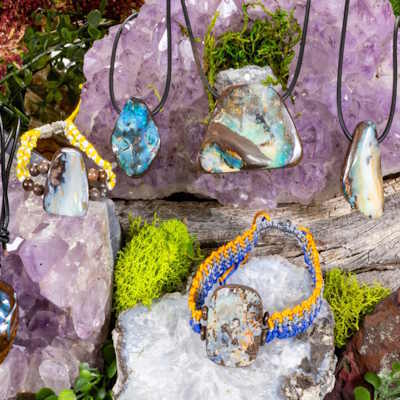
Host rock material represents the most common inclusion type in Australian opals. This is the surrounding sedimentary rock that didn’t fully transform into opal during formation. You’ll see it as darker bands, patches, or layers running through the stone. Far from being a flaw, host rock can actually stabilize the opal and add visual depth. Some collectors specifically seek pieces where the contrast between the host rock and the play of color creates striking aesthetic appeal.
Trace elemental inclusions offer something far more subtle but equally important. Australian opals contain microscopic amounts of elements like hafnium, barium, and zirconium, inherited from altered volcanic sediments and weathered host rocks accumulated over millions of years. These elemental signatures are specific to particular mining regions, making them invaluable for authenticating where an opal originated. When you purchase from a reputable source familiar with opal formation and geological development, you gain insight into how these trace elements shaped your specific stone.
Fluid and mineral inclusions also occur in Australian opals, though they’re less visible without magnification. These might include water pockets, tiny crystals, or other mineral deposits trapped during the opal’s development. They rarely affect structural integrity but can occasionally influence how light passes through the stone, subtly altering its play of color.
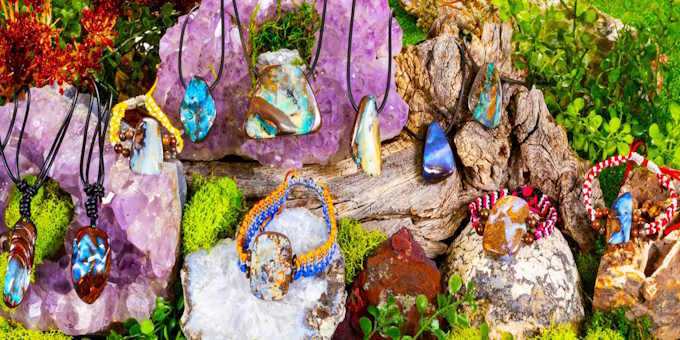
Matrix opals deserve special mention because the host rock isn’t just an inclusion; it’s integral to the stone’s identity. The opal material itself is scattered throughout the host rock rather than concentrated in a solid body. These pieces showcase the raw, unrefined beauty of opals as they exist in nature, making them popular with designers seeking authentic character.
Pro tip: Request detailed information about what inclusions are present in any opal you’re considering. A reputable dealer can explain how specific inclusions contribute to the stone’s stability, origin story, and visual appeal, helping you make a confident purchase decision.
Here’s a comparison of inclusion types commonly found in Australian opals and their impact on quality:
| Inclusion Type | Visual Effect | Impact on Durability | Role in Authenticity |
|---|---|---|---|
| Host Rock | Adds contrast, depth | Often stabilizes stone | Confirms geographic source |
| Trace Elements | Rarely visible | Usually stable | Pinpoints regional origin |
| Water Pockets | Subtle color changes | May cause crazing/cracks | Indicates natural formation |
| Mineral Crystals | Occasional sparkle | Minimal impact | Reveals geological history |
How Inclusions Affect Opal Quality and Value
Inclusions shape every aspect of an opal’s worth, from its visual appeal to its long-term durability. Not all inclusions impact value negatively. Some add character and authenticity, while others compromise structural integrity. Understanding how specific inclusions affect your stone is crucial when making informed purchasing decisions as a collector or designer.
Clarity and transparency represent the most immediate visual factors influenced by inclusions. Darker host rock material reduces light transmission through the stone, which lowers transparency and can diminish the play of color that makes opals so captivating. Conversely, lighter inclusions or strategically positioned matrix elements can enhance contrast and make color patterns more vivid. Size and visibility of inclusions matter tremendously. A large, obvious inclusion directly visible to the naked eye will typically reduce value more significantly than a microscopic trace element detected only under magnification.
Water content within inclusions creates the biggest durability concerns for collectors. Opals with balanced water content and ordered internal structures maintain their stability over decades and centuries. However, high water content inclusions can lead to crazing or cracking as humidity fluctuates. This instability dramatically lowers commercial value because the stone becomes risky to wear in jewelry or display. When purchasing, ask about the water content profile of any piece you’re considering.
The effect on play of color cannot be overstated. Some inclusions actually enhance the visual spectacle by creating contrast zones that make the opal’s color flashes appear more intense. Others scatter light unpredictably, resulting in dull or muddy appearance. Experienced craftspeople understand how to position inclusions to maximize aesthetic appeal rather than hide them.
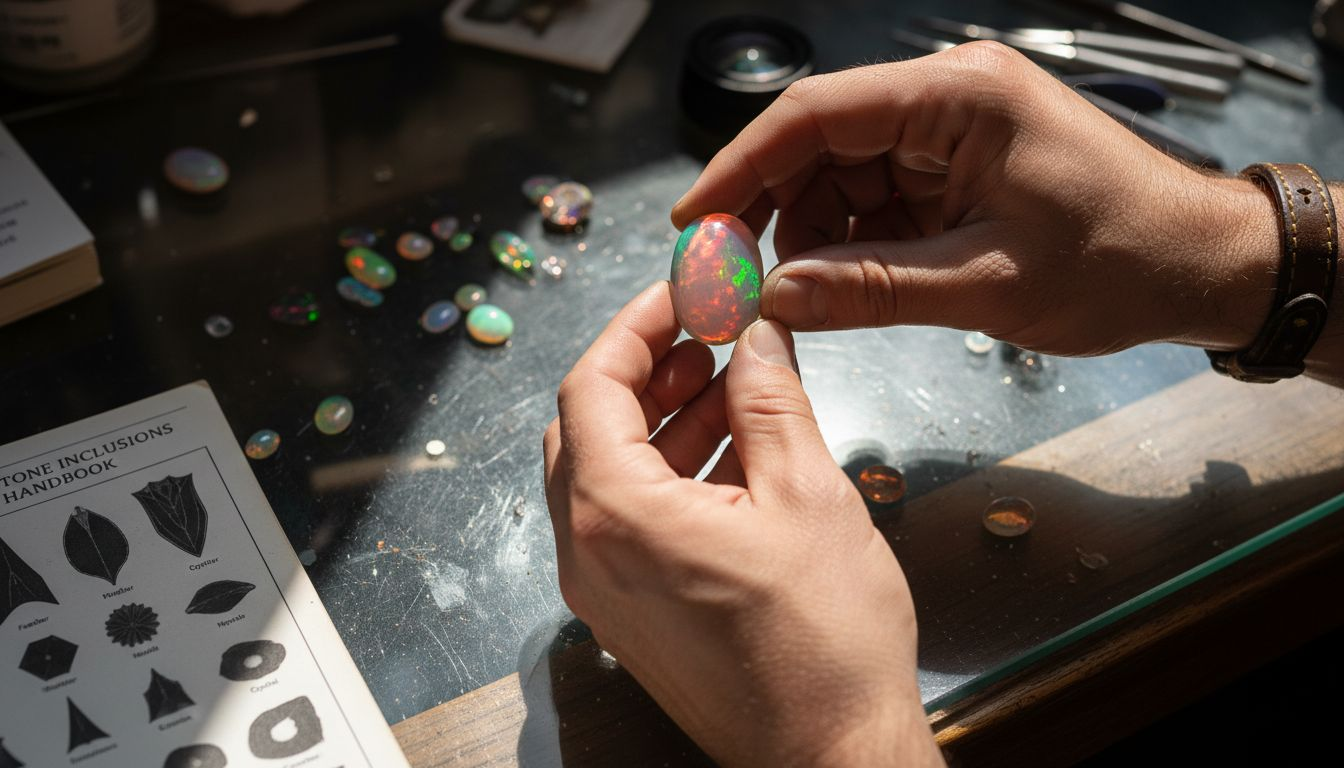
Authenticity represents an often-overlooked benefit of certain inclusions. The presence of specific trace elements and host rock materials from regions like Lightning Ridge or Coober Pedy helps authenticate an opal’s origin. Understanding opal pricing and value factors reveals how dealers assess these technical details.
Pro tip: Request certification or detailed assessment information showing water content levels and inclusion composition for any premium opal. This documentation provides transparency about potential stability issues and helps justify the stone’s price relative to its actual durability and market desirability.
Role of Inclusions in Jewelry Craftsmanship
Inclusions aren’t obstacles for skilled craftspeople to hide. They’re design opportunities that separate exceptional jewelry from ordinary pieces. Master artisans understand how to work with inclusions strategically, turning potential liabilities into defining characteristics that tell each stone’s geological story.
The cutting process begins with careful analysis of where inclusions sit within the rough opal. A skilled cutter examines the stone under magnification to map inclusion placement, size, and composition. They then orient the cut to either minimize visibility of problematic inclusions or position them where they enhance the overall aesthetic. This requires years of experience and intimate knowledge of how light interacts with different inclusion types.
Host rock material, the most common inclusion type, actually provides structural support during cutting and setting. Removing it completely can weaken the stone, making it prone to cracking during the finishing process. Smart craftspeople preserve strategically positioned host rock as a foundation while removing excess material that would compromise the stone’s visual appeal. This balance between stability and beauty separates quality work from rushed cutting.
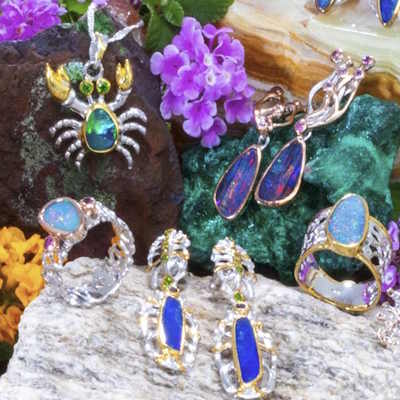
Setting opals with visible inclusions demands precision and respect for the stone’s characteristics. Handcrafted opal jewelry requires metalworkers to build settings that protect the stone’s edges and account for its unique structural properties. A craftsperson must consider how the metal surrounding the opal will support any weak points created by inclusion patterns or water content variations.
Inlay work represents the ultimate expression of inclusion mastery. Designers deliberately select opals with interesting inclusion patterns, cutting them to highlight the contrast between host rock and opal color. The inclusion becomes integral to the design rather than something to conceal. This approach produces pieces with authentic character that machine-cut, uniform stones simply cannot match.
Finishing requires meticulous care around inclusion boundaries. Uneven pressure during polishing can cause micro-fractures at inclusion interfaces, potentially spreading damage over time. Experienced craftspeople use specialized techniques to protect these vulnerable zones while achieving the desired shine and finish across the entire piece.
Pro tip: When commissioning custom jewelry, ask your designer about their inclusion management strategy for your specific opal. Request that they explain how they’ll position the stone and work with its inclusions rather than against them, ensuring your piece will remain stable and beautiful for generations.
Evaluating Inclusions When Purchasing Opals
When you’re examining an opal, inclusions tell the complete story of its quality, durability, and authenticity. Learning what to look for separates confident collectors from those making expensive mistakes. The goal isn’t to find a flawless stone. It’s to understand whether the inclusions present will enhance or compromise your piece over time.
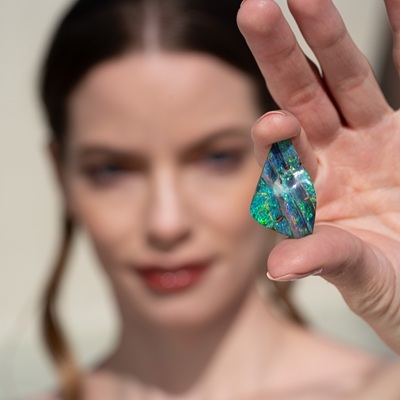
Start by examining inclusion size and visibility under natural light. Small, barely visible inclusions that require magnification to detect pose minimal concern. Large, obvious inclusions visible to the naked eye typically reduce value significantly, especially if they’re positioned in the stone’s face where they directly interrupt color display. Position matters enormously. An inclusion hidden at the stone’s back or side affects value far less than one visible from the front.
Next, assess how inclusions affect the play of color. Some host rock material actually frames the color patches beautifully, creating natural contrast that makes the stone more visually striking. Other inclusions scatter light unpredictably, producing dull, muddy appearance. Look at the opal under different lighting conditions to see how inclusions behave in various settings. This reveals whether you’re purchasing brilliance or compromise.
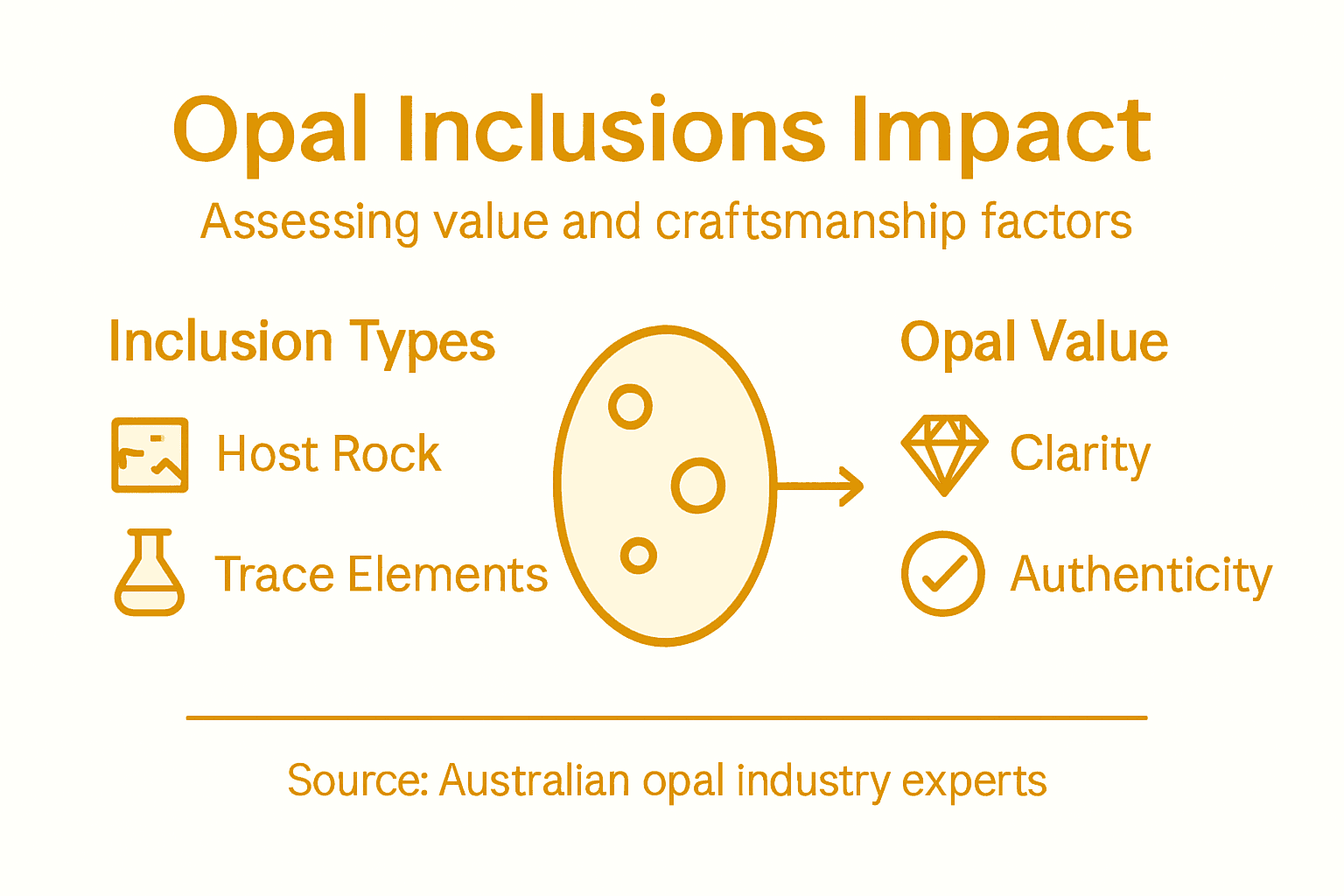
Water content stability is critical but invisible to casual inspection. Ask your seller directly about the stone’s water content profile and structural composition. Opals with balanced water distribution and ordered internal structures maintain stability for decades. Those with excessive water content risk crazing or cracking as humidity fluctuates, making them risky investments despite initially appealing appearance.
When selecting stones for jewelry, understanding how to evaluate opal types for fine jewelry purchases helps you match inclusion characteristics to your intended use. A stone with visible matrix is perfect for bold statement pieces but unsuitable for delicate rings.
Authenticity benefits from certain inclusions. Trace elements and host rock materials from Lightning Ridge or Coober Pedy validate an opal’s origin. Ask your dealer how the inclusion profile supports or confirms the stated geographic source of the stone.
Pro tip: Request permission to examine any opal under magnification before purchasing, and ask the dealer to identify and explain what inclusions are present, their potential impact on stability, and how they view the stone’s long-term durability in jewelry.
Below is a summary of factors to evaluate inclusions when purchasing opals:
| Factor | What to Look For | Potential Impact | Buyer Recommendation |
|---|---|---|---|
| Size & Visibility | Small, hidden inclusions | Minimal value reduction | Favor stones with subtle marks |
| Position | Inclusions on stone’s face | Reduces visual appeal | Value increases if positioned at edges |
| Water Content | Balanced vs. excessive | Risks of cracking/crazing | Request water content analysis |
| Geographic Markers | Trace host rock or elements | Validates stone’s origin | Confirm with dealer’s expertise |
Discover the True Beauty of Opal Inclusions with Australian Opal Direct
Understanding how inclusions impact opal value and craftsmanship is crucial for every collector and jewelry lover. Whether you are concerned about stability, authenticity, or how inclusions enhance the unique character of your gemstone, Australian Opal Direct offers expertly sourced opals that celebrate these natural features. Our ethically mined stones from Lightning Ridge, Coober Pedy, and Queensland come with transparent information about their inclusion types, water content, and origin to help you make a confident purchase.

Explore our curated selection of authentic Australian opals and handcrafted designs where inclusions are embraced as part of each stone’s story. Visit Australian Opal Direct to browse our exclusive collections and learn more about How to Select Opal Types for Fine Jewelry that perfectly match your style and durability needs. Don’t wait to own a gemstone that combines natural history with skilled craftsmanship—shop now and experience the lasting beauty only genuine Australian opals can offer.
Frequently Asked Questions
What are opal inclusions and how do they form?
Opal inclusions are materials trapped inside opal stones during their formation. They can be solid particles, liquid pockets, or tiny air bubbles, forming naturally as silica deposits accumulate over time.
How do inclusions affect the value of opals?
Inclusions can both enhance and diminish an opal’s value. Some inclusions add character and authenticity, while others, especially large or visible ones, can lead to a significant reduction in value depending on their size, visibility, and impact on the stone’s play of color.
What are common types of inclusions found in opals?
Common types of inclusions in opals include host rock material, trace elemental inclusions, fluid inclusions, and matrix opals. Each type influences the stone’s visual appeal, structural integrity, and authenticity differently.
How should I evaluate inclusions when considering an opal for purchase?
When evaluating opals, look for the size and visibility of inclusions, their position on the stone, and how they affect the play of color. Additionally, inquire about the stone’s water content and any trace elements to verify its authenticity.
Recommended
- Opal Stone 101: History, Symbolism, and Uses - Australian Opal Direct
- Opal Opacity Explained: Guide for Gemstone Buyers - Australian Opal Direct
- What Is Opal Pattern? Complete Guide to Types and Value - Australian Opal Direct
- Opal Cabochons: Beauty, Craftsmanship, and Value Explained - Australian Opal Direct