5–6.5 Mohs: What Buyers Must Know to Protect Opal Jewelry
Posted by AOD on 15th Sep 2026
5–6.5 Mohs: What Buyers Must Know to Protect Opal Jewelry
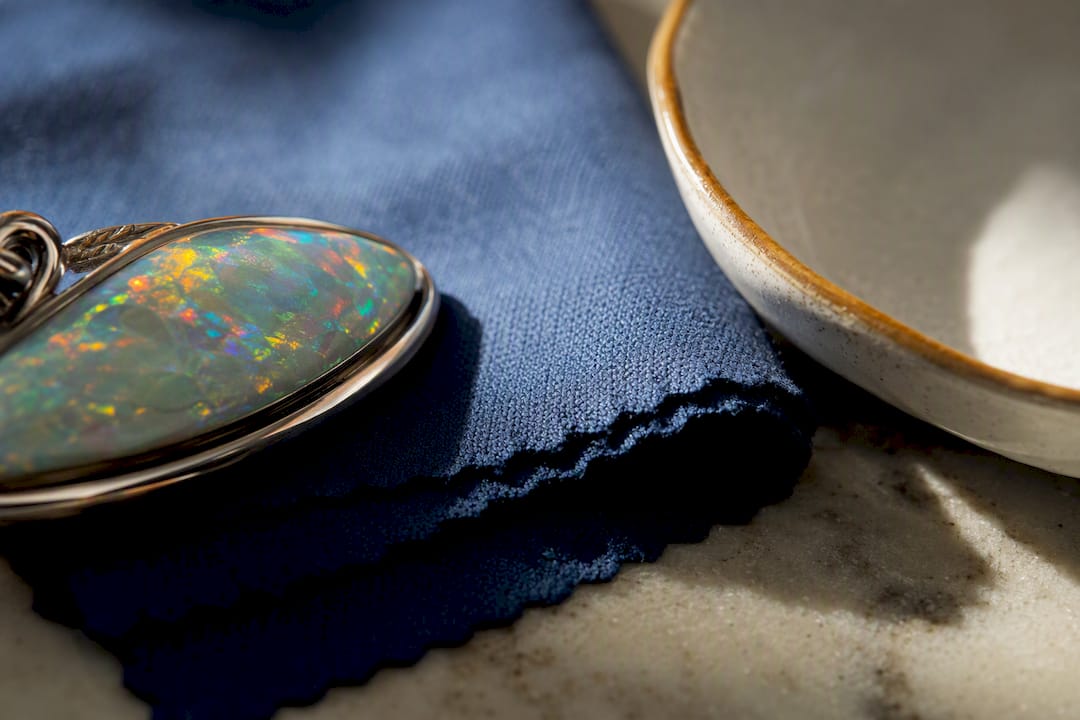
Opal typically rates in the middle range on the Mohs hardness scale, softer than quartz and far softer than diamond. That places it among the more delicate gems used in fine jewelry, prone to scratching from everyday dust, sand, and harder stones it might brush against. Opal deserves protective settings, gentle cleaning, and occasional rather than daily wear.
TL;DR:
- Opal’s Mohs hardness typically ranges from 5 to 6.5, making it softer and more prone to scratching than sapphires or diamonds.
- Variations in opal hardness depend on water content, formation, and treatment, with stabilized or resin-backed stones offering better impact resistance.
- Toughness is separate from hardness; opal’s moderate hardness combined with poor toughness means it is vulnerable to chipping and cracking from impacts.
- Daily wear, especially on rings, increases risk; protective settings like bezels and low-profile designs improve durability.
- Proper care involves gentle cleaning with lukewarm water and mild soap, avoiding heat, ultrasonic cleaners, and rapid temperature changes to prevent crazing and damage.
Table of Contents
- What Opal Hardness Mohs Ratings Actually Measure
- Why Opal Hardness Varies So Much From Stone to Stone
- Hardness vs. Toughness: The Distinction That Actually Protects Your Jewelry
- How to Clean and Store Opal Jewelry Without Damaging It
- Treatments and Stabilization: What Changes and What to Ask
- Buying With Confidence: Authenticity, Certification, and Seller Trust
- Treat It Like the Rare Thing It Is
- Where to Buy Genuine Australian Opal With Real Protection
- Sources
- FAQ
What Opal Hardness Mohs Ratings Actually Measure
The Mohs scale measures one thing only: scratch resistance. Developed in 1812 by mineralogist Friedrich Mohs, it ranks minerals from 1 (talc) to 10 (diamond) based on which one can scratch the other. Talc crumbles under a fingernail. Diamond scratches everything else on Earth and gets scratched by nothing except another diamond.
Here’s the catch that trips up a lot of buyers: the scale is ordinal, not linear. The jump from 9 (corundum, the mineral behind sapphires and rubies) to 10 (diamond) represents a far bigger real-world hardness difference than the jump from 1 to 2. Gemologists treat Mohs numbers as a ranking system, not a proportional measurement, and lean on lab hardness tests and practical wear experience when a decision actually matters.
Where does that leave opal? Right in the middle of the pack.
Opal’s Mohs hardness typically ranges around the middle of the scale, below quartz and the corundum family. For Australian opal, Geoscience Australia lists a slightly narrower range near the mid-range on the Mohs scale.
That half-point spread exists because opal isn’t one uniform mineral recipe. It varies by deposit, water content, and formation conditions, a point worth unpacking before you decide what opal jewelry is right for you.
Set opal next to the gems it commonly shares a jewelry box with, and the practical stakes become obvious:
- Diamond (10): Scratches nearly everything; effectively immune to abrasion from daily wear.
- Sapphire and ruby (9): Extremely scratch-resistant; a common choice for rings worn every day.
- Quartz, amethyst, citrine (7): Harder than the sand and dust particles that cause most everyday scuffing.
- Opal (5 to 6.5): Can be scratched by quartz-based dust, sand, and even some countertop surfaces.
- Turquoise, malachite (5 to 6): Similarly soft, similarly demanding of careful settings.
Everyday household dust contains quartz particles. That single fact explains why opal rings show more wear over time than a sapphire or diamond ring handled the same way. It’s not fragile in a museum-piece sense. It’s simply softer than the grit already floating around your kitchen counter, your car seat, and your gym bag.
Why Opal Hardness Varies So Much From Stone to Stone
Opal doesn’t have the crystalline lattice you find in quartz or diamond. It forms from silica spheres suspended in a hydrated gel structure, and that hydration is the whole story. Some opal contains close to 20% water by weight, locked into microscopic silica spheres arranged in tight, orderly stacks. That same architecture is responsible for the gem’s famous play-of-color, the flashes of red, green, and blue that shift as you tilt the stone. The water content that creates the fire is the same water content that softens the material and makes it more prone to brittleness than a fully crystalline mineral.
Not all opal behaves identically, and the type in your jewelry matters:
- Precious opal (the kind with visible play-of-color) is what most buyers picture. Hardness varies within the 5 to 6.5 range depending on silica structure quality and origin.
- Common opal (potch, lacking play-of-color) tends to follow a similar hardness profile but without the light-diffraction structure that makes precious opal valuable.
- Boulder opal, cut with a layer of host ironstone left attached, often performs better in daily settings. The ironstone backing adds physical support even though the opal layer itself isn’t any harder.
- Black opal and crystal opal from deposits like Lightning Ridge tend to show dense, stable silica structure, though individual stones still vary.
Treatments and stabilization processes can shift how a given stone behaves, sometimes for the better. A stabilized or resin-backed opal may resist chipping more effectively than an untreated stone of identical Mohs hardness, because the added material changes how the piece absorbs impact even though it doesn’t change the mineral’s scratch resistance. That distinction between hardness and toughness is worth its own explanation, since it’s the single most misunderstood concept in opal buying.
Hardness vs. Toughness: The Distinction That Actually Protects Your Jewelry
Hardness tells you how well a gem resists scratching. Toughness tells you how well it resists cracking, chipping, or fracturing under impact or pressure. These are different properties, and opal is the textbook case of why the difference matters.
Opal’s toughness is rated from poor to fair, a separate and arguably more important number than its Mohs rating for anyone deciding how to wear it. A stone can sit safely in the middle of the hardness scale and still be vulnerable to a sharp knock against a doorframe or a sudden drop in temperature. Jade, by contrast, has middling hardness but exceptional toughness, which is why it survives centuries of carving and daily handling. Opal runs the opposite way: moderate hardness, weak toughness. That combination is exactly why blanket comparisons to “harder” gems miss the point buyers actually need.
So which jewelry types suit opal best?
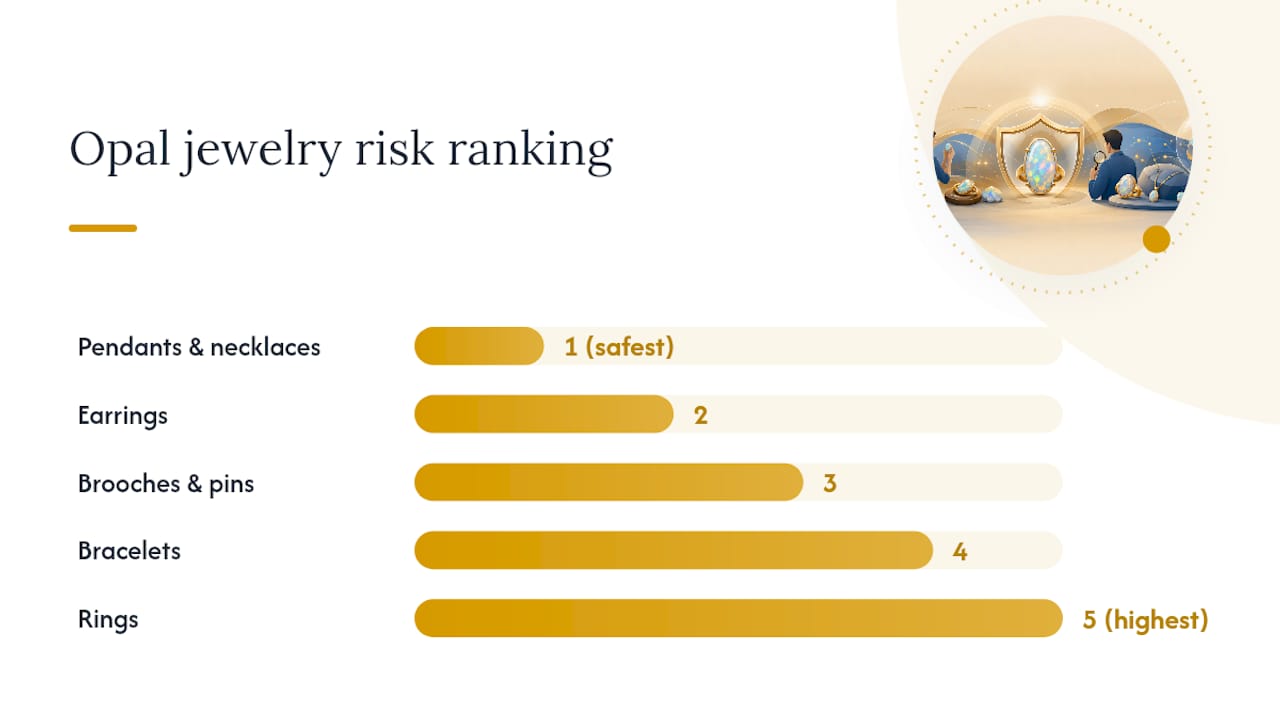
- Pendants and necklaces rank as the safest everyday choice. They hang away from surfaces, rarely make contact with countertops or door handles, and take the least incidental abuse of any jewelry category.
- Earrings run a close second. Occasional brushing against hair or a collar poses minimal risk compared to the friction a ring endures.
- Brooches and pins work well for the same reason: low contact, low friction, mostly decorative movement.
- Rings carry the highest risk. Hands hit things constantly, dishes, doorframes, car doors, and a ring sits at the center of that contact. If you want an opal ring, a bezel setting that wraps a metal rim fully around the stone’s edge offers meaningfully better protection than a prong setting, which leaves the girdle exposed. A low-profile design that keeps the stone close to the finger, rather than raised high, also reduces the odds of a direct hit.
- Bracelets sit near rings on the risk scale. Constant wrist movement against surfaces makes them a tougher call for opal than pendants or earrings.
Pro Tip: If you’re set on an opal ring, ask about a halo setting with a raised metal edge. The metal takes the impact from an accidental knock instead of the stone’s exposed girdle, buying you real protection without hiding the gem’s color.
The main risks worth watching for are crazing (fine surface fractures from dehydration or heat stress), chips along the edges from impact, surface scratches from contact with harder materials, and thermal shock from rapid temperature swings, think leaving a ring on a sunny windowsill, then rinsing it under cold water. Each of these is largely preventable once you know what triggers it, which brings us to daily care.
How to Clean and Store Opal Jewelry Without Damaging It
The safest cleaning method for opal is also the simplest one available: warm water, a small amount of mild soap, and a soft cloth. That combination is what gemological professionals consistently recommend, and it works precisely because it avoids every mechanism that damages opal.
Here’s the routine, step by step:
- Fill a bowl with lukewarm water and add a drop of mild dish soap. Avoid hot water entirely; opal reacts poorly to temperature extremes.
- Soak the piece for one to two minutes, no longer. Extended soaking isn’t necessary and adds no benefit.
- Wipe gently with a soft cloth or a soft-bristled brush (a baby toothbrush works well) to lift dust or oils from crevices around the setting.
- Rinse under lukewarm running water, matching the temperature you started with to avoid thermal shock.
- Pat dry immediately with a soft, lint-free cloth. Don’t let the piece air-dry sitting in a damp spot.
- Store separately in a soft-lined compartment or pouch, away from harder gems like diamonds or sapphires that could scratch the opal’s surface during storage.
Storage conditions matter almost as much as the cleaning itself. Opal prefers moderate, stable humidity. Extremely dry environments, like a safe deposit box near a heating vent, or the glovebox of a car in summer, can pull water out of the stone’s structure over months or years. That dehydration is what triggers crazing, and crazing is irreversible once it happens. Prevention is the only real strategy here, since there’s no reliable way to reverse fine fracture lines once they form.
Pro Tip: Keep a small glass of water or a damp cotton ball in the drawer or box where you store opal jewelry, especially in dry climates. It’s a low-effort way to maintain ambient humidity without soaking anything directly.
What to avoid, explicitly:
- Ultrasonic and steam cleaners. Both rely on vibration and heat that opal’s water content can’t tolerate.
- Hydrofluoric acid and caustic alkaline solutions. These chemicals attack opal’s silica structure directly.
- Abrasive cloths or polishing compounds designed for harder gems or metals.
- High heat sources, including hair dryers, hot car interiors, and direct sunlight for extended periods.
- Sudden temperature changes, such as moving straight from a hot shower to cold tap water.
A detailed opal cleaning routine can walk you through additional nuances if you’re caring for an inherited or vintage piece where the setting’s condition is also a factor. And if you’ve ever wondered why opals crack in the first place, the dehydration mechanism behind crazing explains most cases.
Treatments and Stabilization: What Changes and What to Ask
Not every opal on the market is untreated. Sellers commonly use a handful of processes to improve appearance or durability, and each one changes how the stone should be cared for going forward.
Impregnation involves saturating porous opal with oil, wax, or plastic resin to enhance color saturation and fill microscopic surface gaps. Sugar treatment and smoke treatment work differently: the stone is soaked in a sugar solution and then treated with acid or heat (or exposed to smoke) to deposit dark carbon particles into its structure, which intensifies the background color and makes play-of-color pop more visibly. These processes primarily target common or lighter-toned opal that wouldn’t otherwise show strong contrast.
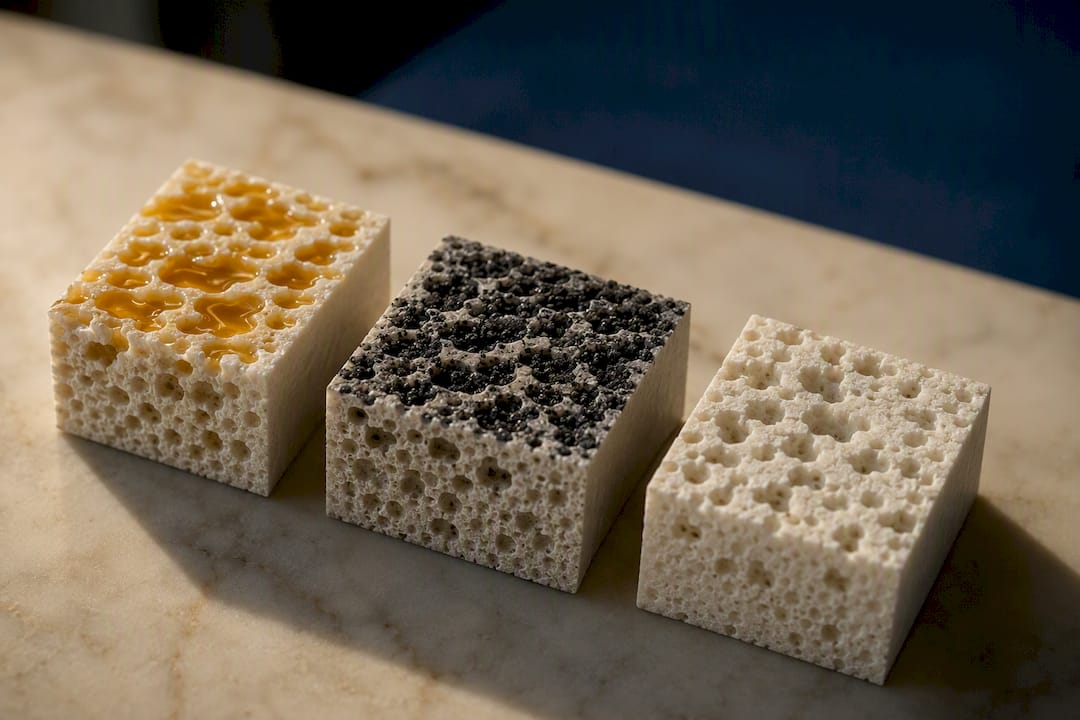
Stabilization, often using polymer resins, can genuinely improve a stone’s practical toughness for everyday settings. That’s a real benefit. But treated opal usually needs adjusted care, since some treatment methods react differently to heat, solvents, or prolonged water exposure than untreated stone does.
Before buying, ask directly:
- Is this opal treated, and if so, by which method?
- Does the treatment affect how I should clean or store the piece?
- Is the treatment permanent, or could color intensity fade over time?
- Is this disclosed on any accompanying documentation?
Full disclosure should come standard from any reputable seller. If a listing doesn’t mention treatment status at all, that’s worth asking about directly rather than assuming the stone is natural.
Buying With Confidence: Authenticity, Certification, and Seller Trust
A Colored Stone Identification Report is the clearest way to confirm what you’re actually buying. A proper report distinguishes natural opal from lab-created or synthetic material, identifies the opal type (solid, doublet, or triplet), and discloses any treatments applied. For a stone whose value depends heavily on origin and natural formation, that documentation isn’t optional paperwork. It’s the difference between knowing what you own and guessing.
Beyond the report itself, a handful of trust signals separate a reliable seller from a risky one:
- Provenance: Can the seller name the specific field or region the opal came from, such as Lightning Ridge, Coober Pedy, or Queensland’s boulder opal country?
- Warranty coverage: Does the piece come with a warranty against manufacturing defects or setting failure?
- Insured shipping: Is the piece insured in transit, given how much value can be concentrated in a small, fragile stone?
- Return policy: Is there a clear window to return or exchange the piece if it doesn’t match its description?
- Custom work transparency: If you’re commissioning a custom setting, does the jeweler walk you through stone selection and setting choice before finalizing the design?
These aren’t abstract checkboxes. Insured shipping matters specifically because opal’s poor to fair toughness means a piece damaged in transit is a real possibility, not a hypothetical one. A warranty matters because settings can loosen or fail years down the line, and knowing you’re covered changes how confidently you wear the piece day to day. If you’re shopping for an engagement piece specifically, guidance on selecting engagement opals covers setting choices in more depth than a general buying checklist can.
Treat It Like the Rare Thing It Is
Opal rewards a particular kind of ownership: attentive, unhurried, a little precious. I’d rather see a beautiful boulder opal pendant worn to dinners and events than jammed into a jewelry box drawer next to a ring that scratches it, or worn daily until crazing sets in from a hot shower routine nobody thought twice about. The hardness number matters, but it’s the toughness rating and your own habits that actually determine how long a piece lasts.
Choose protective settings when a ring is involved. Clean gently and rarely, not aggressively and often. Store it away from harder stones, away from dry heat, away from temperature swings. None of that is complicated. It just requires treating opal as what it is: a gem built from water and light, not built for rough treatment.
— Renee
Where to Buy Genuine Australian Opal With Real Protection
Once you understand how demanding opal can be, the seller you choose matters as much as the setting you pick. Some sellers work directly with miners from Lightning Ridge, Coober Pedy, and Queensland to provide stones with documented provenance rather than a vague “Australian opal” label.

Many pieces ship with insured delivery and a warranty, addressing the risks of transit damage to a toughness-poor gem and providing confidence in settings designed to protect the stone. Custom design work may be available for those who prefer to start with a bezel or halo setting from scratch rather than retrofit an existing piece. For care between wears, the opal jewelry care routine guide pairs well with anything you buy. Browse the current collection at Australianopaldirect to see verified stones with full disclosure on origin and treatment status before you commit.
FAQ
Is opal too soft for a ring?
Opal isn’t too soft for occasional wear rings, but its poor to fair toughness makes protective settings like bezels essential, and daily wear increases chip and scratch risk over time.
What is the hardness of Australian opal?
Australian opal generally falls within a mid-range hardness on the Mohs scale, consistent with the broader range GIA cites for opal overall.
What are the top three hardest minerals on the Mohs scale?
Diamond ranks hardest at 10, followed by corundum (sapphire and ruby) at 9. Opal sits well below both, in the 5 to 6.5 range.
Does opal scratch easily?
Opal scratches more easily than common gems like quartz because everyday dust often contains quartz particles harder than opal itself, which is why separate storage and gentle cleaning matter.








