Opal Engagement Meaning: 5 Care Steps and Australian Origin
Posted by AOD on 3rd Oct 2026
Opal Engagement Meaning: 5 Care Steps and Australian Origin

An opal engagement ring speaks of love, hope, and individuality, a gemstone whose shifting colors have symbolized devotion since antiquity. It carries genuine emotional weight for couples who want a ring as unrepeatable as their story, though its softer structure means it asks for more care than a diamond.
TL;DR:
- Opals’ play-of-color and unique patterns are scientifically linked to their individual significance and aesthetic appeal, making each ring one of a kind.
- Since opals are softer than diamonds, they require protective settings like bezels or halos for daily wear, and loose or treated stones should be verified before purchase.
- Choosing a ring setting that matches the symbolism—such as a bold black opal for a dramatic statement or a white opal for understated elegance—enhances personal significance.
- Support from direct Australian miners, warranties, and custom design services helps ensure provenance, quality, and a tailored piece that reflects both meaning and durability.
Table of Contents
- Symbolism: Cultural and Modern Meanings Used in Engagements
- History, Birthstone, and Anniversary Associations
- Play-of-Color, Opal Varieties, and What They Say
- Durability, Treatments, and Care for Everyday Wear
- Choosing or Designing a Ring That Fits Your Meaning
- Provenance and Support Behind Every Opal We Offer
- Why Meaning Often Outweighs the Extra Care
- See Our Opal Rings and Custom Design Options
- FAQ
- Sources
Symbolism: Cultural and Modern Meanings Used in Engagements
Opal has carried the language of love and hope since ancient Rome, where it was prized as a stone of promise and tenderness. That lineage gives the gem a kind of inherited meaning, one a couple steps into rather than invents. Today, many couples choose opal precisely because it resists convention. A diamond says tradition; an opal says this one is ours alone, since no two stones share the same pattern of light.
That visible individuality is what makes the symbolism feel personal rather than borrowed. The color play shifts with the angle of a hand, the tilt of a head, the light in a room, so the ring seems to hold a living quality.
- Love and devotion: opal’s historic association with affection in ancient Rome.
- Hope and optimism: a traditional meaning carried alongside love through folklore.
- Purity and truth: older symbolic layers tied to the stone’s clarity of spirit.
- Individuality: no two opals display the same pattern, so the stone reads as singular.
History, Birthstone, and Anniversary Associations
The name opal likely descends through Sanskrit and Latin roots connected to India, where early stones were traded, and the Romans called it opalus, a term tied to beauty and preciousness in their own legends. Bedouin and Greek lore added further mystique, with some traditions linking the stone to tears or prophetic power.
- Opal is the designated October birthstone, a modern anchor for anyone born that month.
- It also marks the 14th wedding anniversary, a gift tradition separate from engagement custom.
- The notion that opal brings bad luck outside October traces to a single 1829 novel by Sir Walter Scott, not to any broader historical record.
Knowing that the superstition has a literary origin rather than a cultural consensus lets couples choose the stone on its merits instead of worrying about inherited bad press.
Play-of-Color, Opal Varieties, and What They Say

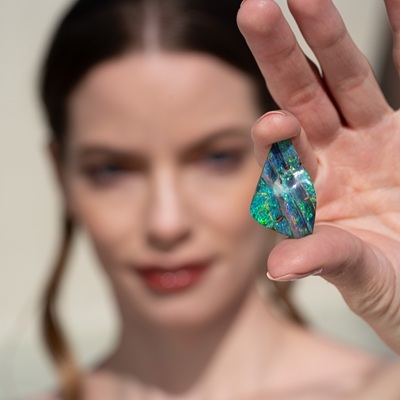
Opal’s signature effect, called play-of-color, comes from microscopic silica spheres stacked inside the stone that diffract light into flashes of red, blue, green, and violet. No two stones form this structure identically, which is the scientific root of the individuality couples respond to emotionally.
The variety a couple chooses can shift the ring’s personality as much as its appearance:
- White opal: a lighter body tone that lets color play read as soft and gentle, suited to understated designs.
- Crystal opal: a near-transparent to semi-transparent body that lets light travel through the stone, producing vivid, glass-like flashes.
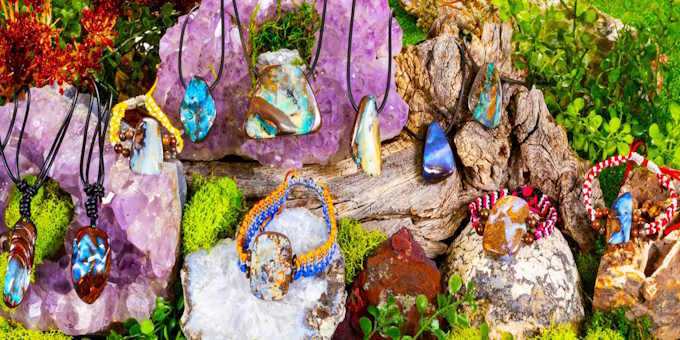
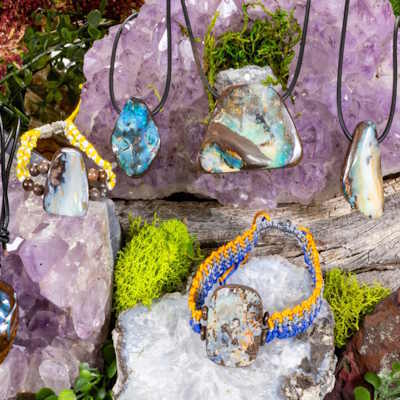
- Boulder opal: formed against an ironstone backing, giving it natural strength and earthy, layered color.
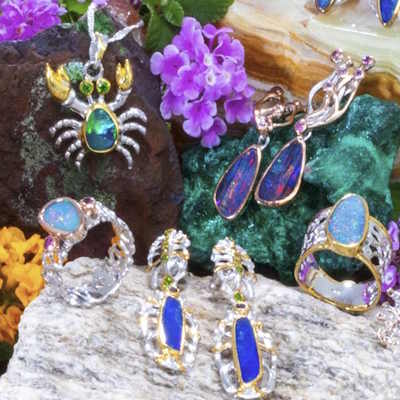
- Black opal: a dark body tone that makes color play appear dramatic and saturated, often the most striking of the four.
A couple drawn to quiet elegance might lean toward white or crystal opal, while those wanting a bolder visual statement often choose black or boulder stones. Either way, the pattern and brightness become part of the ring’s personal narrative, a detail worth exploring further when selecting engagement opals for unique rings.
Durability, Treatments, and Care for Everyday Wear
Opal has a Mohs hardness generally between 5.5 and 6.5, softer than sapphire or diamond, which means it can chip or scratch if knocked against a hard surface. That does not make it unwearable as an engagement ring, but it does change how you treat daily life while wearing one.
Some opals sold for rings are assembled rather than solid, meaning doublets or triplets combine a thin opal layer with backing or a protective cap, and some stones undergo treatments like wax or resin impregnation or sugar-darkening to intensify color. None of these approaches are dishonest on their own, but disclosure matters: ask whether a stone is natural and solid or assembled, and whether any treatment has been applied, before you commit.
- Remove the ring before manual labor, sports, gardening, or dishwashing.
- Avoid prolonged heat and household chemicals, including chlorine and ammonia-based cleaners.
- Clean gently with a soft cloth and lukewarm water rather than ultrasonic cleaners.
- Store the ring away from harder gems that could scratch its surface.
- Keep documentation of origin and treatment for insurance or warranty purposes.
Pro Tip: Have the setting inspected once a year, the same way you’d check a watch battery, since a loose prong is the most common cause of a lost opal.
Choosing or Designing a Ring That Fits Your Meaning
The visual language of the stone should match the meaning you want the ring to carry. A soft white opal with gentle color flashes suits a quiet, steady kind of devotion, while a black opal with dramatic fire suits a bolder declaration. Origin and pattern become part of the story you tell when someone asks about the ring.
Setting choice matters just as much as stone choice, since opal’s relative softness calls for protection built into the design rather than added later.
- Bezel settings: a metal rim wraps the stone’s edge, shielding it from side impact.
- Halo settings: a ring of smaller stones surrounds the opal, adding visual presence while keeping the opal lower and more protected.
- Low-profile bezel hybrids: combine the security of a bezel with a sleeker silhouette for daily wear.
Before buying or commissioning a ring, ask the jeweler directly whether the stone is natural or assembled, whether it has been treated, what warranty applies, and whether repair or re-tipping is available down the line. These questions, paired with thought toward custom opal ring design, turn an abstract symbol into a ring built for the life it will actually live.
Provenance and Support Behind Every Opal We Offer
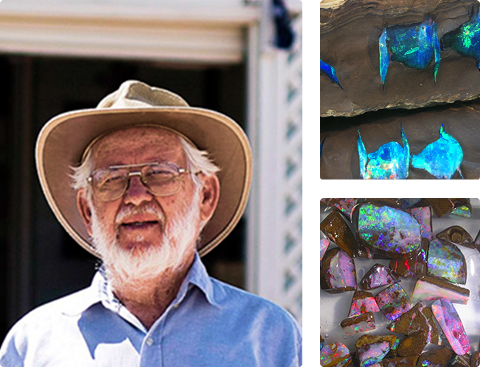
Some online opal retailers work through direct relationships with miners in key Australian regions. This direct line from ground to buyer can mean fewer intermediaries and clearer provenance for a stone meant to carry decades of meaning.
- Curated collections may group stones by color, pattern, and rarity for easier comparison.
- Custom design services can help translate specific symbolism into a one-of-a-kind setting.
- Warranties, complimentary insurance, and return policies can reduce the practical risk of buying a softer gemstone.
For readers weighing specific stones against the symbolism they want, the significance of opal in jewelry offers further background on rarity and meaning.
Why Meaning Often Outweighs the Extra Care

Couples rarely choose opal by accident. They choose it because a diamond felt too expected and this stone felt like theirs. The extra care an opal asks for, a little more caution, a little more intention, tends to matter less over time than the story the ring tells at dinner parties for the next forty years.
My own view is simple: treat the superstition as folklore, treat the hardness as a design problem to solve, and treat the ring as an heirloom in training. Pair that choice with a thoughtful proposal gesture, whether it’s a heartfelt message or flowers chosen to match the moment, and the ring becomes part of a larger, intentional story rather than a single purchase.
— Renee
See Our Opal Rings and Custom Design Options
If the symbolism of opal speaks to you, the practical next step is seeing the stones themselves. Our opal rings collection highlights opal jewelry with a focus on provenance and craftsmanship. Pieces may be offered with warranty coverage, complimentary insurance, and returns policies that support buyers.

For couples who want a setting built around a specific meaning, pattern, or stone origin, our custom hand-crafted opal jewelry service works directly with you to shape a ring that fits both the symbolism and the life it will live. Browse the current collection or reach out to start a custom design conversation.
FAQ
Is opal a good engagement stone?
Opal works well as an engagement stone for couples who value individuality and are willing to give it slightly more care than a diamond. Its play-of-color makes each ring visually unique, though a protective setting like a bezel or halo helps it hold up to daily wear.
What does it mean if someone gives you an opal?
Opal traditionally signals love, hope, and purity, meanings tied to its long history in ancient Rome and later folklore. Given as a gift, it often expresses affection and a wish for good fortune rather than any negative connotation.
What stone represents engagement?
Diamond remains the conventional engagement stone, but there is no rule requiring it, and gemstones like opal, sapphire, and morganite are increasingly chosen for their own symbolism and appearance. Opal specifically represents love, hope, and individuality, making it a meaningful alternative for couples who want something distinct.
Who should not wear an opal stone?
Anyone whose daily routine involves frequent manual labor, heavy chemical exposure, or high-impact activity should think carefully about wearing opal without removing it regularly, since its hardness of 5.5 to 6.5 makes it more prone to chipping than harder gems. The superstition that only October-born people can safely wear opal has no historical basis beyond a nineteenth-century novel.
Sources
- How to Select Engagement Opals for Unique Rings
- Opal Play-of-Color: Why It Defines Australian Gems
- Significance of Opal in Jewelry – Meaning, Rarity, Impact
- How to Design Custom Opal Rings for Luxury Jewelry Lovers
- Thoughtful Message Ideas for Partners That Truly Connect
- Best Engagement Flower Ideas for Proposals and Parties