Jewelry Warranties Explained: What Buyers Need to Know
Posted by AOD on 13th Jul 2026
Jewelry Warranties Explained: What Buyers Need to Know

TL;DR:
- Jewelry warranties guarantee protection against manufacturing defects for a specified period but do not cover loss, theft, or damage from daily wear. Buyers should carefully understand coverage exclusions, inspection requirements, and claim procedures to avoid surprises. Combining warranties with insurance provides the most comprehensive protection for valuable jewelry.
Jewelry warranties are guarantees from a manufacturer or retailer that protect your purchase against defects in materials and workmanship for a defined period. Coverage periods range from 90 days to lifetime depending on the retailer, and the Magnuson-Moss Warranty Act governs how written warranties must be disclosed to consumers in the United States. A warranty is not insurance. It fixes factory mistakes. It does not replace lost stones, cover theft, or repair damage from daily wear. Understanding that distinction before you buy protects you from a costly surprise later.
What do jewelry warranties typically cover and exclude?
A jewelry warranty covers manufacturing defects and workmanship errors. Think faulty clasps, loose prongs, structural faults in the setting, or a shank that splits because of a casting flaw. These are problems born in the workshop, not on your finger. Warranty coverage is the retailer’s promise that their craft meets a defined standard.
The exclusions list is where most buyers get surprised. Standard warranty terms for necklaces, rings, and earrings almost always exclude the following:
- Normal wear and tear: Tarnishing, metal discoloration, and surface scratches are excluded from warranties across the industry. These are expected outcomes of wearing jewelry, not manufacturing failures.
- Accidental damage: A ring bent from impact or a chain snapped by snagging on fabric falls outside standard coverage.
- Loss and theft: No warranty covers a missing piece. That protection belongs to insurance.
- Center stones: Warranties usually exclude center stones or cap coverage for stones above certain values. This is a critical gap for anyone buying a diamond or opal centerpiece.
- Unauthorized repairs: Any repair done outside the approved service network voids coverage immediately.
- Discoloration from chemicals: Exposure to chlorine, perfume, or cleaning products falls on the owner, not the maker.
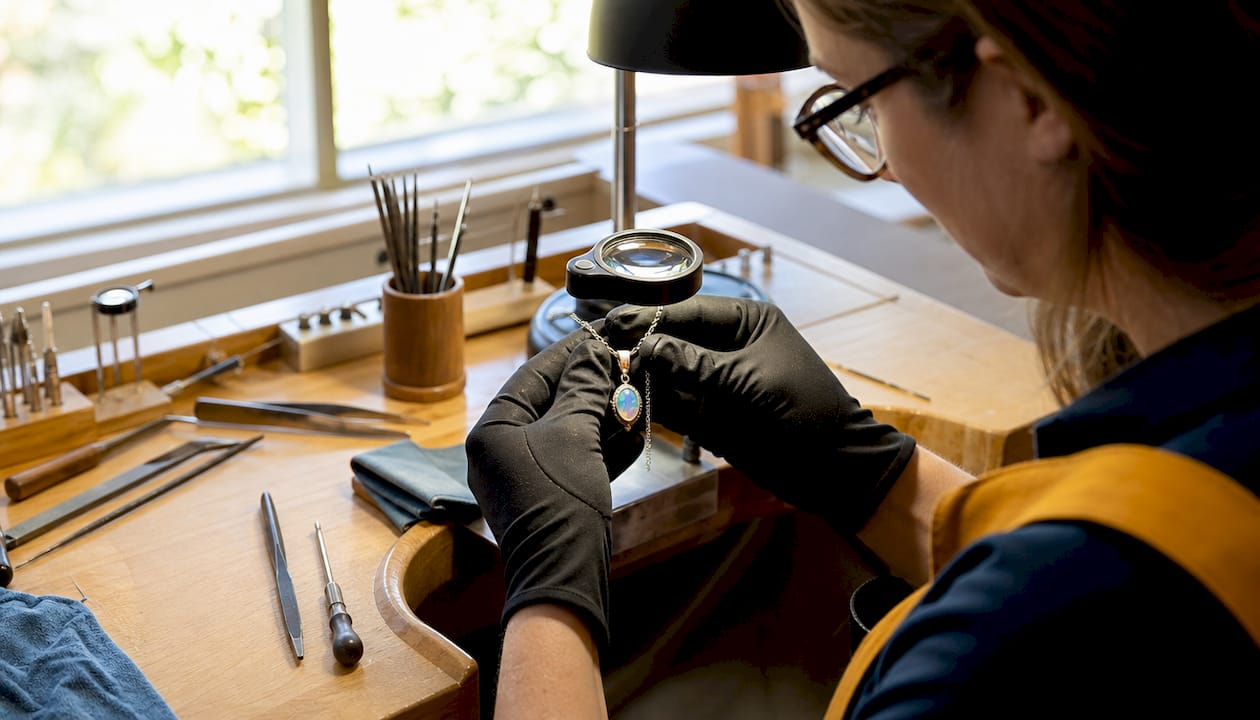
Many warranties also require regular inspections every six months to keep coverage active. Missing a single scheduled checkup can void even a “lifetime” warranty. That condition rarely appears in bold print, which is why reading the full policy document matters before you sign.
Pro Tip: Ask the retailer to highlight the inspection schedule and exclusion list in writing before you complete your purchase. A trustworthy seller will answer without hesitation.
Repair turnaround times and restocking fees also vary widely. Restocking fees can range from 15% up to 50% for returns or replacements under warranty. That figure shocks most buyers who expect a straightforward fix at no cost.
How does the jewelry warranty claim process work?
Filing a warranty claim follows a clear sequence, and skipping any step delays or kills the claim. Here is the standard process used across the fine jewelry industry:
- Gather your documentation. The claim process requires your original order number, proof of purchase, a clear written description of the defect, and multiple-angle photographs showing the issue in detail.
- Contact the retailer or warranty provider. Reach out through the official channel listed in your warranty document. Do not use social media or informal email threads. Keep a record of every message, including timestamps.
- Ship the piece safely. Shipping to the service center is typically at the customer’s expense until the defect is confirmed. Use a tracked, insured shipping method. If the defect is verified, some retailers cover return shipping.
- Wait for assessment. A qualified jeweler inspects the piece and determines whether the issue falls within warranty terms. This step can take several weeks.
- Receive repair or replacement. If approved, the piece is repaired or replaced according to the warranty terms. Repair turnaround can take up to 60 business days for complex or specialized work. Plan accordingly, especially if the piece is worn daily.
One rule applies throughout the entire process: never attempt a DIY repair or take the piece to an unauthorized jeweler. DIY or unauthorized repairs void a warranty immediately, regardless of how minor the fix seems. The original retailer or warranty provider must authorize every repair attempt.
Pro Tip: Create a dedicated folder, physical or digital, for each piece of fine jewelry you own. Store the purchase receipt, warranty document, inspection records, and any claim correspondence together. A clear timeline of documented damage aids smoother claim processing.
How do jewelry warranties differ from insurance and protection plans?
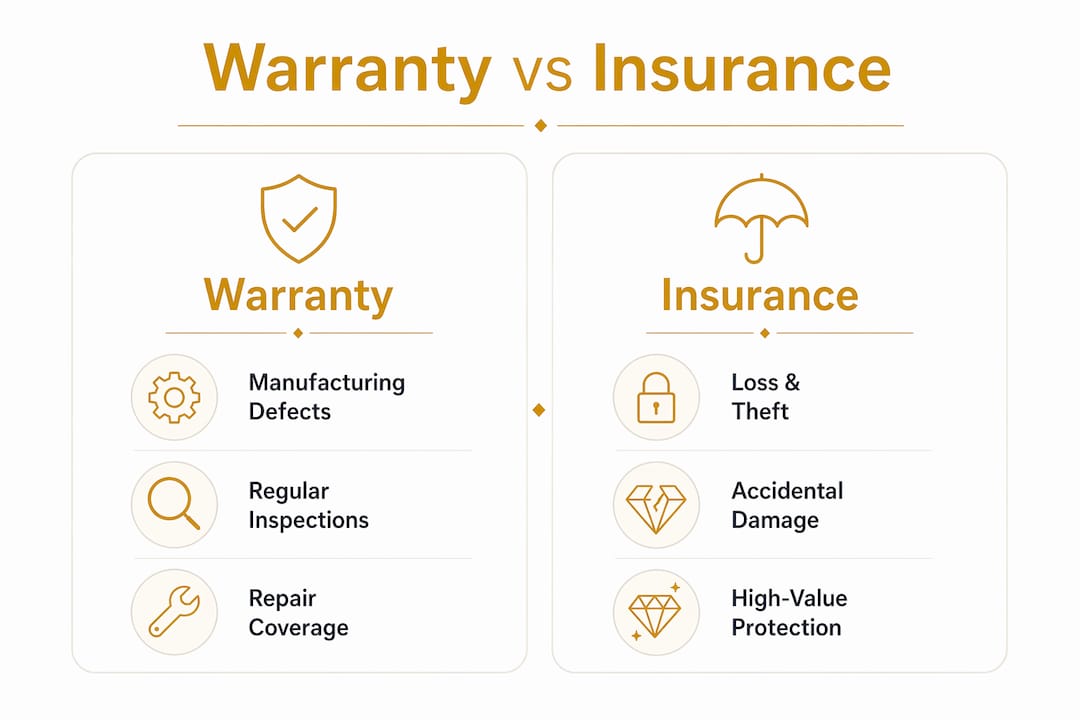
A warranty and an insurance policy protect against entirely different risks. Confusing the two leaves real gaps in your coverage. The table below shows the core distinctions:
| Protection type | What it covers | What it excludes |
|---|---|---|
| Manufacturer warranty | Defects in materials and workmanship | Loss, theft, accidental damage, wear |
| Jewelry insurance | Loss, theft, accidental damage | Manufacturing defects (varies by policy) |
| Extended protection plan | Wear, tear, minor accidental damage | Major loss, theft (varies by plan) |
Insurance covers loss, theft, and accidental damage that a warranty never will. For high-value pieces, specialist insurance policies provide scheduled or blanket worldwide coverage, and underwriters advise “all-risk” coverage even for pieces stored securely at home. That recommendation reflects how often valuable jewelry is damaged or lost in ordinary domestic settings, not just during travel.
Extended warranty or jewelry protection plans sit between the two. They typically cover wear, minor accidental damage, and some stone tightening that a standard warranty excludes. They do not replace insurance for loss or theft. Think of the three layers this way: the warranty fixes the factory’s mistakes, the protection plan covers the life you live in the piece, and insurance guards against the world outside your control.
For opal jewelry specifically, this layered approach matters. Opals are softer than diamonds and more sensitive to impact and dehydration. A gemstone warranty may cover a crack caused by a setting flaw, but a crack from a knock on a countertop requires insurance. Understanding which layer applies to which risk is the foundation of smart jewelry protection. You can read more about coverage gaps explained in Australianopaldirect’s full insurance guide.
What are the most common pitfalls when using jewelry warranties?
Most warranty disappointments trace back to terms the buyer never read. These are the pitfalls that appear most often, and how to avoid each one:
- “Lifetime” warranties with hidden conditions. Consumers often misunderstand lifetime warranties, which can include strict inspection requirements and exclusions that limit actual coverage. Lifetime means the life of the warranty terms, not unconditional protection forever.
- Center stone exclusions. The most expensive part of many rings sits outside warranty coverage. Confirm in writing whether your center stone is included, capped, or excluded entirely.
- Non-transferability. Many jewelry warranties are non-transferable. If you sell or gift the piece, the new owner has no warranty protection. This affects resale value and estate planning for high-value collections.
- Unauthorized repair traps. Taking a piece to a local jeweler for a quick fix, even a minor prong tightening, can void the entire warranty. Always call the original retailer first.
- Shipping costs as hidden expenses. Shipping costs for warranty claims often fall on the customer unless the defect is confirmed. On a high-value piece, insured shipping both ways adds up quickly.
- Restocking fees on replacements. Fees of 15% to 50% on a replacement piece can make a warranty claim feel more like a penalty than a benefit.
Retail experts suggest using warranties as a buying evaluation tool, focusing on warranty clarity and retailer support to avoid surprises. A retailer who provides a clear, written policy with no evasive language is demonstrating long-term commitment to the customer. That transparency is worth as much as the warranty terms themselves.
Pro Tip: Before purchasing any fine jewelry, ask three direct questions: What does this warranty exclude? What are the inspection requirements? Who pays for shipping during a claim? The answers reveal the retailer’s actual commitment to after-sale support.
Australianopaldirect offers a 90-day warranty alongside complimentary insurance on its pieces, which reflects the kind of transparent warranty communication that buyers should look for in any fine jewelry retailer.
Key Takeaways
A jewelry warranty covers manufacturing defects only. Combining it with insurance and a protection plan is the only way to guard against the full range of risks a fine jewelry piece faces.
| Point | Details |
|---|---|
| Warranty scope is narrow | Coverage applies to manufacturing defects, not wear, loss, theft, or accidental damage. |
| Inspection requirements matter | Missing a required six-month inspection can void even a lifetime warranty. |
| Center stones are often excluded | Confirm in writing whether your gemstone is covered, capped, or excluded entirely. |
| Claims require full documentation | Gather proof of purchase, photos, and a written defect description before contacting the retailer. |
| Insurance fills the gaps | Specialist all-risk policies cover what warranties never will, including loss and accidental damage. |
What I’ve learned from watching buyers navigate warranty claims
The single most common mistake I see is treating a warranty as a catch-all safety net. Buyers invest in a beautiful piece, tuck the warranty card in a drawer, and assume they are fully protected. They are not. A warranty is a narrow promise about the quality of the craft. Nothing more.
The second mistake is failing to document. When a claim goes sideways, it almost always comes down to missing records. No receipt, no photos taken at the time of damage, no record of inspection visits. The claim stalls, the retailer disputes the timeline, and the buyer is left frustrated. A few minutes of organized record-keeping at the time of purchase prevents months of headache later.
What I find genuinely reassuring is when a retailer builds transparency into the purchase experience from the start. Clear warranty terms, written inspection schedules, and honest communication about exclusions signal that the seller stands behind their work. That quality of communication is itself a form of protection. It tells you the retailer expects to be there when something goes wrong.
My honest advice: combine your warranty with a specialist insurance policy and read both documents in full before you need them. The role of insurance alongside a warranty is not optional for high-value pieces. It is the complete picture.
— Renee
Australianopaldirect’s commitment to clear warranty support
Australianopaldirect pairs every purchase with a 90-day warranty and complimentary insurance, giving buyers a clear foundation of protection from the moment their opal piece arrives. The brand’s direct-miner relationships mean every piece is crafted with documented provenance and quality standards, making warranty claims straightforward rather than contentious.

For buyers who want to understand exactly what their protection covers, Australianopaldirect’s genuine Australian opal jewelry collection comes with transparent policies and dedicated customer support. Whether you are choosing a Lightning Ridge black opal ring or a Queensland boulder opal pendant, the warranty terms are clear, written, and explained before you buy. That is the standard every fine jewelry purchase deserves.
FAQ
What do jewelry warranties typically cover?
Jewelry warranties cover manufacturing defects such as loose prongs, faulty clasps, and structural workmanship errors. They do not cover wear and tear, accidental damage, loss, or theft.
How do I claim a jewelry warranty?
Submit your original proof of purchase, order number, a written defect description, and multiple-angle photos to the retailer or warranty provider. Ship the piece using a tracked, insured method and keep records of all communication.
Can a lifetime warranty be voided?
Yes. Many warranties require inspections every six months to stay active, and repairs by unauthorized jewelers void coverage immediately. Always read the full terms before assuming lifetime means unconditional.
What is the difference between a warranty and jewelry insurance?
A warranty covers manufacturing faults from the maker. Insurance covers loss, theft, and accidental damage that a warranty never addresses. Both serve different purposes and work best together.
Are center stones covered under a gemstone warranty?
Most standard warranties exclude center stones or cap coverage at a set value. Confirm stone coverage in writing with the retailer before purchasing, especially for high-value diamonds or opals.