Protect Resale Value: 3 Australian Opals Worth Investing In
Posted by AOD on 11th Sep 2026
Protect Resale Value: 3 Australian Opals Worth Investing In
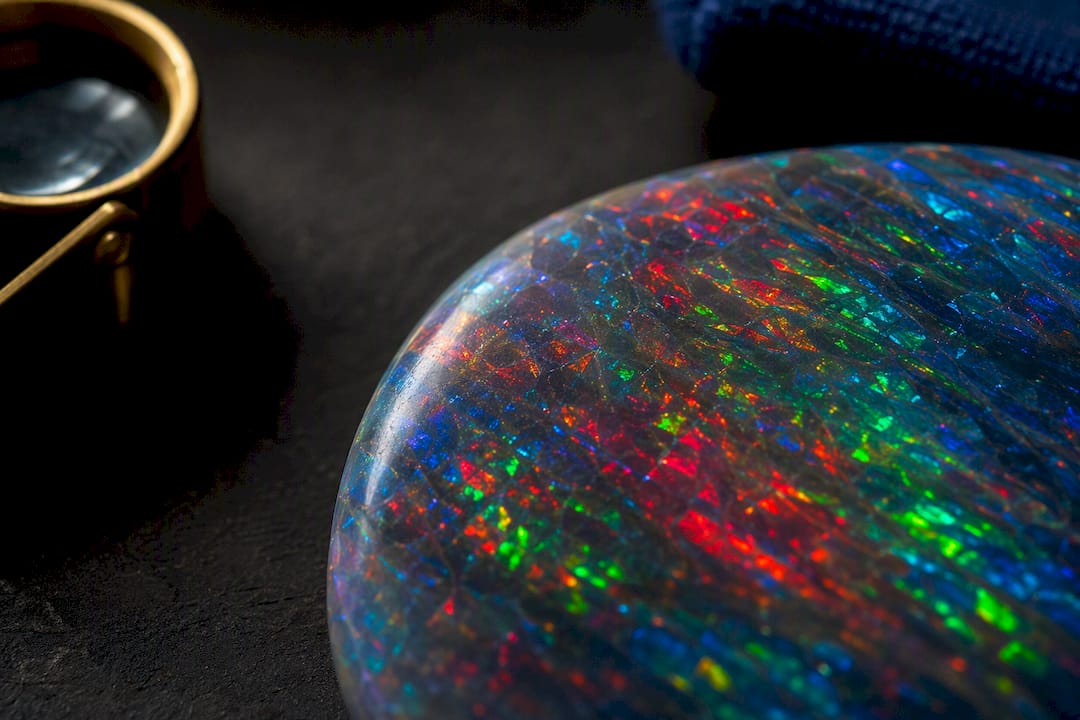
Certain Australian solid opals qualify as investment-grade, but only when they combine top-tier play-of-color, a rare pattern, verifiable provenance, and independent authentication. The single rule that overrides every other consideration: insist on untreated, solid opal backed by a lab report or documented miner origin. Skip that step, and you own a beautiful stone with no defensible resale case.
TL;DR:
- Only solid, untreated Australian opals with verified provenance and independent lab reports qualify as investment-grade; without these, resale value is uncertain.
- The most valuable opals display vivid red flashes on dark body tones, rare patterns like Harlequin, and broad flashing patterns, which significantly influence price.
- Top investment options include black opal from Lightning Ridge, boulder opal from Queensland with continuous color, and high-quality crystal or white opal with distinctive play-of-color.
- Proper due diligence involves confirming solid construction, requesting provenance records, and obtaining transparent treatment disclosures before purchase.
- Market value is driven by comparable sale data, not fixed formulas, and high costs should be considered alongside shipping, insurance, and lab report fees for accurate breakeven calculations.
Table of Contents
- Investment Opal Guide: The Quality Factors That Set Price
- Which Opal Types Belong in an Investment Portfolio?
- How Are Opals Valued and Priced in the Current Market?
- What Should Be on Your Opal Due Diligence Checklist?
- What Do Lab Reports Actually Verify?
- How Do You Store and Care for an Opal Without Losing Value?
- What Are the Real Risks and Realistic Returns on Opal Investments?
- Why Direct-Miner Sourcing Matters for Investment Buyers
- What Legal and Ownership Considerations Apply to Opal Buyers?
- A Collector’s Take on Buying for the Long Term
- Ready to Buy? How to Start With Australian Opal Direct
- Where to Verify These Facts Further
- FAQ
Investment Opal Guide: The Quality Factors That Set Price
Every serious investment opal guide starts in the same place gemologists do: with play-of-color. It is the phenomenon that made this stone famous, and it is the single most influential factor in valuation. Play-of-color describes how a spectrum of hues flashes across the stone as it moves, and the range, brightness, and rarity of those hues drive price more than any other attribute. Red flashes across a dark body tone are the rarest and most valuable, followed by orange and green, with blue being the most common and least expensive on its own.
Pattern rarity is the second lever. Gemologists and dealers name patterns for a reason: some occur so infrequently that a well-documented example can carry a premium over an otherwise similar stone with a common pattern. Look for terms like these when evaluating a piece:
- Harlequin: angular, mosaic-like patches of color, among the rarest patterns found in Australian opal.
- Chinese writing: elongated, calligraphic streaks of color that read as distinct brushstrokes.
- Pinfire: small, tightly packed points of color, common but attractive when saturation is high.
- Flagstone: broad, flat patches resembling paving stones, valued when colors are bold and well-defined.
- Rolling flash: broad sheets of color that sweep across the stone as it tilts, prized for their drama under movement.
Body tone and contrast work together to intensify what the eye perceives. A black or dark body tone (graded roughly N1 through N4 on the scale dealers use) makes play-of-color pop with far more contrast than a light or crystal body tone, which is a major reason black opal from a single Australian field commands the steepest per-carat premiums in the category.
Clarity matters differently here than in diamonds. Play-of-color, pattern, and clarity are the three pillars gemologists use to judge quality, and clarity mainly concerns whether inclusions, sand patches, or potch (colorless opal) intrude on the face of the stone. A boulder opal with ironstone showing through the back is normal and expected; a crystal opal riddled with cloudy inclusions across the top is a problem.
Cut and dome shape then determine how much of that color potential actually reaches the eye. A well-domed cabochon scatters light more effectively than a flat cut, and a skilled cutter orients the dome to maximize the strongest color zone rather than simply preserving carat weight.
Carat weight interacts with all of the above rather than standing alone. A 2-carat stone with mediocre color can sell for less than a 1-carat stone with exceptional red-on-black play-of-color. Investors who chase size over color quality routinely overpay relative to what the stone will fetch on resale.
Which Opal Types Belong in an Investment Portfolio?
Not every opal category performs the same way as a store of value. Three natural types dominate serious collections, and one manufactured category should generally be avoided.
- Black opal. Mined almost exclusively around Lightning Ridge, black opal pairs a dark body tone with vivid play-of-color, producing the highest per-carat prices in the category. Lightning Ridge material carries a provenance premium precisely because the field is finite and closely associated with the finest examples of the stone.
- Boulder opal. Found predominantly in Queensland, boulder opal forms as a thin seam on ironstone host rock, which is typically left attached during cutting. Large boulder specimens with strong, continuous color across the face are genuinely collectible, though the ironstone backing means investors are buying a composite of gem and host rock rather than a pure gem by weight.
- Crystal and white opal. Crystal opal is transparent to semi-transparent with a light or colorless body tone, often associated with Coober Pedy, and reaches investment-grade status only when play-of-color is unusually bright and the pattern is distinctive enough to overcome the lighter tone’s natural disadvantage against black opal.
Doublets and triplets fall outside genuine investment consideration. A doublet glues a thin slice of natural opal to a backing (usually black potch or glass); a triplet adds a clear cap on top of that sandwich, usually quartz or plastic, to protect a very thin opal layer. Both can look striking and sell cheaply, but they are assembled products, not solid gemstones, and their resale value collapses once a buyer realizes what they are holding. Any listing that does not explicitly state “solid opal” deserves a direct question before you proceed.
How Are Opals Valued and Priced in the Current Market?
Pricing an opal is closer to appraising a one-of-a-kind painting than pricing a diamond off a certificate chart, because every stone is genuinely unique. That uniqueness is exactly why the best benchmarking method relies on comparable sales rather than a fixed formula.
The main pricing drivers stack in roughly this order of influence: play-of-color intensity and hue range, pattern rarity, body tone, clarity, carat weight, and cut quality. Each factor multiplies against the others rather than adding linearly, which is why two stones of identical carat weight can differ in price by a factor of ten or more.
-
Auction records and specialist dealer sales offer the most reliable public signals for top-tier pricing, since they reflect what an informed buyer actually paid.
-
Retail listing prices can overstate realistic resale value substantially, because retail markups reflect overhead, marketing, and setting costs that a private resale will not recover.
-
Wholesale-to-retail spreads on fine Australian opal are often wide enough that a stone bought retail needs meaningful appreciation just to break even on a future sale.
-
Comparable-sales research works best when you match body tone, pattern type, and origin field, not just carat weight, before comparing prices.
Retail and wholesale prices for the same stone can diverge sharply, and that gap is exactly where negotiation happens. A buyer who has already reviewed comparable auction results walks into a negotiation with leverage a buyer relying on the seller’s asking price never has.
All-in cost extends past the sticker price. Factor in independent lab report fees if you’re commissioning one, insured shipping, sales tax where applicable, and ongoing insurance premiums once the stone is in your possession. None of these are large individually, but ignoring them when calculating breakeven resale value is a common mistake among first-time opal buyers.
What Should Be on Your Opal Due Diligence Checklist?
Treat every high-value opal purchase as a transaction with steps, not a single decision. Following a consistent sequence protects you from the two most common losses in this market: buying an assembled stone at solid-opal prices, and buying an undisclosed treated stone.
- Confirm solid versus assembled construction. Ask directly whether the stone is solid opal, and request written confirmation. For any purchase above a few thousand dollars, request an independent lab report rather than relying on the seller’s word alone.
- Request provenance documentation. Ask which mining field the stone came from, and where possible, request batch or miner-of-origin records. A seller who cannot say where a stone was mined is a seller who cannot substantiate a provenance premium.
- Get standardized photographic documentation. Because each opal is unique, comparing specimens fairly requires multi-angle photography under consistent, controlled lighting, not a single flattering photo taken under a spotlight.
- Confirm treatment disclosure. Ask explicitly about impregnation with oil, wax, resin, or plastic, and about any surface modification. Undisclosed treatments are one of the fastest ways a stone’s resale value evaporates once discovered.
- Cross-check the asking price against recent comparable sales from auctions or specialist dealers before agreeing to terms.
- Clarify return policy, escrow options, and shipping insurance in writing before any funds change hands, particularly for purchases made sight-unseen or across borders.
Pro Tip: Before you wire a deposit on a high-value stone, ask the seller to photograph it next to a scale bar or ruler under neutral daylight. Sellers with genuine confidence in a stone rarely hesitate; sellers hiding a treatment or an assembled construction usually stall.
Reputable sellers who volunteer miner provenance and independent lab reports without being asked are usually signaling that they have nothing to hide, and that transparency itself can justify a modest premium over an anonymous listing.
What Do Lab Reports Actually Verify?
A lab report tells you what the stone is, not exactly what it is worth, and understanding that distinction prevents disappointment later. The GIA issues Colored Stone Identification Reports that confirm whether a stone is natural or laboratory-grown and flag detectable treatments, but GIA does not assign opal a single numeric grade the way it does with diamond clarity and color. Treat the report as a factual identification document, then layer your own quality judgment (pattern, play-of-color, body tone) on top of it.
- A GIA report or equivalent from another accredited gemological laboratory confirms natural origin and lists detected treatments, giving you a paper record to show a future buyer.
- Independent gemologists working outside major labs can provide supplementary opinions, particularly useful for regional appraisal or insurance valuation between formal lab submissions.
- Treatment disclosure on the report (wax, oil, or plastic impregnation) matters enormously at resale. A buyer who discovers an undisclosed treatment after purchase will discount every future offer, and word travels fast in a market this specialized.
- Who pays for the report is negotiable. On expensive stones, splitting the cost or asking the seller to commission the report as a condition of sale is standard practice, not an unusual request.
For step-by-step guidance on verifying a specific stone before you buy, a detailed authentication checklist for Australian opals walks through the documentation to request and the red flags that should stop a transaction.
How Do You Store and Care for an Opal Without Losing Value?
Opal sits lower on the hardness scale than diamond or sapphire, which makes it genuinely vulnerable to scratching, chipping, and thermal shock from sudden temperature swings. A protective setting with a raised bezel or side gallery reduces the risk of an edge chip far more effectively than an open-claw setting that leaves the stone exposed.
- Clean opal with warm soapy water and a soft cloth; this is the method gemologists consistently recommend as safe.
- Never use ultrasonic cleaners or steam cleaners on opal, and avoid harsh chemicals or prolonged sun exposure, all of which can crack or dry out the stone.
- Store pieces individually in padded, humidity-controlled cases rather than tossed together in a drawer where they can scratch each other or absorb ambient dryness.
- Avoid leaving opal jewelry in a hot car, near a fireplace, or anywhere subject to rapid temperature shifts.
- Photograph each stone’s condition periodically and keep those images alongside your insurance documentation, so any future damage claim or resale negotiation has a clear before-and-after record.
A consistent opal care routine does more to protect resale value over a decade than any single purchasing decision, because damage is far harder to reverse than a pricing mistake is to correct.
What Are the Real Risks and Realistic Returns on Opal Investments?
Opal is a collectible asset, not a liquid one, and that distinction shapes everything about how you should treat it in a portfolio. Selling a fine opal typically means finding a specialist dealer or auction house willing to handle a niche gemstone, which can take considerably longer than liquidating a stock position or even a piece of standard diamond jewelry.
High-grade Australian opals, particularly fine black opal, have historically shown notable price appreciation within specialist markets, though that appreciation has come alongside a market that remains far less liquid and more trend-driven than mainstream financial assets. Demand for opal has also shifted with fashion and regional buying trends over the decades, and a sudden cooling in a key market can leave sellers waiting far longer than expected for the right buyer at the right price.
- Liquidity constraints mean you should plan an exit horizon in years, not weeks, and never treat opal as a source of emergency cash.
- Trend and fashion risk can shift demand for particular colors, patterns, or cutting styles over time, affecting which stones command premiums a decade from now.
- Fraud and misrepresentation, including undisclosed assembly (doublets sold as solid) or undisclosed treatment, remain the most common ways buyers lose money, which is exactly why provenance records and lab reports function as risk mitigation, not paperwork for its own sake.
- Opal fits best as a diversifying collectible allocation alongside other assets, not as a core liquid holding you might need to convert to cash on short notice.
Why Direct-Miner Sourcing Matters for Investment Buyers
Provenance risk is the quiet threat that undermines more opal purchases than outright fraud does. When a seller can trace a stone back to a specific field and, ideally, a specific miner or batch, that traceability does real work for you at resale, because the next buyer inherits the same confidence you had.
Some online retailers source genuine, ethically obtained Australian opal through direct relationships with miners in notable fields, which removes layers of unverifiable middlemen from the chain of custody. This sourcing approach supports competitive pricing by eliminating markup stacking that can occur when a stone passes through several intermediaries before reaching a buyer.
- Some collections and custom-designed jewelry pieces emphasize craftsmanship and rarity rather than volume, which matters when selecting for long-term display value rather than quick turnover.
- Educational resources, including a dedicated opal investment guide, walk buyers through valuation logic in more depth than a typical retail product page.
- Some sellers offer free shipping, complimentary insurance during transit, and limited warranties on purchases to provide buyers a documented safety net during the highest-risk window of any transaction, the period between payment and physical receipt of the stone.
For a broader look at how sourcing decisions affect long-term value, the guide on luxury opal investment sourcing covers additional buyer considerations worth reviewing before a major purchase.
What Legal and Ownership Considerations Apply to Opal Buyers?
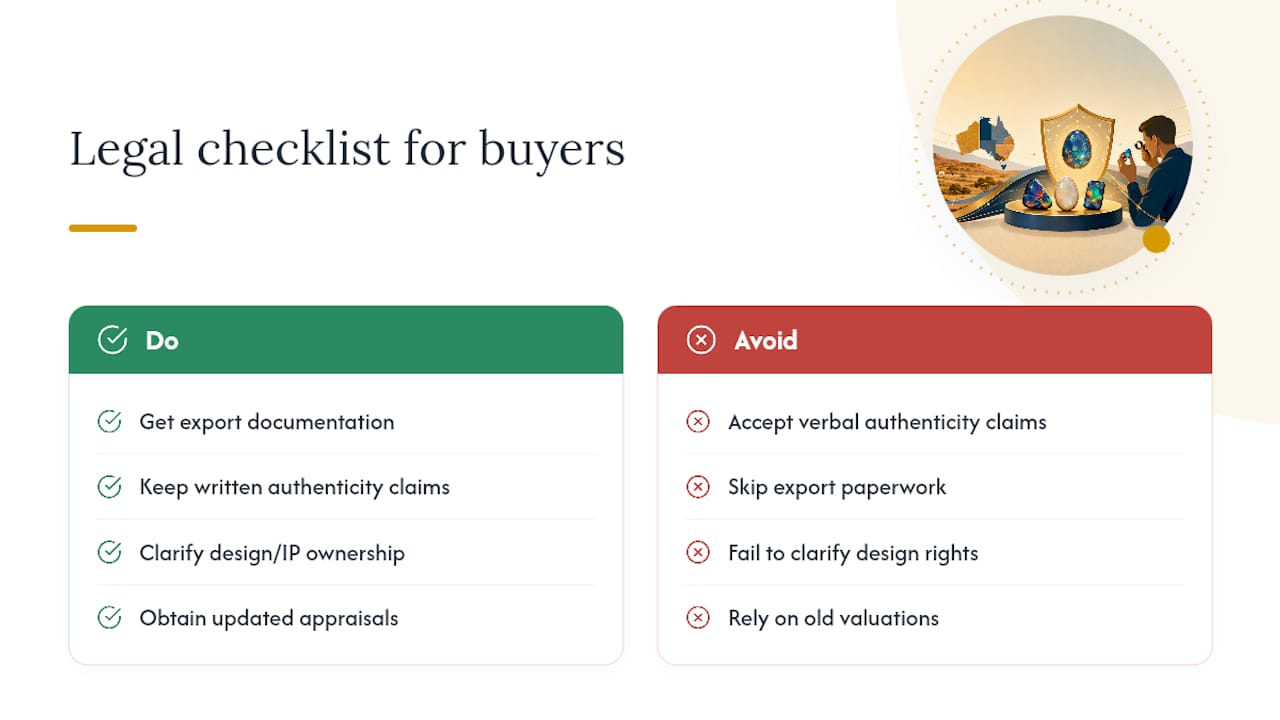
Ownership of a purchased opal transfers to the buyer once payment and delivery are complete, but several practical legal issues deserve attention before that point. Export documentation matters for cross-border purchases, since some jurisdictions require paperwork confirming legal export of gemstones, and a reputable seller should be able to provide it without hesitation.
Title and authenticity representations made at sale carry legal weight. A seller who represents a stone as “solid opal” or “natural, untreated” in a listing or invoice is making a claim you can point to later if that representation proves false, which is one more reason to keep every written communication and invoice describing the stone’s characteristics.
For custom-designed jewelry pieces, clarify intellectual property and design ownership terms before commissioning a piece, particularly if you intend to have the design replicated or modified later. Inheritance and estate planning also deserve a mention for high-value collections: because opal valuations depend heavily on individual stone characteristics rather than a standardized market price, estates benefit from updated appraisals rather than relying on decades-old purchase records. Finally, confirm return and dispute resolution terms in writing before completing any high-value transaction, since specialist gemstone disputes rarely have the straightforward consumer protections that apply to mass-market retail goods.
A Collector’s Take on Buying for the Long Term
I would rather hold one exceptional black opal with a documented Lightning Ridge origin than three mediocre stones bought for the same total price. Display-quality color and pattern reward patience in a way that speculative flipping never does in this category. Uniqueness and provenance should outweigh immediate resale math whenever you are buying something you genuinely want to look at for the next twenty years, because that emotional return is part of the actual return.
That said, I would start moving toward a sale if I saw unmistakable market froth (prices detached from comparable sales), a spike in insurance premiums signaling rising theft or damage risk, or visible condition deterioration that a re-setting could not fix. Those three signals matter more than any single price target.
— Renee
Ready to Buy? How to Start With Australian Opal Direct
Australian Opal Direct gives you a documented alternative to the anonymous listings that dominate much of the secondary opal market. Every stone in our curated collections is sourced through direct miner relationships across Lightning Ridge, Coober Pedy, and Queensland, which means the provenance chain you need for a defensible resale case already exists before you buy, rather than needing to be reconstructed after the fact.

Getting started is straightforward. Review a curated collection, request provenance details and any available lab documentation for a specific stone, and arrange insured shipping as part of the transaction rather than as an afterthought. Every purchase includes complimentary insurance during transit and a 90-day warranty, and custom design services are available if you would rather commission a specific piece around a particular stone. For buyers ready to move from research to acquisition, explore the current opal collections or request a private consultation to discuss investment-grade selections suited to your collecting goals.
Where to Verify These Facts Further
The GIA’s buyer’s guide on opal quality factors remains the standard reference for play-of-color, pattern, and clarity terminology. Government of Australia resources cover the stone’s national symbolism and origin fields, while specialist market commentary and auction records offer the most current pricing signals for serious buyers.
FAQ
Is It Worth Investing in Opals?
Top-tier Australian solid opals with exceptional play-of-color, rare patterns, and verified provenance can hold and appreciate in value, but the category rewards careful selection and patience far more than it rewards speculation. Opals with mediocre color or unverified origin rarely perform as investments regardless of price paid.
Are Opals Going Up in Value?
High-grade Australian opals, particularly fine black opal, have historically shown notable price appreciation in specialist markets, though gains are uneven and tied to trend-driven demand rather than steady, predictable growth. The market remains far less liquid than mainstream financial assets, which affects how quickly you can realize any appreciation.
Which Gemstone Is Best for Investment?
There is no single “best” investment gemstone; diamonds offer more liquidity and standardized grading, while rare colored stones like fine black opal, ruby, and sapphire can offer stronger upside for buyers willing to accept lower liquidity and higher expertise requirements. Opal’s appeal for collectors comes from its uniqueness. No two stones display the same pattern, which supports rarity premiums but also makes comparison shopping harder than with standardized gems.
How Profitable Is Opal Mining?
Opal mining profitability varies enormously by field and season, since the stone occurs unpredictably and most mined material is lower-grade rather than gem quality. The rare, exceptional stones that reach investment-grade status represent a small fraction of total production, which is part of why fields like Lightning Ridge carry a durable provenance premium.
What Makes an Opal Investment-Grade Rather Than Just Decorative?
An opal reaches investment-grade status through a combination of exceptional play-of-color, a rare or well-defined pattern, favorable body tone and contrast, solid (non-assembled) construction, and documented provenance or independent lab verification. Missing any one of these, particularly solid construction and provenance, undermines the case for treating a stone as a genuine investment.








