Guide to Marketing Luxury Opals for Brand Strategists
Posted by AOD on 21st May 2026
Guide to Marketing Luxury Opals for Brand Strategists

TL;DR:
- Luxury opal marketing requires translating complex grading criteria, provenance, and origin into buyer desire through education and storytelling. Segmenting collections into three tiers and using appointment-based experiences build trust, while transparent disclosures and documented provenance justify premium prices. Combining emotional resonance with investment logic ensures lasting relationships with high-net-worth buyers.
Few gemstones challenge marketers the way opals do. Unlike diamonds, where the four Cs provide a universal shorthand, this guide to marketing luxury opals requires you to translate grader-level complexity into desire, rarity into price logic, and geographical origin into emotional weight. The opal’s play-of-color shifts with every angle of light, and your marketing must capture that same dynamic quality. What follows is a practical, technically grounded framework for jewelry marketers and brand strategists who want to move opals as a luxury product, not just a novelty gemstone.
Table of Contents
- Key takeaways
- The guide to marketing luxury opals starts with product education
- Storytelling and provenance in luxury opal marketing
- Tiered collections and pricing strategy for market segmentation
- Multi-channel campaigns and experiential selling
- Avoiding common marketing pitfalls for luxury opals
- My perspective on what actually moves luxury opals
- Discover luxury opal collections at Australianopaldirect
- FAQ
Key takeaways
| Point | Details |
|---|---|
| Build a value explanation ladder | Start with opal type and origin before introducing technical grading criteria to reduce buyer confusion. |
| Provenance must be documented | Authentic scarcity narratives backed by certifications and sourcing stories outperform glamour-based messaging. |
| Structure tiered collections | Use three distinct price bands to serve aspirational, premium, and collector buyers without diluting brand value. |
| Align visuals with stone type | Creative campaigns must disclose and visually match whether a stone is solid, doublet, or triplet. |
| Treat events as content assets | Trunk shows and appointments generate reusable storytelling material that sustains long-term buyer engagement. |
The guide to marketing luxury opals starts with product education
No other sector of high-end gemstone retail demands as much buyer education upfront as opals do. Before a single campaign launches, your marketing team needs a clear framework for communicating opal value factors. The good news is that a structured approach turns complexity into competitive advantage.
Opal grading criteria cover type, origin, body tone, play-of-color, pattern, brightness, clarity, cut, natural versus synthetic classification, and any treatments applied. That is a rich portfolio of value levers. For marketing purposes, the most effective sequence follows a “value explanation ladder,” which starts with the factors buyers grasp instinctively and progresses toward more nuanced distinctions.
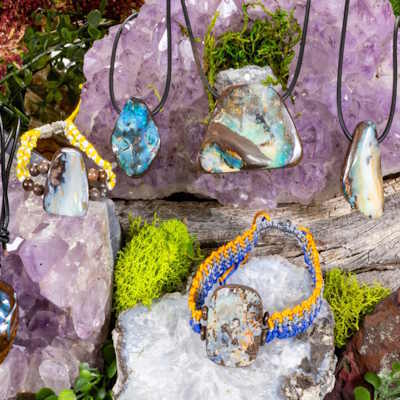
Begin every product narrative with type and geographic origin. A Lightning Ridge Black Opal communicates prestige immediately to an informed buyer. Queensland Boulder Opals carry their own visual identity in the ironstone host rock that frames their color. From there, move to body tone and play-of-color, since the contrast between a dark body tone and a vivid spectral display is something any buyer can see and appreciate. Only then introduce pattern naming and brightness grades.
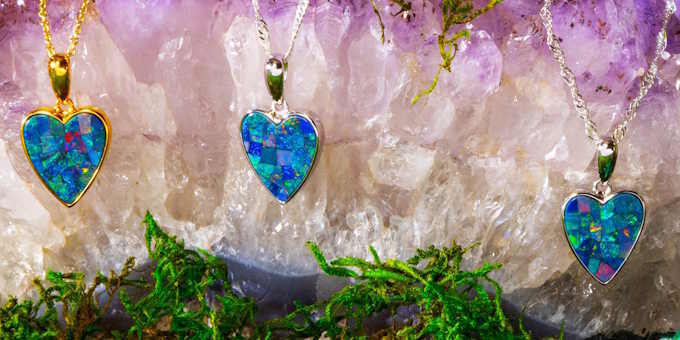
One of the most critical education points concerns stone construction. The difference between a solid opal, a doublet, and a triplet is not merely technical. It directly shapes durability, care, and value in ways buyers must understand before purchase. A solid opal is 100% natural opal material. A doublet bonds a thin opal slice to a backing. A triplet adds a clear protective dome over that slice. Each type has legitimate market appeal, and each deserves its own honest marketing angle.
- Solid opals: Position around rarity, investment potential, and the integrity of an unaltered natural gem.
- Doublet opals: Market as accessible entry points with genuine opal material and attractive color display.
- Triplet opals: Emphasize durability and wearability for buyers who want visual impact at an accessible price.
Pro Tip: Resist the temptation to lead with carat weight or stone size. Non-linear pricing driven by rarity factors such as body tone contrast and play-of-color pattern means that a small Black Opal with a rolling fire pattern can command multiples of the price of a larger stone with muddy color. Your product copy must explain why.
Storytelling and provenance in luxury opal marketing
Luxury buyers are not just purchasing an object. They are acquiring a narrative, and that narrative must be airtight. Provenance-based storytelling built on artisan profiles, sourcing documentation, and certified origin outperforms glamour-driven campaigns in the high-net-worth segment. The reason is simple: these buyers have seen polished marketing before. What earns their trust is specificity.
Every opal you market carries a story that no diamond, sapphire, or ruby can replicate. It formed over millions of years in ancient seabeds, and its current address is a particular mine in a particular Australian town. That specificity is a marketing asset. Use it deliberately.
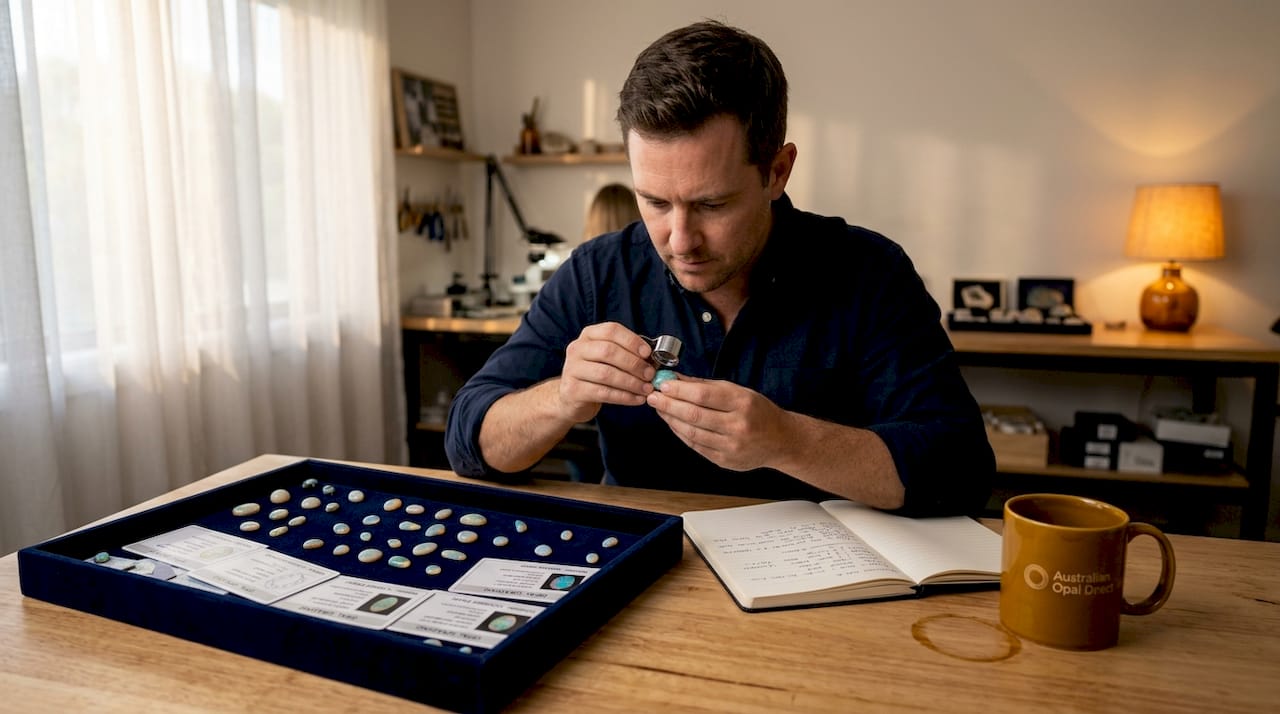
Consider how designer sourcing credibility tied to reputable specialist supply chains, such as combining German cutting expertise with verified Australian origins, functions as a powerful differentiator in luxury opal branding. The combination of “where it came from” and “who shaped it” creates a two-axis credibility framework that justifies price and builds collector confidence.
Your storytelling framework for selling luxury opals should incorporate the following elements:
- Mine-to-market documentation: Name the mine, the region, and the miner relationship where possible. Vague “Australian origin” claims feel hollow against competitors who name Lightning Ridge or Coober Pedy with specificity.
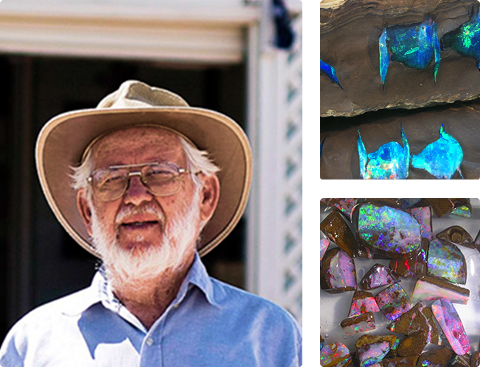
- Artisan profiles: Show the cutter, the setter, and the designer. Faces build trust faster than certificates alone.
- Certification and appraisal: Third-party valuations and gemological certificates reduce purchase anxiety, particularly for pieces at investment price points.
- Scarcity that is documented, not implied: Closed mine status, limited yield seasons, or specific rarity metrics give scarcity claims weight.
The emotional register of opal storytelling should balance two distinct appeals. The first is personal meaning: the stone’s shifting colors as a reflection of life’s own complexity and beauty. The second is investment logic. Wealthy consumers are increasingly drawn to luxury gemstones as meaningful assets during periods of market uncertainty, with messaging that emphasizes heritage and resale optionality landing particularly well in 2026.
Pro Tip: Align your storytelling calendar with collector community conversations around market volatility. When financial markets show turbulence, your provenance and investment angle becomes a lead message, not a supporting note.
Tiered collections and pricing strategy for market segmentation
Selling luxury opals across a market that spans aspirational first-time buyers to serious collectors requires a structured collection architecture. A flat product line with no clear hierarchy forces every buyer to do too much interpretive work and risks diluting the prestige of your highest-value pieces.
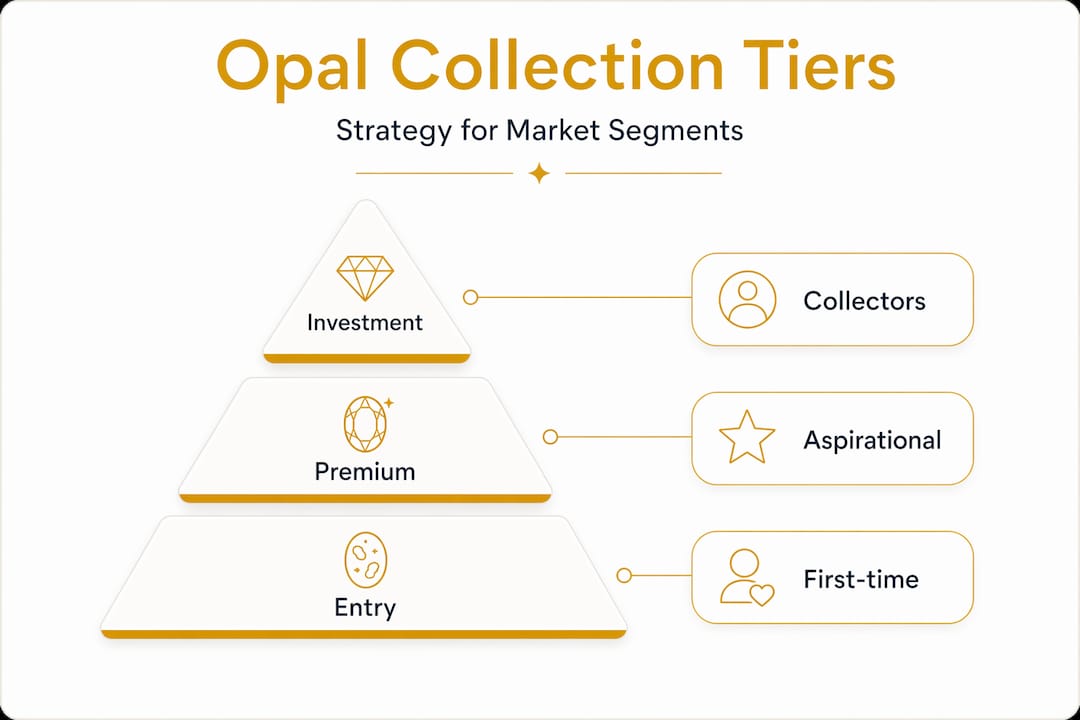
A three-tier model creates natural segments without contradiction:
| Tier | Price band (per carat) | Stone type | Marketing angle |
|---|---|---|---|
| Entry accessible | Under $1,000 | Doublet, triplet, crystal opal | Wearability, color beauty, accessible luxury |
| Premium bestseller | $1,000 to $4,500 | Fine Boulder, crystal, White Opal | Collector quality, gift-worthy, documented origin |
| Investment statement | $5,000 to $15,000+ | Black Opal, rare Boulder | Rarity, provenance, appraisal-backed investment value |
These price bands for Black and Boulder Opals by grade map directly onto buyer psychology. The entry tier captures buyers who are emotionally curious but financially cautious. The premium tier serves buyers who have done some research and want quality assurance. The investment tier speaks exclusively to collectors and high-net-worth buyers who understand rarity pricing.
Avoid blanket discounts at every tier. For entry pieces, offer value-added bundles such as care kits, certificates of authenticity, or complimentary sizing. For investment pieces, offer appraisal services or first-access notifications for new acquisitions. These protect the perceived value of the stone while rewarding the buyer.
Messaging must shift tone across tiers as well. Entry-level buyers respond to color language and emotional warmth. Collector buyers want data: origin, grade, pattern name, and comparative rarity. Investment buyers need documentation above all else, alongside the emotional resonance that makes the piece feel personally significant, not just financially logical.
Pro Tip: When pricing opal jewelry for your collections, anchor your premium tier pieces against investment-grade comparables to make the value proposition feel rational, not arbitrary.
Multi-channel campaigns and experiential selling
Effective luxury opals advertising strategies do not live in a single channel. The most successful campaigns create a coherent experience across digital touchpoints, social platforms, and in-person moments that builds knowledge before it builds desire.
A well-structured campaign timeline for luxury opals looks like this:
- Awareness phase (6 to 8 weeks out): Publish origin stories, mine-to-market content, and grading explainers across owned channels. This is education before promotion. Use this window to market opal jewelry online through search-optimized content and targeted paid social.
- Consideration phase (3 to 5 weeks out): Introduce specific collection pieces with provenance narratives attached. Feature artisan profiles, video content showing play-of-color in natural light, and comparison content across stone types.
- Conversion phase (1 to 2 weeks out): Deploy appointment booking prompts, trunk show invitations, or limited-access previews for email subscribers and social followers. Trunk shows marketed four to six weeks ahead with active venue promotion and storytelling consistently outperform last-minute event announcements.
- Post-event nurture: Repurpose the content assets generated during in-person events. A provenance reveal moment at a trunk show becomes a short-form video. An artisan conversation becomes a written profile. These materials sustain engagement and nurture leads who were not ready to purchase at the event.
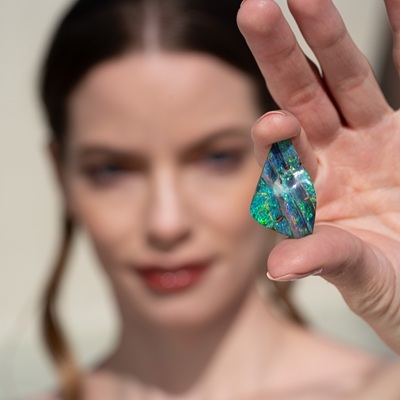
Appointment-based and trunk show selling formats deserve particular emphasis in any guide on how to market opals at the luxury tier. These controlled environments allow your team to move through a story-driven selling approach rather than a transactional one. When a buyer holds a Lightning Ridge Black Opal under a loupe for the first time and watches its rolling fire shift from crimson to violet, the price becomes almost secondary to the experience.
Cross-category partnerships also extend reach meaningfully. Consider co-promotions with interior designers, bespoke fashion brands, or travel experiences focused on Australian heritage. These partnerships position opals within the lifestyle context that luxury buyers already inhabit.
Pro Tip: Use P.Max campaigns for prospecting to reach new high-intent buyers across Google channels. Combined with provenance-led creative assets, this approach can surface luxury opal content to buyers actively searching for meaningful gemstone investments.
Avoiding common marketing pitfalls for luxury opals
Even well-funded campaigns stumble when the fundamentals are misaligned. The most common failure in marketing high-end gemstones is a mismatch between visual creative and the actual stone type disclosed in the product description. Showing the kaleidoscopic brilliance of a solid Black Opal in campaign imagery while the product page reveals a triplet creates a trust breach that no amount of copy can repair. Visuals and disclosures must be synchronized at every touchpoint.
A few critical checkpoints for marketing teams:
- Stone type disclosure: Every ad, landing page, and product card must clearly state whether a stone is solid, doublet, or triplet. This is not just ethical practice. It protects conversion by aligning buyer expectations.
- Rarity explanation over size logic: Non-linear pricing driven by body tone contrast and pattern cannot be explained by carat weight alone. Product copy must articulate why a stone commands its price.
- Authentic user-generated content: Encourage buyers to photograph their opals in natural light and share those images. UGC that shows real play-of-color in real-world conditions builds social proof more powerfully than studio photography.
- Care information as a trust signal: Clear, accessible opal care guidance on product pages reduces post-purchase anxiety and reduces returns. Buyers who understand how to care for their stone feel more confident in the purchase decision.
Pro Tip: Offer a complimentary appraisal or certificate of authenticity at checkout for pieces above a set threshold. This single addition can distinguish opal origins credibly and ease the anxiety that often stalls high-ticket purchases at the final moment.
My perspective on what actually moves luxury opals
I’ve spent years watching luxury opal campaigns either succeed quietly or fail loudly, and the pattern is consistent. The campaigns that work are the ones where the marketing team understood the stone before they wrote a single word of copy. Not at a surface level, not “it has beautiful colors.” At the level of understanding why a Black Opal with a harlequin pattern commands ten times the price of one with a pinfire pattern of similar carat weight.
What I’ve learned is that grading education is not a niche concern for gemologists. It is the foundation of your pricing credibility. When buyers understand the grading logic, price resistance drops substantially. The stone explains itself. Your job is to provide the translation.
The other thing I’ve seen consistently undervalued is the trunk show and appointment format. Most brands treat these as closing opportunities. I think of them as storytelling moments. When you place a genuinely rare opal in someone’s hands and walk them through its origin, its rarity factors, and the craft behind its setting, you are not selling. You are transferring knowledge, and knowledge creates conviction that advertising simply cannot replicate.
The tension I see most in 2026 is between emotional storytelling and the demand for investment-grade documentation. Luxury buyers want both: the poetic resonance of a stone that seems to hold fire and the rational reassurance that their acquisition is well-documented and holds value. The brands that resolve this tension rather than choose between these two appeals are the ones building lasting collector relationships.
— Renee
Discover luxury opal collections at Australianopaldirect
For brand strategists who want to see these principles in practice, Australianopaldirect offers one of the most transparent and well-documented luxury opal collections available online. Every piece is ethically sourced from Australian mining regions including Lightning Ridge, Coober Pedy, and Queensland, with provenance narratives and grading information built directly into product pages.
The collection spans entry, premium, and investment tiers, illustrating the tiered structure this guide recommends in applied form. From accessible doublet designs to rare solid Black Opal statement pieces, the premium opal jewelry range demonstrates how transparent grading, artisan storytelling, and documented origin work together to justify price and build buyer confidence. For further reading, explore Australianopaldirect’s guides on artisan craftsmanship and ethics and mine-to-market sourcing narratives to deepen your content strategy.
FAQ
What makes opals uniquely difficult to market as luxury products?
Opals lack a universal grading shorthand like diamonds’ four Cs, requiring marketers to translate complex criteria such as body tone, play-of-color, and pattern into buyer-friendly language that still supports premium pricing.
How should luxury opal pricing be communicated to high-net-worth buyers?
Rather than leading with carat weight, explain rarity factors such as body tone contrast and pattern type, since non-linear pricing logic means smaller stones with exceptional pattern can far exceed the price of larger but less rare examples.
What is the difference between solid, doublet, and triplet opals in marketing terms?
Each stone construction type carries a distinct value and durability profile. Solid opals command the highest prices and investment appeal, doublets offer accessible luxury with genuine opal material, and triplets provide durable wearability at entry-level price points.
Why are trunk shows and appointment selling effective for luxury opals?
Appointment-based selling formats allow marketers to deliver provenance narratives and hands-on stone experiences that build the buyer conviction advertising alone cannot achieve, while also generating reusable content assets for ongoing campaigns.
How does provenance storytelling support luxury opal brand positioning?
Documented provenance tied to specific Australian mining regions and artisan supply chains builds credibility with discerning buyers, outperforming generic glamour messaging by grounding price justification in verifiable, specific facts.
Recommended
- How to Market Opal Jewelry for Maximum Impact Online - Australian Opal Direct
- How to Price Opal Jewelry for Authentic Luxury Buyers - Australian Opal Direct
- Role of Opals in Luxury Jewelry: Rarity & Value - Australian Opal Direct
- Luxury gemstone gifting: authenticity, opal value, tips - Australian Opal Direct