High-Quality Opal Jewelry: Where Experts Shop
Posted by AOD on 6th Feb 2026
High-Quality Opal Jewelry: Where Experts Shop
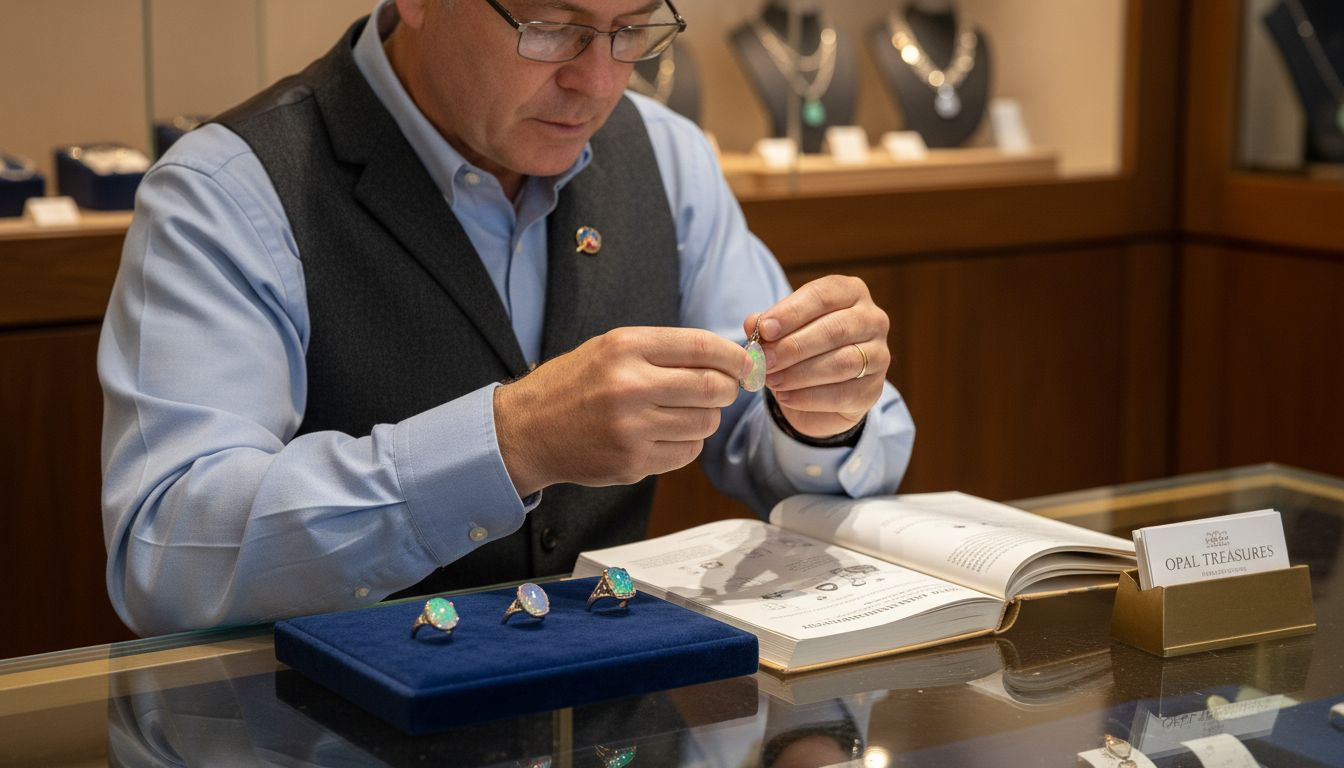
What sets Australian opals apart from every other gemstone? For collectors who treasure authenticity and artistry, these gems offer more than mesmerizing color. Myths and legends once surrounded opals, yet their status as symbols of creativity and natural wonder has persisted through time. Discover how understanding the unique qualities, types, and ethical sourcing of Australian opals empowers you to choose truly exceptional pieces with confidence and clarity.
Table of Contents
- Opal Jewelry Defined And Common Myths
- Major Types Of Australian Opals Explained
- Identifying Genuine Versus Treated Opals
- Ethical Sourcing And Region-Specific Practices
- How Experts Verify Authenticity And Quality
- Avoiding Scams And Overpriced Opal Pieces
Key Takeaways
| Point | Details |
|---|---|
| Understanding Opals | Opals are unique gemstones known for their play of color and should not be viewed as unlucky. Proper care enhances their durability and aesthetic value. |
| Types of Australian Opals | Australia’s opals vary by type, such as Black, White, Boulder, Crystal, and Gray, each with distinct characteristics influenced by their geological origin. |
| Authenticity Verification | Always request gemological certification to ensure opal authenticity, focusing on treatments, stability, and quality. |
| Avoiding Scams | Be cautious of unverified sellers and deals that seem too good to be true; thorough research is vital to protect your investments. |
Opal Jewelry Defined and Common Myths
Opals are extraordinary gemstones distinguished by their unique ability to display a stunning phenomenon known as play of color - an iridescent dance of spectral hues that shifts and shimmers with every movement. Unlike other gemstones, opals possess a mesmerizing quality that has captivated jewelry collectors for generations.
Historically, opals have been surrounded by fascinating myths and legends that add to their mystique. Opal Stone 101: History, Symbolism, and Uses reveals several intriguing cultural narratives about these remarkable stones:
- Some cultures believed opals fell from lightning strikes
- Ancient legends described opals as divine tears or celestial gifts
- Gothic literature in the 19th century portrayed opals as mood-changing stones
- Superstitions emerged suggesting opals could bring bad luck
Contrary to historical misconceptions, modern gemologists understand opals as extraordinary natural treasures. The superstitious beliefs originated primarily from literary works and unfortunate coincidences rather than any inherent negative properties of the stones themselves.
Opals are not harbingers of misfortune, but symbols of creativity, transformation, and natural beauty.
The most prevalent myths about opals typically revolve around their perceived fragility and supposed bad luck. However, when properly cared for, high-quality opals can be remarkably durable and stunning pieces of jewelry that retain their value and beauty for generations.
Pro tip: Always purchase opals from reputable sources that can provide detailed documentation about the stone’s origin, quality, and specific characteristics.
Major Types of Australian Opals Explained
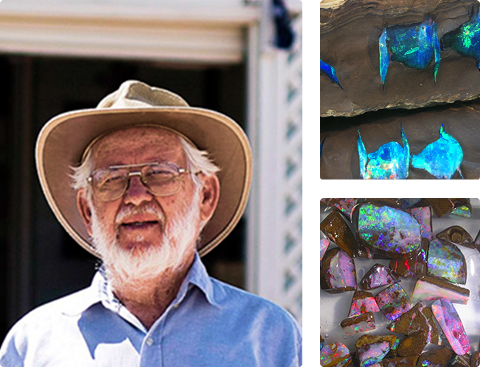
Australia is the world’s premier source of opals, producing an astounding 95% of global supply from legendary mining regions like Lightning Ridge, Coober Pedy, and Mintabie. 7 Types of Australian Opals Every Collector Should Know reveals the incredible diversity of these mesmerizing gemstones.
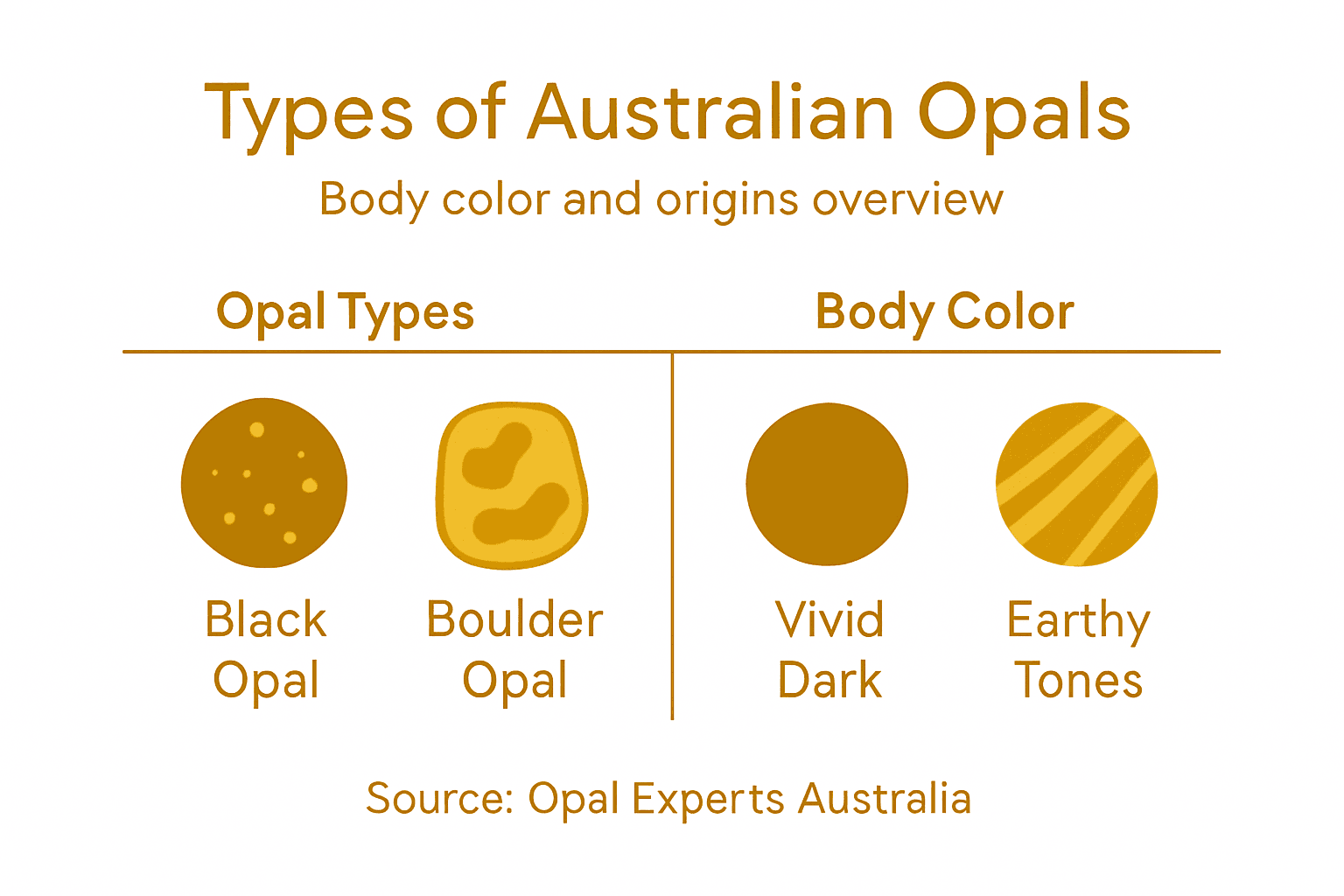
The primary categories of Australian opals are distinguished by their unique characteristics:
- Black Opal: Rare and most valuable, featuring a dark body tone that dramatically enhances play-of-color
- White (Light) Opal: Predominantly found in Coober Pedy, with a lighter background
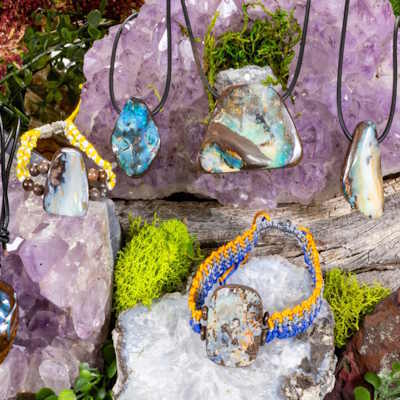
- Boulder Opal: Uniquely embedded in ironstone, creating distinctive patterns
- Crystal Opal: Transparent with vibrant, intense color displays
- Gray (Dark) Opal: Intermediate between black and white opals in body tone
Each opal type emerges from a fascinating geological process that began approximately 140 million years ago, when silica-rich waters permeated the Great Artesian Basin. These waters gradually deposited silica layers, creating the stunning gemstones collectors now treasure.
The value of an Australian opal is determined not just by its type, but by the intensity, pattern, and quality of its color play.
Geological conditions in different Australian regions create unique opal varieties, with each mining area producing stones with distinct characteristics. Lightning Ridge, for instance, is renowned for producing the world’s most prized black opals, while Coober Pedy is famous for its white opals.
Here’s a concise comparison of major Australian opal types:
| Opal Type | Typical Body Color | Visual Appeal | Primary Origin |
|---|---|---|---|
| Black Opal | Dark (black/gray) | Intense color play | Lightning Ridge |
| White Opal | Light (white/milky) | Subtle pastel flashes | Coober Pedy |
| Boulder Opal | Brown/ironstone | Vibrant veins, patterns | Queensland fields |
| Crystal Opal | Transparent | Brilliant clarity | Various regions |
| Gray Opal | Medium gray | Moderate brightness | Multiple locations |
Pro tip: When purchasing Australian opals, always request detailed documentation about the stone’s specific origin, as the mining location significantly influences the gem’s character and value.
Identifying Genuine Versus Treated Opals
Authentic Australian opals represent a complex world where visual beauty meets scientific precision. How to Identify Real Opal: Complete Collector’s Guide reveals the intricate process of distinguishing genuine gemstones from treated alternatives.
Treated opals undergo various enhancement processes that can significantly alter their natural characteristics:
- Surface Coating: Artificial layers applied to modify color or improve appearance
- Polymer Impregnation: Treatment to enhance stability and color intensity
- Dye Absorption: Particularly common with porous hydrophane opals
- Synthetic Replication: Lab-created stones mimicking natural opal structures
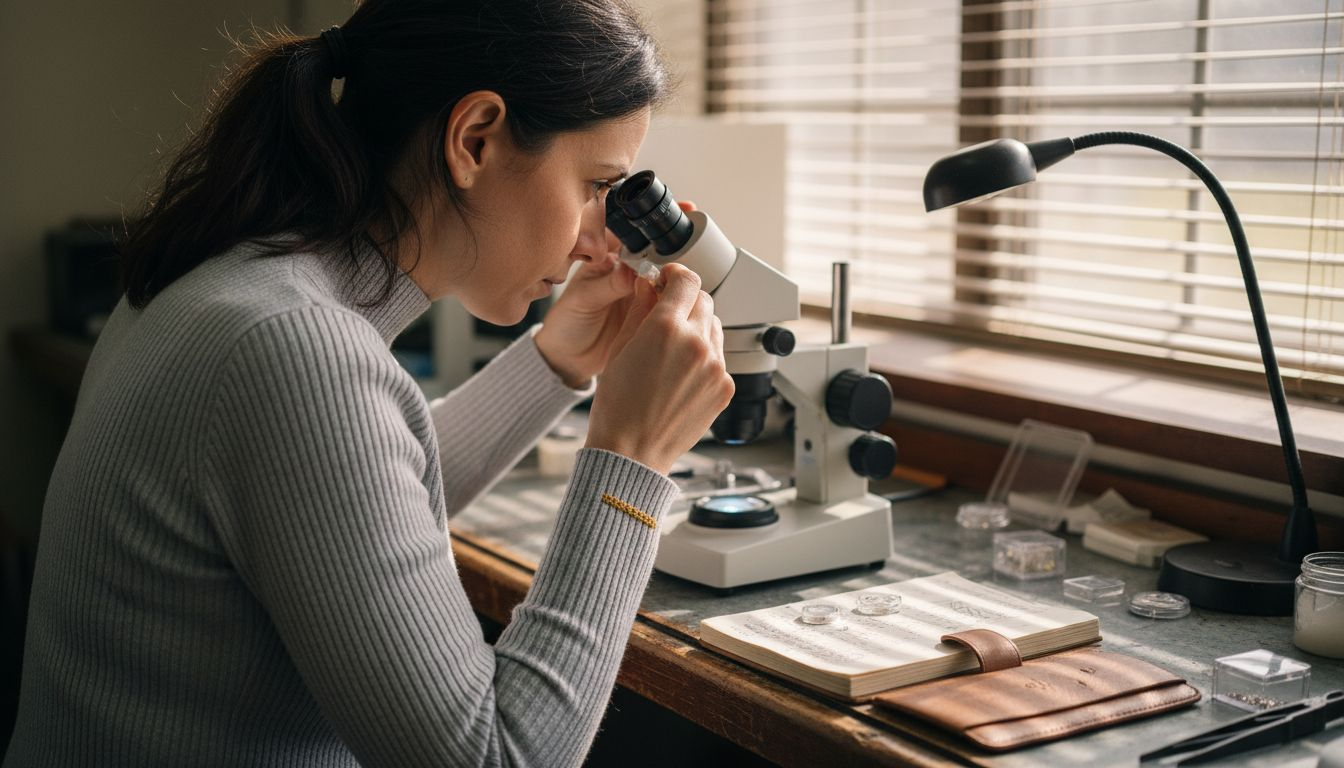
Experts employ sophisticated techniques to evaluate opal authenticity, including advanced diagnostic methods like infrared spectroscopy and microscopic examinations. These scientific approaches help detect subtle differences in water content, structural integrity, and mineral composition.
Not all treatments automatically diminish an opal’s value - transparency about enhancement processes is key to ethical gemstone trading.
Understanding opal stability is crucial for collectors. Genuine opals demonstrate consistent water content and structural uniformity, while treated stones may exhibit irregular patterns, artificial color distributions, or unexpected physical characteristics.
Pro tip: Always request a comprehensive gemological certificate that details the opal’s origin, treatment history, and specific characteristics before making a significant investment.
Ethical Sourcing and Region-Specific Practices
The world of Australian opal mining represents a complex ecosystem of environmental stewardship, cultural preservation, and economic opportunity. Responsible sourcing has become increasingly critical in ensuring the sustainability and integrity of this precious gemstone industry.
Key principles of ethical opal sourcing include:
- Environmental Protection: Minimizing landscape disruption and implementing land rehabilitation strategies
- Community Engagement: Supporting local mining communities and indigenous populations
- Fair Labor Practices: Ensuring safe working conditions and fair compensation for miners
- Transparent Supply Chains: Documenting mineral origins and preventing conflict mineral trade
- Regulatory Compliance: Adhering to national and international mining standards
Artisanal and small-scale mining (ASM) plays a crucial role in the Australian opal industry, particularly in regions like Lightning Ridge and Coober Pedy. These communities have developed intricate practices that balance economic survival with environmental consciousness.
Ethical sourcing is not just a regulatory requirement, but a moral commitment to preserving the cultural and ecological heritage of opal-producing regions.
Different Australian mining regions have unique approaches to responsible sourcing. Lightning Ridge, famous for its black opals, has implemented strict environmental guidelines that protect the delicate ecosystem while supporting local mining communities.
Pro tip: Request detailed documentation about your opal’s specific origin and the mining practices used in its extraction to ensure you are supporting responsible and sustainable gemstone production.
How Experts Verify Authenticity and Quality
Authenticity in opals requires a sophisticated blend of scientific analysis and expert visual examination. How to Authenticate Australian Opals for Genuine Value reveals the intricate process gemologists use to validate these extraordinary stones.
Experts employ multiple critical evaluation techniques:
- Infrared Spectroscopy: Analyzing water content and mineral composition
- Microscopic Examination: Checking structural integrity and natural formation patterns
- Color Spectrum Analysis: Assessing play-of-color intensity and directionality
- Stability Testing: Evaluating long-term durability and potential treatment impacts
- Chemical Composition Verification: Confirming natural mineral signatures
The grading process for high-quality opals involves a comprehensive assessment of multiple interconnected factors. Certified gemologists carefully evaluate characteristics like body tone, fire brightness, clarity, and unique color patterns to determine an opal’s true value and authenticity.
Genuine opals are living stories of geological transformation, each with a unique fingerprint that no synthetic process can perfectly replicate.
Physical imperfections often serve as key indicators of natural formation. Skilled experts look for subtle variations in color distribution, microscopic inclusions, and characteristic structural elements that distinguish genuine Australian opals from their synthetic counterparts.
Below is a summary of expert opal authentication techniques and what each method identifies:
| Method | Focus Area | Insight Provided |
|---|---|---|
| Infrared Spectroscopy | Water/mineral structure | Detects treatments, confirms age |
| Microscopic Examination | Internal features | Spots natural vs. synthetic forms |
| Color Spectrum Analysis | Play-of-color | Assesses brightness and direction |
| Stability Testing | Durability | Evaluates resistance to cracking |
| Chemical Composition Test | Mineral elements | Confirms geographic authenticity |
Pro tip: Request a detailed gemological certificate that includes high-resolution microscopic images and comprehensive scientific analysis to ensure you are investing in a truly authentic opal.
Avoiding Scams and Overpriced Opal Pieces
Navigating the complex world of opal purchasing requires strategic awareness and sophisticated consumer skills. What Affects Opal Value – Insights for Collectors provides critical guidance for discerning buyers looking to protect their investments.
Common red flags that signal potential opal scams include:
- Unverified Seller Credentials: Lack of professional certifications or transparent business history
- Suspiciously Low Prices: Offers significantly below market value for high-quality stones
- Pressure Tactics: Aggressive sales techniques demanding immediate purchase
- Vague Certification: Incomplete or non-professional documentation
- Unusual Payment Requests: Demands for wire transfers or unconventional payment methods
Simulants and treated opals represent significant risks for uninformed buyers. Sophisticated scammers often use advanced techniques to mimic genuine opal characteristics, making expert verification crucial for protecting your investment.
True value in opals is determined by authenticity, not just appearance - an educated buyer is a protected buyer.
Professional gemologists recommend comprehensive strategies for verifying opal authenticity, including requesting detailed origin documentation, independent certifications, and understanding the precise characteristics that distinguish genuine Australian opals from sophisticated imitations.
Pro tip: Always request a comprehensive gemological report with high-resolution microscopic images and detailed scientific analysis before finalizing any significant opal purchase.
Discover Authentic Australian Opal Jewelry with Confidence
If you have ever faced the challenge of verifying the authenticity and quality of opals while navigating a complex market full of treated stones and imitations, Australian Opal Direct offers a trusted solution. Our commitment to ethically sourced, earth-mined opals from renowned locations like Lightning Ridge and Coober Pedy means you can shop with peace of mind. We understand the importance of genuine documentation and expert craftsmanship that complements the natural beauty and play-of-color detailed in your article.

Explore our curated collections including exquisite rings, pendants, and custom-designed pieces that bring the geological story of each opal to life. Act now to own a rare treasure backed by free shipping, complimentary insurance, and 90-day warranties. Visit Australian Opal Direct to browse our authentic opal jewelry and request full provenance certificates that showcase the stone’s origin and treatment history. Trust our direct-miner relationships to secure a competitive price without sacrificing quality or ethical standards. Start your journey toward owning a piece of Australia’s natural heritage today.
Frequently Asked Questions
What are the key characteristics to look for in high-quality opal jewelry?
High-quality opal jewelry should feature vibrant play-of-color, good transparency if it’s a crystal opal, and minimal surface flaws. Additionally, factors such as body tone, color patterns, and overall craftsmanship are also important indicators of quality.
Are opals considered fragile, and how should I care for opal jewelry?
While opals are often perceived as fragile, high-quality opals can be quite durable with proper care. To maintain their brilliance, avoid exposing opals to harsh chemicals, extreme temperatures, or prolonged direct sunlight. Clean them with a soft, damp cloth or mild soap solution to keep them looking their best.
What types of opals are available, and how do they differ?
The main types of opals include black opals, white (light) opals, boulder opals, crystal opals, and gray opals. Each type has unique characteristics, such as body color, patterning, and intensity of play-of-color, which can influence their beauty and value.
How can you tell if an opal has been treated or enhanced?
To determine if an opal has been treated, request a detailed gemological report that includes information on water content and mineral composition. Treated opals might show signs of surface coatings or polymer impregnation, while untreated opals typically display natural imperfections and variations in color distribution.
Recommended
- Opal Stone 101: History, Symbolism, and Uses - Australian Opal Direct
- How to Price Opal Jewelry for Authentic Luxury Buyers - Australian Opal Direct
- Custom Opal Jewelry Workflow: Create Bespoke Designs Easily - Australian Opal Direct
- Top Custom Opal Jewelry Options – Expert Comparison 2025 - Australian Opal Direct