Protect Opal Jewelry on Flights: Carry On Packing for Australia Travel
Posted by AOD on 7th Sep 2026
Protect Opal Jewelry on Flights: Carry On Packing for Australia Travel
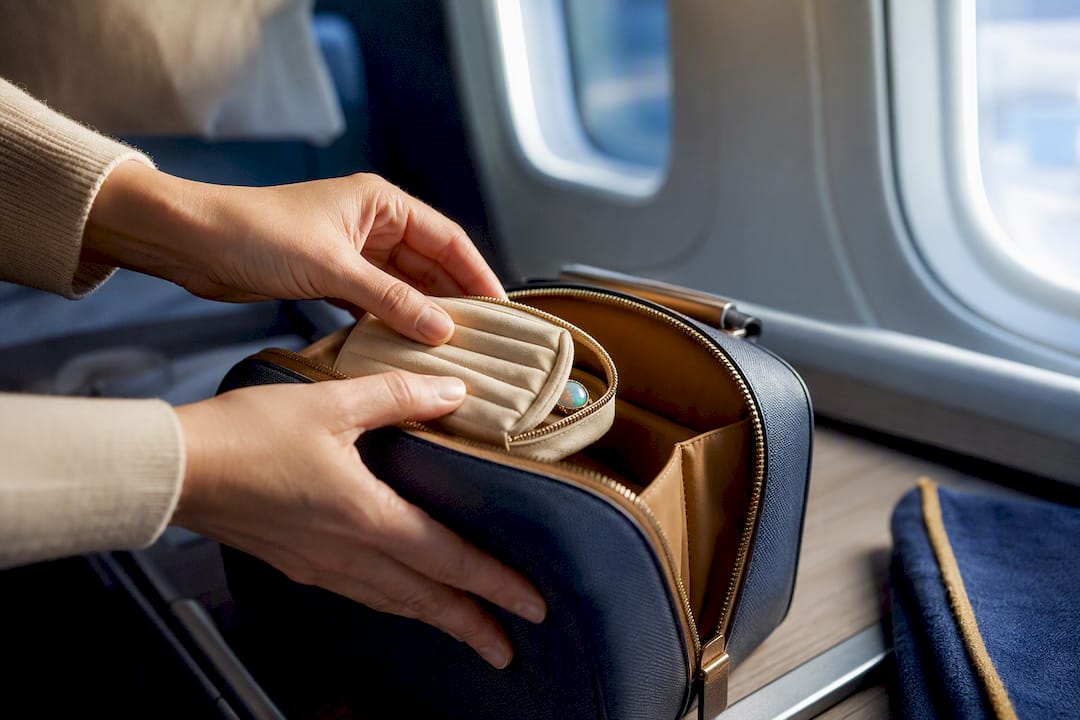
Keep opal jewelry in your carry-on, never in checked luggage, and pad each piece so it cannot rub or knock against anything else. Opals are soft and prone to cracking under heat or impact, so avoid steam, harsh chemicals, and sudden temperature swings at every leg of the trip. Photograph and insure high-value pieces before you leave home.
TL;DR:
- Opals should always be packed in padded, secure cases and carried in hand luggage to prevent impact and heat damage during travel.
- Remove opal jewelry before swimming, applying chemicals, or engaging in activities like hiking to avoid chemical damage, impact, and temperature stress.
- Use only mild soap and warm water for cleaning opals post-trip, avoiding ultrasonic or steam cleaners that can cause cracking or clouding.
- Prolonged heat exposure, such as leaving jewelry in hot vehicles or near radiators, can cause crazing and cracking, so keep opals in controlled, cool environments.
- Document and insure high-value opal pieces before travel, and carry receipts and certificates to assist in recovery or claims if damaged or lost.
Table of Contents
- How Should You Pack Opal Jewelry for Travel?
- What’s the Best Travel Case for Opal Rings and Pendants?
- When Should You Take Opal Jewelry Off During a Trip?
- How Do You Clean Opal Jewelry After a Trip?
- Why Do Opals Crack From Heat, and How Do You Prevent It?
- How Do You Insure and Document Opal Jewelry Before a Trip?
- A Printable Checklist for Traveling With Opal Jewelry
- What Customs Rules Apply to Traveling With Opal Jewelry?
- How Do You Handle Opal Jewelry on Long Flights and in Changing Climates?
- Author perspective: pack first, wear last
- Where to Find Travel-Ready Opal Settings and Coverage
- Sources Used in This Guide
How Should You Pack Opal Jewelry for Travel?
Checked baggage gets thrown, stacked, and occasionally left on a tarmac in full sun. That combination of impact and heat is close to the worst thing you can do to a gemstone that GIA rates as poor to fair in toughness. Carry-on solves both problems at once: it stays with you, it stays climate-controlled, and it never takes a fall from a conveyor belt.
Airport security adds its own small ritual. Keep your opal pieces in an accessible, padded pouch rather than buried at the bottom of a bag, so you are not digging through folded shirts while a line backs up behind you. If a screening officer asks you to remove jewelry, do it yourself and keep the piece in view the entire time. Never hand it over to be placed in a separate bin that leaves your sight.
Once you are seated, resist the urge to stash rings or pendants in the overhead bin.
- Slip small pieces into an inner, zippered compartment of your seat bag, not a side pocket that flops open.
- Wear simple stud earrings or a pendant instead of packing them, if the setting is sturdy enough for daily wear.
- Keep the pouch within arm’s reach for the whole flight, especially during boarding and deplaning, when bags get jostled most.
What’s the Best Travel Case for Opal Rings and Pendants?
There is no single correct case, only the right case for the piece. A hard-shell travel case with molded, padded slots earns its keep for rings and other high-value items that can chip if they shift even slightly. Soft, fabric-lined pouches work well for pendants and bracelets that need cushioning more than rigid containment. Individual ring boxes, the kind with a slotted foam insert, are worth the extra bulk for anything you would not want to replace.
Packing the piece correctly matters as much as the case you choose.
- Wrap each item in soft, acid-free tissue rather than newspaper or scratchy paper.
- Nestle the wrapped piece between a layer of cotton or wool inside its compartment.
- Tuck it into the padded slot so it cannot slide during turbulence or a bumpy taxi ride.
- Seal the whole bundle inside a small pouch to stop metal clasps or prongs from rubbing against the stone.
Never let opals touch coins, keys, or other jewelry directly. Metal edges and hard gemstones scratch opal’s relatively soft surface faster than almost anything else you would pack. Skip cling film and raw plastic wrap, too. Both can trap moisture against the stone or press unevenly on a setting, which is the opposite of the gentle, breathable cushioning opal needs.
Pro Tip: Pack your most fragile opal piece last, right before you close the bag, so you can visually confirm it landed in its padded slot rather than trusting memory alone.
When Should You Take Opal Jewelry Off During a Trip?
Opal rewards a “last on, first off” habit better than almost any other gemstone in your collection. Pool decks, hot tubs, and beach afternoons are the classic trip hazards, since chlorine, salt water, and sand can attack both the stone and its setting. Household-style chores on the road, think scrubbing a rental kitchen or hauling luggage, carry the same risk of a stone getting knocked loose.
A simple sequence keeps the rest of your trip low-risk.
- Apply sunscreen, perfume, and lotion first, and let them absorb fully.
- Put opal jewelry on as the last step before you walk out the door.
- Remove it before swimming, showering, or any activity involving cleaning chemicals.
- Save opals for dinners, sightseeing, and photos, not hikes or water sports.
If a planned activity calls for jewelry that can take a beating, reach for something harder, like a sapphire or a plain gold band, and let the opal sit safely in its pouch back at the hotel.
How Do You Clean Opal Jewelry After a Trip?
Warm water, a drop of mild soap, and a soft cloth are the only tools opal actually needs. GIA’s care guidance is blunt on this point: steam cleaners and ultrasonic cleaners are off-limits, because both can crack or cloud the stone rather than simply cleaning it. Wipe gently to remove sunscreen residue, sweat, or salt film picked up over the trip, and skip any household chemical cleaner that promises a deeper shine.
Run a quick visual inspection once the piece is clean.
- Check the setting for loose prongs or a stone that shifts when you press it lightly.
- Look for chips along the edge of the stone, especially near the girdle.
- Watch for crazing, the fine web of surface cracks that signals heat or moisture stress.
- Photograph anything unusual and take the piece to a jeweler before wearing it again.
One category needs extra caution: doublets and triplets, which are opal slices glued to a backing (and sometimes capped with a clear dome). Those glued layers are more sensitive to moisture and heat than a solid opal, so never soak them, even briefly, and dry them with a soft cloth immediately after any contact with water. A routine cleaning schedule built around these gentler steps will keep color and shine intact for years.
Why Do Opals Crack From Heat, and How Do You Prevent It?
Opal sits at a moderate level on the Mohs hardness scale, softer than sapphire or diamond, with toughness that GIA describes as very poor to fair. That combination means impact and heat both do damage that harder, tougher stones simply shrug off. Crazing, the fine network of surface fractures’ opal owners dread, tends to follow prolonged heat exposure or a sudden swing in temperature, not just one hot afternoon.
Travel creates exactly those conditions if you are not paying attention.
- Never leave jewelry in a parked car, where dashboard temperatures spike far past anything a stone should tolerate.
- Keep pouches out of direct sun on a beach bag, windowsill, or poolside table.
- Avoid setting jewelry near heaters, hair dryers, or radiators in a hotel room.
- For long transit through hot climates, use an insulated pouch and keep it away from silica packets or other drying agents that pull moisture from the air.
Controlled humidity helps opal stay stable. Extremes in either direction, bone dry or soaking wet, are what cause trouble.
How Do You Insure and Document Opal Jewelry Before a Trip?
Documentation takes fifteen minutes and can save a claim later. Photograph each piece from several angles in good light, and keep receipts or certificates of authenticity together in one folder. Store digital copies in the cloud and leave a second copy with someone you trust at home, in case your phone or laptop goes missing along with the jewelry.
Before you pack a single piece, confirm your coverage actually applies to it.
- Check whether your travel insurance or homeowner’s policy covers gemstone jewelry away from home, since many general policies cap coverage far below a piece’s real value.
- Consider short-term jewelry insurance for anything you would genuinely mourn losing, particularly heirloom or custom pieces.
- If something is lost or damaged, photograph the damage immediately, file a report with your insurer, and contact the airline or local police if theft is involved.
- Get a written assessment from a jeweler before any repair, so your claim has documentation to match the photos.
Readers who want the specifics on policy types and required paperwork can review opal insurance coverage before their next trip.
A Printable Checklist for Traveling With Opal Jewelry
Print this, tuck it into your suitcase, and check it off before you close the zipper.
Pack: carry-on only, padded pouch or hard case, each piece separated in its own compartment or individual box.
Wear: last step of getting dressed, after sunscreen and perfume; remove before water, heat, or chemicals.
After travel: clean with mild soap and lukewarm water, inspect the setting, photograph anything unusual.
Australian Opal Direct’s product pages list warranty terms and shipping details for readers who want a travel-ready setting or a protective case to go with a piece. The five-step care guide covers the daily habits that keep opal color and clarity stable long after the suitcase is unpacked, and it pairs well with the insurance guidance above if you are outfitting a piece specifically for frequent travel.
What Customs Rules Apply to Traveling With Opal Jewelry?
Most countries treat opal jewelry the same way they treat any personal gemstone item you are wearing or carrying for personal use, not resale. That generally means no special declaration is required at your destination’s customs checkpoint, provided the piece is clearly for personal wear and not part of a commercial shipment. The distinction that matters to customs officials almost everywhere is intent: personal effects move through with minimal friction, while anything that looks like inventory, multiple identical pieces, loose stones in bulk, invoices attached, gets treated as trade goods and can trigger duties or paperwork.
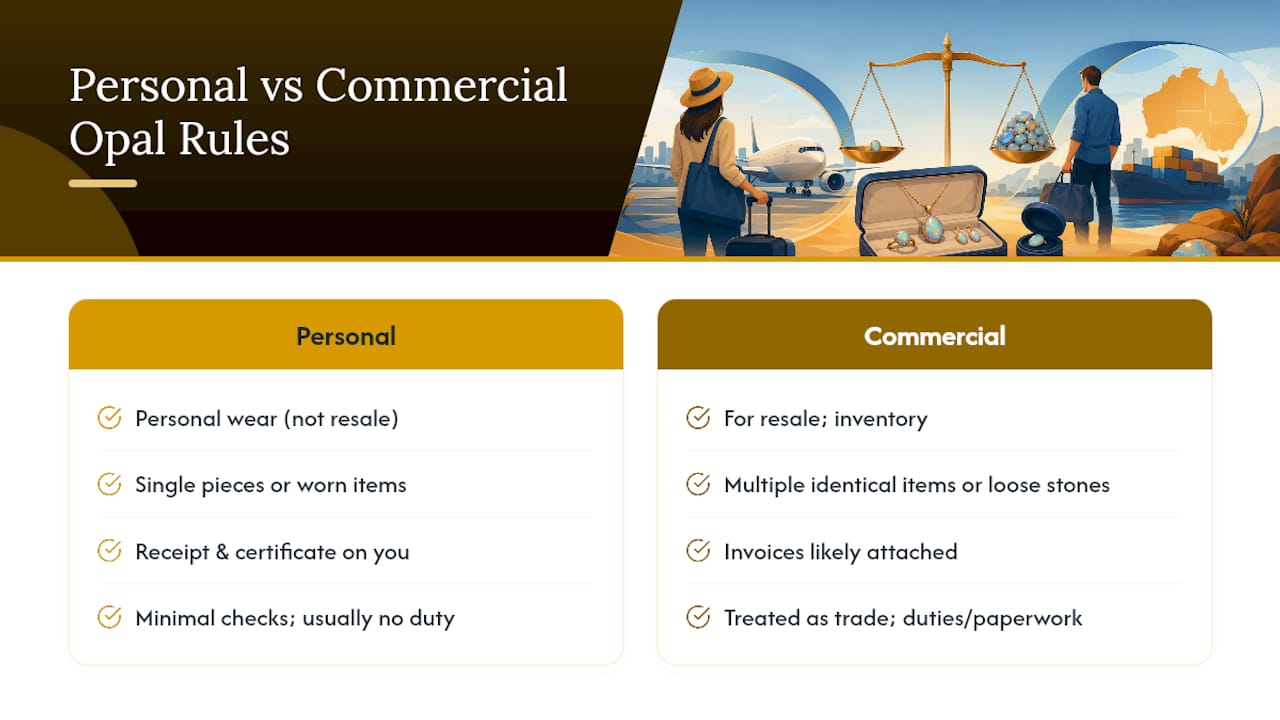
Rules shift the moment you are buying opal jewelry abroad and bringing it home. Many countries set a duty-free personal allowance for gifts and personal purchases, and jewelry above that threshold may be taxable on arrival. Since these thresholds vary by country and change periodically, check your home country’s customs authority before a trip where you plan to buy a significant piece overseas.
Keep your receipt and any certificate of authenticity with you rather than packed away, since a customs officer who asks about a visibly valuable piece will want proof of where and when it was purchased. This same paperwork doubles as the documentation your insurer will want if the piece is ever lost or damaged in transit, so there is no real downside to carrying it. If you are traveling internationally with a piece bought specifically for the trip, photograph the receipt and store a copy digitally as a backup, in case the original gets separated from your luggage.
How Do You Handle Opal Jewelry on Long Flights and in Changing Climates?
Long-haul flights subject jewelry to a strange mix of stress: hours of low cabin humidity, temperature swings between the terminal and the aircraft, and the simple friction of a piece being touched, adjusted, or brushed against fabric for ten or twelve hours straight. Cabin air is notably dry, which will not crack opal outright, but it is one more reason to avoid combining low humidity with direct heat, like resting a pendant against a window seat baking in the sun.
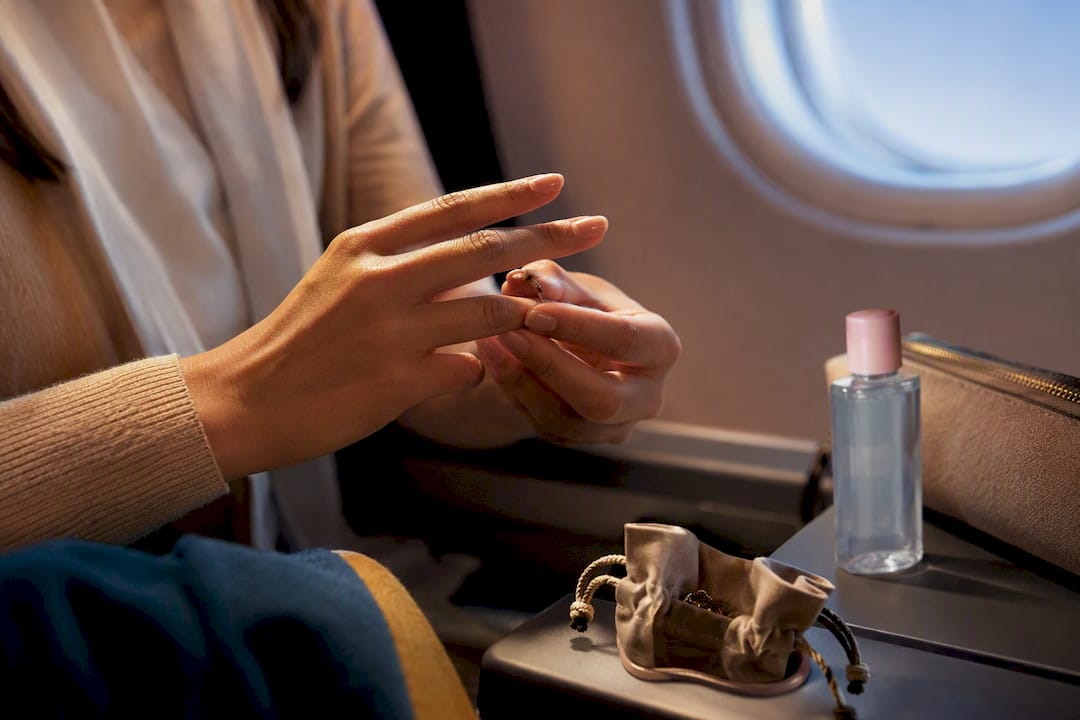
If you are wearing a ring or pendant rather than packing it, get in the habit of removing it before using hand sanitizer or lotion mid-flight, then putting it back on afterward rather than layering chemicals directly onto the stone for hours. Landing in a drastically different climate than the one you departed from, say, leaving a cold winter city for a humid tropical destination, is exactly the kind of temperature and humidity swing that stresses a stone already weakened by a chip or hairline crack. Give a packed piece a few minutes to acclimate in its pouch before handling it right after landing, rather than pulling it out the moment the seatbelt sign turns off.
Layovers deserve the same caution as the flights themselves. A jewelry pouch left in a hot rental car during a long layover, or set on a sunlit café table while you wait for a connection, undoes all the careful packing you did before the trip even started. Treat every leg of a multi-stop itinerary as its own small test of your packing discipline, not just the final destination.
Author perspective: pack first, wear last
My honest take, after working through the actual research on opal’s hardness and heat sensitivity, is that most travel advice undersells how quickly a beautiful piece turns into a cracked one. The heuristic I would give any traveler is simple: pack first, wear last. Decide what stays in the padded pouch before you decide what looks good with an outfit. Opals rewarded with that kind of restraint tend to stay wearable for decades, while the ones treated as everyday accessories on every trip are the ones that eventually show crazing nobody saw coming.
— Renee
Where to Find Travel-Ready Opal Settings and Coverage
This retailer offers rings and pendants designed to endure travel, featuring secure settings like bezels or protective mountings to improve durability during handling and padding. That matters when you are choosing a setting meant to survive carry-on travel: a secure bezel or protective mounting holds up to the padding and handling this guide describes far better than an open-claw setting picked for looks alone.

Some pieces include insurance and a warranty to provide coverage against certain transit mishaps described in this guide. If you are shopping for a new opal ring, pendant, or custom piece built with travel in mind, browse the current collection at Australian Opal Direct and check the warranty and shipping details on any product page before you buy.
Sources Used in This Guide
This guide draws on opal care guidance from GIA and the Australian Opal Association, alongside jewelry-care sources covering doublets, triplets, and seasonal travel risks, to ground its packing and cleaning steps in established gemstone care practice.








