7 Men's Opal Ring Styles That Withstand Daily Wear
Posted by AOD on 17th Sep 2026
7 Men’s Opal Ring Styles That Withstand Daily Wear
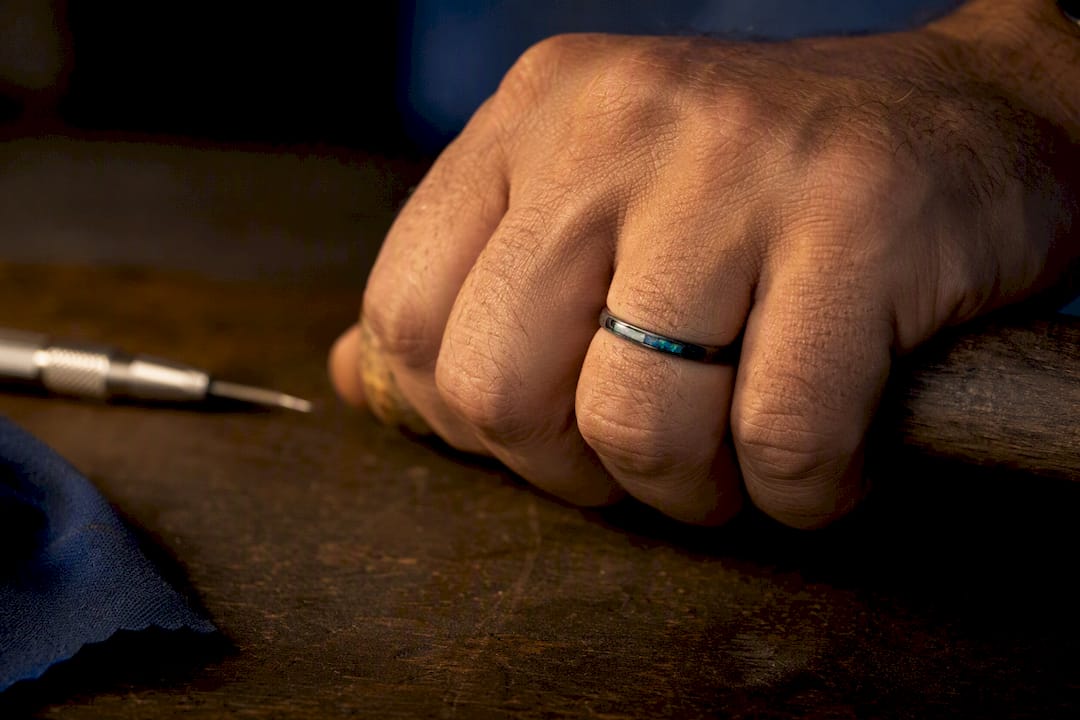
Seven styles dominate men’s opal jewelry right now: boulder opal bezels, black opal signets, opal inlay bands in titanium or tungsten, triplet inlay rings, crushed-opal mosaics, and low-profile flush-set accents. The boulder bezel and inlay bands win for daily wear; the black opal signet and high-domed solid stones deserve rarer, more deliberate occasions. Australian Opal Direct is a well-known online retailer specializing in genuine Australian opals, making it a sound place to start comparing them.
TL;DR:
- Boulder opal bezel rings offer a durable, natural backing with metal collars that are ideal for daily wear and rougher environments.
- Black opal signet rings showcase saturated colors on low-profile surfaces but are best reserved for special occasions due to their rarity and value.
- Inlay bands in titanium or tungsten with crushed or triplet opals provide a maintenance-free, impact-resistant option suitable for frequent use.
- Sealed constructions like inlays, bezels, and flush settings protect fragile opals better than exposed prongs or high-domed stones.
- Prices vary significantly based on stone rarity, construction, and metal choice, with solid black opal signets representing the highest investment.
Table of Contents
- What Are the Main Men’s Opal Ring Styles?
- Which Metals and Settings Protect an Opal Best?
- How Do You Pick the Right Opal Ring for Your Life?
- How Should You Wear and Style an Opal Ring?
- Why Provenance and Guarantees Matter With Opal
- Vintage, Modern, or Eclectic: Which Opal Ring Design Fits You?
- Which Opal Ring Style Fits Your Lifestyle and Job?
- What Do Men’s Opal Rings Typically Cost?
- A Buyer’s Perspective on Getting This Right
- How Australian Opal Direct Makes This Easier
- Key References for Durability and Buying Claims
- FAQ
What Are the Main Men’s Opal Ring Styles?
Every masculine opal ring style solves the same design problem differently: how much fire can you show without exposing a soft stone to a hard world? Some styles chase maximum color and accept more careful wear. Others trade a little brilliance for a ring you can forget you’re wearing while stacking firewood.
- Boulder opal bezel rings. Boulder opal keeps its natural ironstone backing intact, so the stone reads darker, richer, and noticeably tougher than a thin solid slice. That host rock isn’t decorative filler. It’s structural, which is why boulder opal shows up so often in men’s ring recommendations. A metal bezel wrapping the edge finishes the protection, giving the stone a collar instead of an exposed rim.
- Black opal / solid opal signet-style rings. A signet’s flat top and squared shoulders were built for wax seals centuries ago, and that broad, low profile happens to be perfect for showing off black opal’s deep, saturated play-of-color. These run premium because black opal from Lightning Ridge is genuinely rare, and a solid stone this size carries real value. Reserve it for a special ring, not a work glove.
- Opal inlay bands (titanium or tungsten). A thin band of opals, often crushed or triplet-constructed, sits recessed into a channel cut in a hard metal band. The metal does the heavy lifting structurally while the opal supplies color. It’s the closest thing to a maintenance-free opal ring on this list.
- Triplet and doublet rings. A thin opal slice gets backed by dark potch or glass and sometimes capped with a clear quartz dome, intensifying the color play while protecting fragile material underneath. You get more color for less money, but you’re buying a constructed stone, not a solid one. That distinction matters for resale and for how you talk about the ring.
- Crushed or mosaic opal inlay. Small opal fragments get set in a textured pattern and sealed, producing a scattered, almost galaxy-like surface. Properly sealed, this construction resists knocks better than a single high-domed cabochon, since there’s no fragile crown to chip.
- Minimal accent opal (flush-set or low-profile cabochon). A small opal cut nearly flush with the band’s surface, often on a wider ring, gives you color without a raised stone to catch on tools, gloves, or gym equipment.
Pro Tip: If you only wear one ring and you’re not precious about it, start your search with inlay bands or boulder bezels. Save the solid black opal signet for a piece you’ll actually treat like an heirloom.
Which Metals and Settings Protect an Opal Best?
Opal typically ranks in the mid-range on the Mohs hardness scale, making it noticeably softer than diamonds and sapphires, which puts it closer to window glass than to a diamond or sapphire. That single fact should drive almost every setting decision you make.
- Bezel settings wrap a continuous metal collar around the stone’s edge, and jewelry guides consistently name the bezel as the single best upgrade for an opal ring meant for regular wear.
- Inlay and flush settings recess the stone into the metal itself, so there’s no raised edge to catch a doorframe or a socket wrench.
- Avoid exposed prongs or claws. They leave the opal’s most vulnerable point, its edge, sitting in open air.
On metal, tungsten carbide and titanium deliver the scratch resistance men’s inlay bands rely on, especially when the metal itself forms the protective wall around a crushed or triplet inlay. Gold and silver give you the warmer, classic look of a traditional signet or bezel ring, though they’ll pick up scratches faster and need occasional polishing. Black zirconium and matte-coated finishes split the difference, pairing a rugged, high-contrast look with opal inlays for a style that reads modern without needing an ornate mounting. For doublets, triplets, and crushed inlays, a sealed cap of quartz or resin isn’t a shortcut. It’s the actual engineering that keeps the stone wearable.
How Do You Pick the Right Opal Ring for Your Life?
Match the ring to how you actually live, not to the photo that caught your eye. Work through this before you buy:
- Rate your wear frequency and physical demands. Daily wear with manual work points to inlay bands or bezel-set boulder opal. Occasional wear opens the door to solid black opal.
- Set a real budget. Solid stones cost more than triplets and doublets, and that gap can be substantial for comparable size and color.
- Choose band width and profile. Wider bands (8mm and up) suit signet and mosaic styles; slimmer profiles suit flush accents.
- Check for metal allergies. Titanium and tungsten are hypoallergenic options if gold or certain alloys have bothered your skin before.
- Ask the seller directly: what opal variety and origin, whether the stone is solid or a doublet/triplet, exactly what setting and backing it uses, and what the warranty and resizing policy covers.
Wide bands often need a comfort-fit interior edge to avoid pinching, so ask about that specifically during sizing. Walk away from any listing with vague stone descriptions, no stated warranty, or an unclear return and resizing policy; that vagueness is rarely accidental.
How Should You Wear and Style an Opal Ring?
Band width and finger placement do more visual work than most men expect.
- Wide bands (8mm+) with a signet or bezel profile suit the ring or index finger and carry weight without looking fussy.
- Slimmer, flush-set styles work well stacked or worn on a pinky for a more discreet signal.
- For everyday work, lean on durable inlay or bezel-set boulder opal.
- For smart casual, a textured crushed-opal mosaic adds personality without formality.
- For formal occasions, a solid black or boulder opal signet earns its moment.
- Match metal finish to opal tone: matte black zirconium against fiery orange and green opal reads sharp and modern, while gold warms up softer blue and violet color play. For broader guidance on wearing statement pieces without overdoing it, this styling guide is worth a look.
- Pull the ring off before the gym, gardening, or any job involving solvents or impact, regardless of how the stone is set.
Why Provenance and Guarantees Matter With Opal
Renee, who writes Australian Opal Direct’s buyer guidance and ring style breakdowns, built that content around one recurring theme: an opal ring is only as trustworthy as the story behind the stone. Australian Opal Direct sources its opals directly from Lightning Ridge, Coober Pedy, and Queensland mines, working with miners rather than middlemen, so buyers know where a stone actually came from. That provenance backs up three concrete guarantees worth checking before you buy anywhere: free shipping, complimentary insurance on shipped pieces, and a 90-day warranty. Combined with custom sizing and design options, those protections take most of the financial risk out of buying a stone you can’t inspect in person.
Vintage, Modern, or Eclectic: Which Opal Ring Design Fits You?
Design trends in men’s opal rings split roughly three ways, and none of them is objectively better than the others.
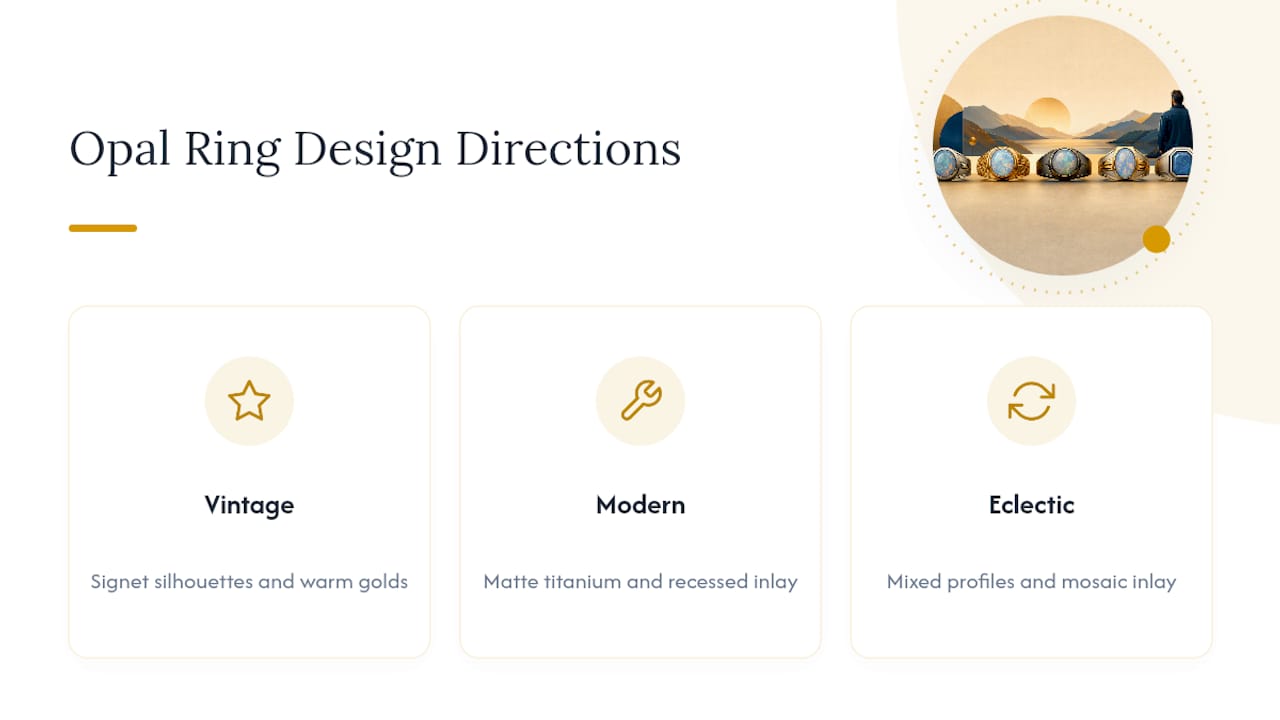
Vintage-inspired styles lean on signet silhouettes, milgrain edging, and warmer metals like yellow or rose gold. They pair a solid black or boulder opal with traditional jewelry-making techniques, and they tend to appeal to men who want a ring that looks like it could have been handed down, even when it’s brand new.
Modern designs favor matte titanium, black zirconium, and tungsten, often built around clean inlay work rather than a raised stone. The insight worth remembering here is that these dark, industrial metals create high contrast against opal’s color play, so the ring reads rugged and current without needing an elaborate mounting to make its point.
Eclectic styles mix elements deliberately: a signet profile in titanium, or a mosaic inlay with an unconventional band shape. These suit men who want an opal ring that doesn’t slot neatly into either camp, and they’re where a lot of custom design work happens, since off-the-shelf collections rarely stock the unusual combination someone has in mind.
None of these trends changes the underlying physics of a soft stone. Whichever aesthetic you gravitate toward, the setting and metal choices covered earlier still apply.
Which Opal Ring Style Fits Your Lifestyle and Job?
The honest answer to “which style should I buy” almost always comes down to your lifestyle and daily activities.
If you work in construction, mechanics, or any hands-on trade, an inlay band in titanium or tungsten with a crushed or triplet opal construction is the realistic choice. The metal absorbs impact and the recessed stone has nothing to catch on.
If your work is office-based or client-facing, you have more room. A boulder opal bezel or a black opal signet can handle a desk environment fine, since the main risks are limited to the occasional knock against a keyboard or door handle rather than sustained physical labor.
If you’re outdoors often, hiking, fishing, working the land, prioritize sealed constructions and hard metals over showy high domes. A flush-set accent opal on a wide titanium band gives you color without a raised profile to snag on gear or branches.
If you mostly wear rings for evenings out, weddings, or events rather than daily grind, a solid black opal signet is worth the extra investment, since the wear-and-tear risk drops substantially when the ring spends most of its life in a box.
What Do Men’s Opal Rings Typically Cost?
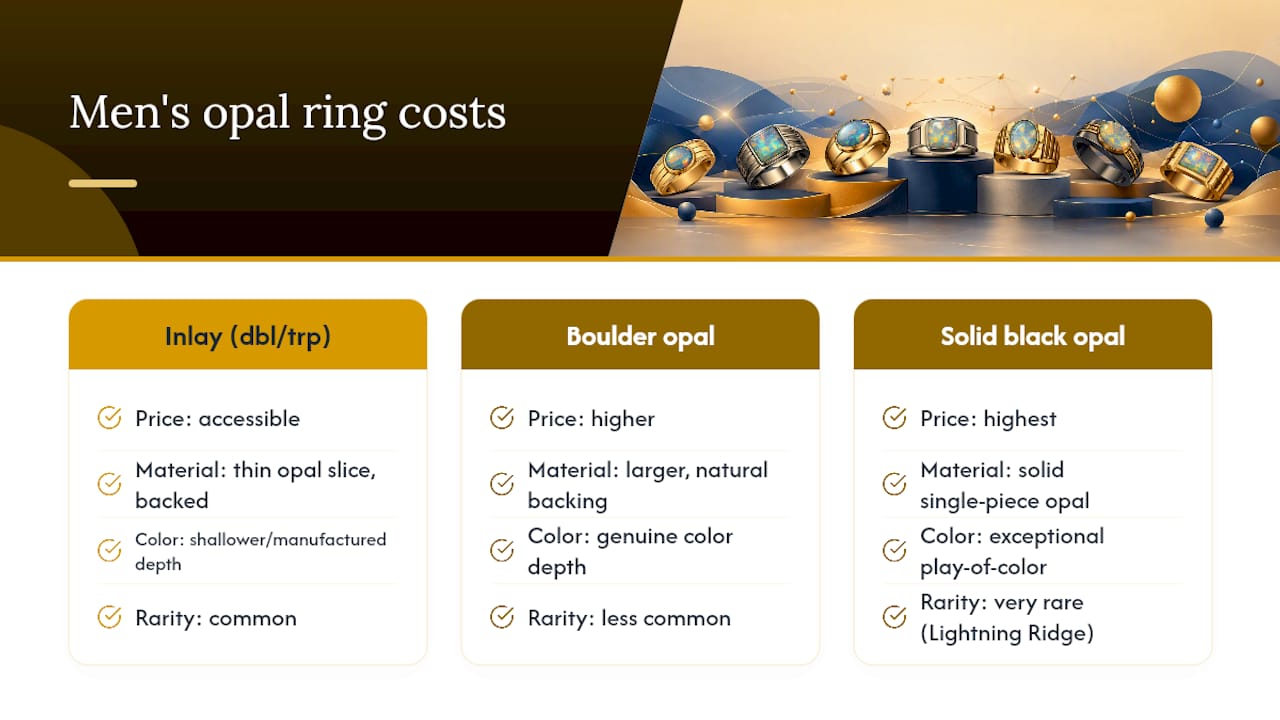
Price tracks two things above all else: whether the opal is solid or constructed, and how rare the color pattern is. Triplet and doublet inlay rings sit at the accessible end of the range, since a thin slice of opal backed by potch or glass uses far less rough material than a solid stone, and crushed-mosaic inlays land in a similar bracket.
Boulder opal bezel rings cost more, because you’re paying for a larger, naturally backed stone with genuine color depth rather than a manufactured sandwich. Solid black opal signet rings sit at the top of the range by a wide margin. Black opal from Lightning Ridge is among the rarest gem materials mined anywhere, and a jeweler cutting a stone large enough for a signet-style ring is working with material that took the earth millions of years to produce and can take months to source and cut.
Metal choice shifts the number too. Titanium and tungsten bands generally cost less than gold at a comparable size, though a heavily customized gold mounting with an exceptional stone will always sit above a mass-produced inlay piece. Custom design work adds a further variable, since a one-off ring built to your hand and your stone naturally costs more than a stocked collection piece. Current pricing details can be found directly on the men’s opal ring collection page.
A Buyer’s Perspective on Getting This Right
Chasing maximum color at the expense of a stone you can’t wear defeats the purpose. I’ve seen custom orders succeed precisely because the buyer picked boulder opal in a bezel over a flashier solid stone he’d have babied forever. Use the checklist above before you commit.
— Renee
How Australian Opal Direct Makes This Easier
Australian Opal Direct is the direct route to a men’s opal ring without guessing whether the seller actually knows where the stone came from. Every piece traces back to a working relationship with miners in Lightning Ridge, Coober Pedy, or Queensland, and every order ships free with complimentary insurance and a 90-day warranty behind it.

If you already know your style, browse the curated men’s opal jewelry collection or the full opal ring catalog. If none of the standard settings fit what you’re picturing, a boulder opal bezel with a wider band, a titanium inlay in a nonstandard shape, custom hand-crafted opal jewelry turns that description into a real ring, sized to your hand and built around a stone chosen for how you’ll actually wear it. Start by picking a stone or sending a sketch of what you have in mind.
Key References for Durability and Buying Claims
- Mohs scale of mineral hardness, for opal’s 5.5 to 6.5 hardness rating
- The Opal Buyer’s Handbook, for bezel-setting and doublet/triplet construction guidance
FAQ
Can a Man Wear an Opal Ring?
Yes, and opal reads as a strongly masculine stone once it’s set in the right style. Boulder opal bezels, black opal signets, and titanium inlay bands are all built around masculine forms and protective settings rather than delicate, feminine mountings.
What Are the Different Styles of Opal Rings for Men?
The main styles are boulder opal bezel rings, black opal or solid opal signets, opal inlay bands in titanium or tungsten, triplet and doublet rings, crushed or mosaic opal inlays, and minimal flush-set accents. Each balances color intensity against durability differently, so the right pick depends on how often you’ll wear it.
What’s the Difference Between Solid, Doublet, and Triplet Opal Rings?
A solid opal ring uses one uncut piece of opal throughout, while a doublet backs a thin opal slice with dark potch or glass, and a triplet adds a clear quartz cap on top of that same construction. Doublets and triplets protect fragile material and intensify color, but they carry less value than an equivalent solid stone.
What Are the Best Opal Ring Styles for Everyday Wear?
Boulder opal bezel rings and titanium or tungsten inlay bands are the best choices for daily wear, since both use hard metal to shield the opal’s edges. High-domed solid opal rings, including black opal signets, are better suited to occasional wear unless mounted with extra protective design.
How Much Do Men’s Opal Rings Usually Cost?
Pricing varies by construction and stone rarity: triplet, doublet, and crushed-mosaic inlay rings sit at the more accessible end, boulder opal bezels cost more for their larger natural stones, and solid black opal signets sit at the top of the range. Current prices for specific styles are listed on the men’s opal ring collection.








