How to Choose Opal Accents for Your Jewelry Designs
Posted by AOD on 18th May 2026
How to Choose Opal Accents for Your Jewelry Designs
TL;DR:
- Opal accents enhance jewelry with vibrant, shifting colors, but choosing the right type and setting ensures durability and visual impact. Australian opals are ideal for daily wear due to their density, while bezel settings provide better protection against chipping for delicate stones. Thoughtful pairing of metal tones, patterns, and placement maximizes the opal’s beauty and longevity in jewelry design.
Opal accents can transform a jewelry piece from beautiful to truly unforgettable, but knowing how to choose opal accents that serve both your aesthetic vision and your practical needs takes more than instinct. These gems carry living color inside them — flashes of crimson, electric blue, and molten gold that shift with every turn of the wrist. The challenge lies in matching that kaleidoscopic brilliance to the right design, the right setting, and the right stone type. This guide gives you the specific knowledge to make those decisions with confidence.
Table of Contents
- Key Takeaways
- How to choose opal accents: understanding opal types
- Opal accent color tips for jewelry design
- Choosing the right settings for opal accents
- Integrating opal accents into your jewelry designs
- My honest take on opal accents and design longevity
- Discover authentic opal accents at Australianopaldirect
- FAQ
Key Takeaways
| Point | Details |
|---|---|
| Opal type determines durability | Australian opals suit daily wear better than Ethiopian varieties, which require more delicate handling. |
| Play-of-color drives visual impact | Red flashes and harlequin patterns command the highest desirability and design presence in accent stones. |
| Setting choice protects the stone | Bezel settings distribute pressure evenly, reducing chip risk for opals rated at Mohs 5.5 to 6.75. |
| Metal tone shapes color perception | Cool white metals amplify blue and green hues; yellow and rose gold warm fire opals and white opals. |
| Lifestyle dictates the right accent | Active wearers need lower-profile settings; occasional wearers can prioritize brilliance over protection. |
How to choose opal accents: understanding opal types
Before selecting any opal accent, you need to understand what differentiates one type from another. Not all opals behave the same way under light, under pressure, or in daily wear conditions. The variety is extraordinary and the distinctions matter deeply in jewelry design.
The major types used as accent stones
Here is a clear comparison of the opal types most commonly used in accent roles:
| Opal Type | Body Tone | Play-of-Color | Durability | Best Used For |
|---|---|---|---|---|
| Black opal | Dark | Vivid, high contrast | Good | Statement accents, fine jewelry |
| White opal | Light/milky | Softer, diffused | Good | Romantic, layered designs |
| Crystal opal | Transparent | Brilliant, deep | Good | Halo and bezel settings |
| Fire opal | Orange/red | Minimal to none | Moderate | Color-pop, warm metal pairings |
| Ethiopian opal | Variable | Vivid, fiery | Delicate | Occasional wear, fashion pieces |
| Australian opal | Dark to light | Broad, multidirectional | Excellent | Everyday and heirloom designs |
Australian opals are denser and better suited for daily wear, which makes them the preferred choice when you want an accent stone that holds up over time. Ethiopian opals, by contrast, are hydrophane, meaning they absorb moisture and change in appearance depending on their environment. That characteristic makes them gorgeous in controlled settings but fragile in rings or bracelets worn regularly.
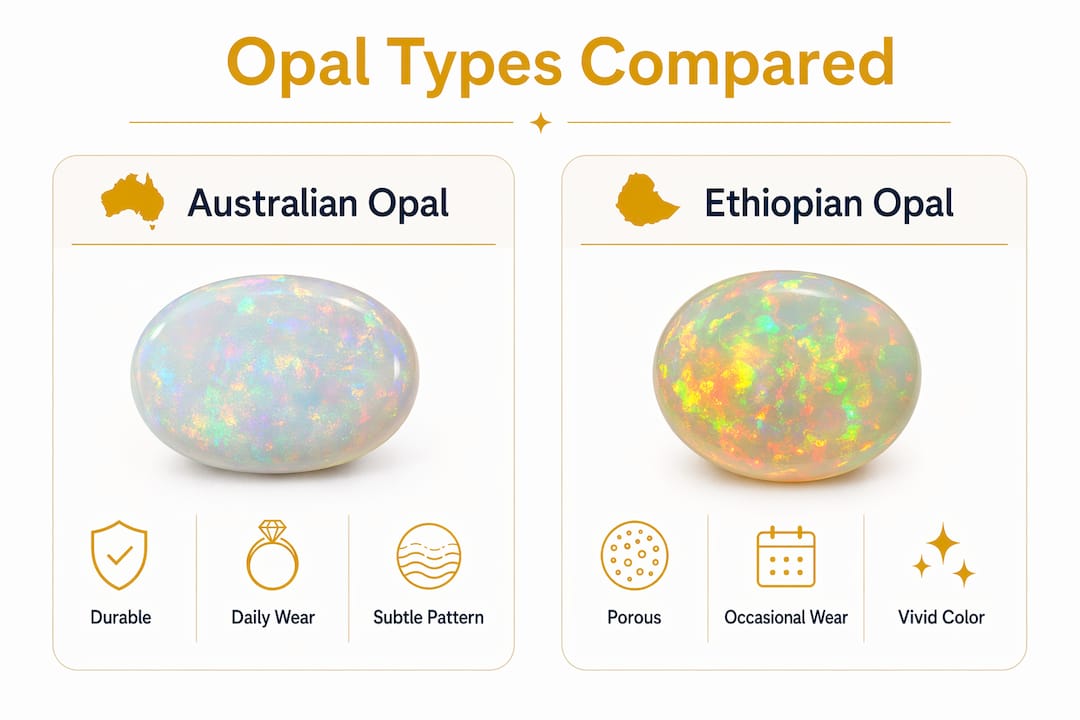
The concept of body tone is central to opal gemstone selection. A dark body tone in black opals creates the dramatic contrast that makes their play-of-color appear to glow from within. White and crystal opals offer subtler displays that work beautifully in layered or mixed-stone designs, where you want the opal to complement rather than dominate.
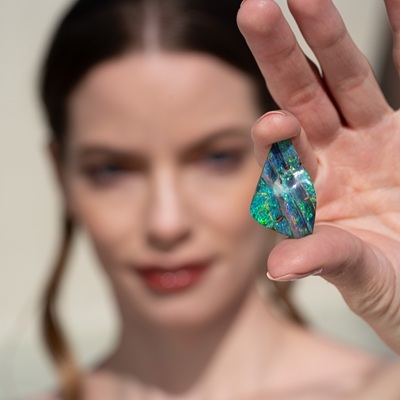
Play-of-color itself ranges from broad sweeping flashes to intricate pinpoint patterns. Red flashes are the most valuable and visually striking, but a stone that shows multiple colors across a wide pattern will almost always outperform a single-color stone in accent use. The goal in selecting opal jewelry for accent roles is to find a stone whose display is visible from multiple angles, not just when held directly under light.
Opal accent color tips for jewelry design
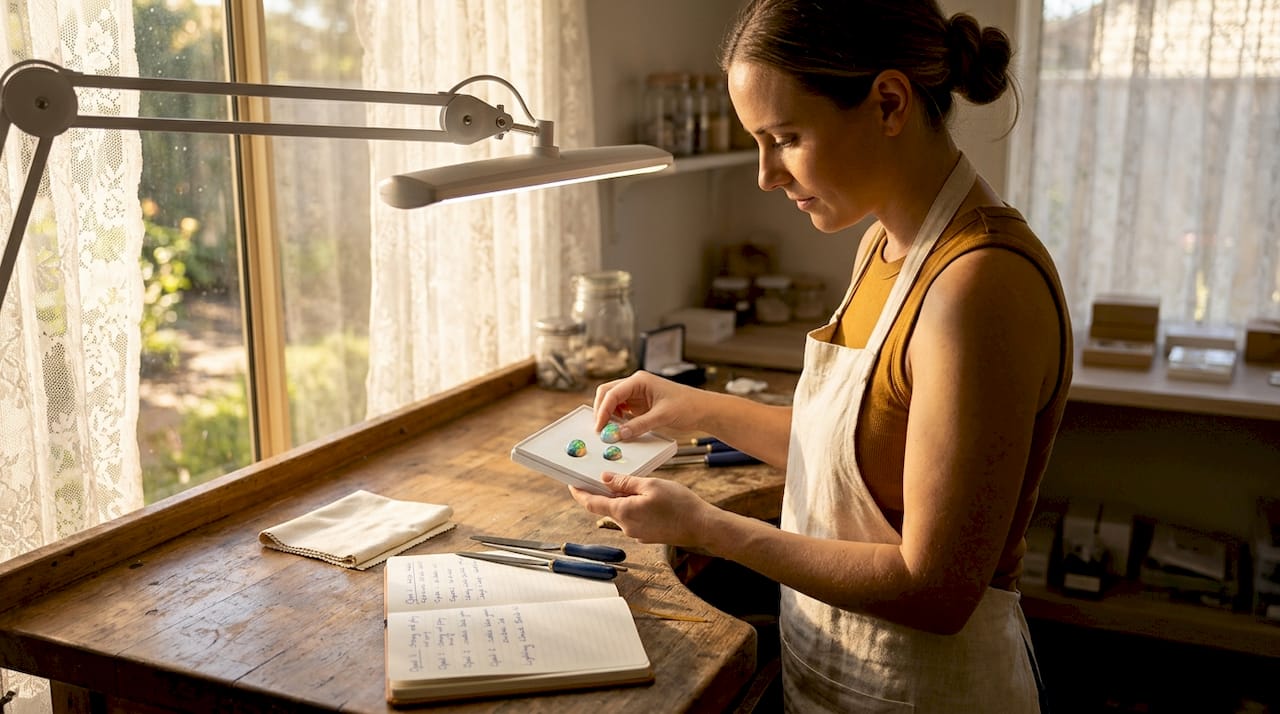
Color is the soul of an opal. When choosing an accent stone, you are not simply picking a shade — you are choosing which emotions and energies the piece will radiate. Getting this right requires thinking about how the opal’s play-of-color will interact with the metal, the centerpiece stone (if any), and the overall design intention.
Matching opal colors with metals and gemstones
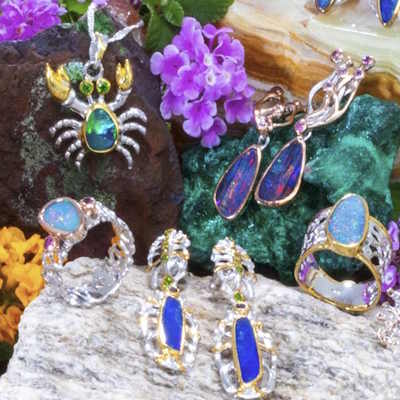
White metals enhance blue, green, and purple hues in an opal by providing a cooler tonal backdrop that lets those colors sing. Sterling silver and white gold work especially well with crystal and black opals that carry cool-spectrum flashes. Yellow and rose gold, on the other hand, draw warmth from fire opals and white opals, amplifying their body color and making the whole piece feel more radiant and organic.
When pairing opal accents with other gemstones, consider contrast and harmony separately:
- Contrast pairings: Black opal with white diamonds creates dramatic tension. The diamond’s brilliance amplifies the opal’s color against a dark ground.
- Harmony pairings: Crystal opal with aquamarine or pale sapphire creates a fluid, oceanic visual language that feels cohesive rather than competitive.
- Warm-tone pairings: Fire opal with citrine or yellow diamond builds a sunset-inspired palette that feels simultaneously bold and unified.
- Neutral anchors: White opal paired with pearls or moonstones leans into soft luminosity without any single stone overwhelming the design.
Choosing patterns for maximum accent impact
Harlequin and broadflash patterns are among the most desirable for accent stones because they deliver visual impact across a broad surface area. Pinfire patterns create a more delicate, shimmering effect that works well in smaller accent stones where you want texture rather than drama. Broadflash opals with rolling color transitions suit bezel-set accent rows or halo designs where the stone is viewed at changing angles throughout the day.
Pro Tip: When reviewing potential accent stones, ask to view them under multiple light sources including natural daylight, incandescent light, and LED. An opal that shows play-of-color only under one type of light will disappoint in everyday wear.
Choosing the right settings for opal accents
The setting is not merely a structural decision. It determines how much of the opal’s light reaches the viewer, how protected the stone remains during wear, and how the accent integrates visually into the broader piece.
Setting types and their trade-offs
- Bezel settings: A metal rim encircles the opal’s entire girdle, distributing pressure evenly across the stone. Bezel settings prevent uneven pressure that commonly causes chipping in prong mounts, making them the safest choice for opals rated at Mohs 5.5 to 6.75. The trade-off is that bezels can cost 20 to 40% more due to the added metal and specialized labor, and they slightly reduce light entering the stone from the sides.
- Prong settings: These expose the maximum surface of the opal and allow light to enter from multiple directions, maximizing brilliance. However, each prong creates a pressure point, and professional inspections every 6 to 12 months are recommended to catch any loosening before damage occurs.
- Halo settings: A ring of smaller accent stones surrounds the center opal. Halo settings raise perceived stone size and create a protective visual frame. For delicate Ethiopian or crystal opals used as center pieces with opal accents surrounding them, this structure adds both beauty and a degree of physical protection.
- Low-profile settings: These minimize how far a stone protrudes above the band. Lower-profile settings reduce snagging and are highly practical for individuals who wear opal jewelry during active daily routines.
Lifestyle considerations for setting selection
A designer or wearer who spends time outdoors, works with their hands, or wears jewelry continuously should prioritize bezel or low-profile settings without hesitation. The added protection outweighs the slight reduction in light exposure. Someone selecting accent stones for a gala necklace or occasional-wear cocktail ring can afford to consider prong settings for their superior brilliance, provided the piece is stored carefully and inspected regularly.
Caring for opal jewelry in accent roles also involves avoiding ultrasonic cleaners and harsh chemicals, both of which can compromise opal stability over time regardless of setting type.
Integrating opal accents into your jewelry designs
Selecting opal jewelry is only half the process. Knowing how to incorporate those accents into a design that wears beautifully and ages gracefully requires deliberate choices at every stage.
- Prioritize accent placement by light exposure. Opals mounted on rings receive far more physical contact than those set in pendants or earrings. For ring designs, choose your most durable opal type and most protective setting. Save the more fragile or elaborate varieties for earrings and necklaces where impact risk is lower.
- Balance size with design purpose. Smaller stones with excellent play-of-color can create greater visual impact than large stones with dull or patchy displays. In accent roles specifically, a tight row of vivid 3mm opals can outperform a single mediocre 8mm stone both aesthetically and structurally.
- Consider how accent opals age alongside other materials. Sterling silver tarnishes over time, which can actually enhance the look of dark opal accents by deepening contrast. Yellow gold remains stable in color and continues to warm fire opals naturally across decades.
- Avoid layering fragile opals beneath chain elements. In necklace designs, ensure that chains or pendant bails do not swing against opal accent stones during wear. Repeated contact, even light contact, causes surface dulling over time.
- Test your design under wear conditions before finalizing. A wax or resin mock-up with stand-in stones lets you check how movement, light, and proportions interact before committing to the final gem placement.
Pro Tip: For everyday opal styling, pair accent opals in white gold with light, monochromatic outfits. The opal becomes the sole source of color, and its play-of-color commands full visual attention rather than competing with printed or patterned fabric.
My honest take on opal accents and design longevity
I have worked with opal accents long enough to know that the most common regret is not choosing the wrong color. It is choosing the wrong setting. Prong settings are seductive because they maximize brilliance, and clients understandably fall in love with how vivid the stone looks in the display case. But I consistently steer people toward bezel settings for accent stones that will see real wear, even when it takes some convincing.
Here is what I have learned: the slight reduction in light exposure that a bezel creates is almost imperceptible to the human eye in daily conditions. What is very perceptible is a chipped opal six months into ownership. The emotional letdown of that moment undoes all the visual pleasure the prong setting was supposed to provide.
I have also seen the trend toward Ethiopian opals as accent stones accelerate dramatically, and I understand the appeal. The colors can be astonishing, and the price point makes them accessible. But Ethiopian opals require more delicate handling compared to their Australian counterparts, and that reality needs to be part of the conversation before any purchase. For designers building pieces meant to last generations, I will always advocate for Australian opals sourced from Lightning Ridge or Coober Pedy. Their density and consistency are simply unmatched.
The best opal accent designs I have encountered are not the ones that showed off the most dramatic stone. They are the ones where every decision, from opal type to setting to metal choice, was made with both the stone’s character and the wearer’s life in mind.
— Renee
Discover authentic opal accents at Australianopaldirect
When you are ready to move from knowledge to creation, the quality of your source material matters as much as the quality of your decisions.

Australianopaldirect works directly with miners from Lightning Ridge, Coober Pedy, and Queensland, which means every opal available through their collections reflects the genuine geological heritage of Australia’s most celebrated opal fields. Their curated range includes black opals, crystal opals, white opals, and fire opals suited to accent roles across a spectrum of design styles. Whether you are selecting opal stones for a custom piece or exploring their ready-made collections for design inspiration, you will find stones whose play-of-color has been evaluated with both aesthetics and wearability in mind. Explore the full collection at Australianopaldirect and let the stones guide the design.
FAQ
What type of opal is best for accent stones in everyday jewelry?
Australian opals are the strongest choice for everyday accent use because they are denser and more resistant to moisture than Ethiopian varieties. Lightning Ridge black opals and Coober Pedy white opals are particularly well suited to rings and bracelets that see regular wear.
How does play-of-color affect the value of an opal accent?
Red flashes are considered the most valuable and visually striking in opal gemstone selection, followed by orange and green. Patterns like harlequin and broadflash, which display color across most of the stone’s surface, add significant desirability in accent roles.
Which setting type best protects opal accents from chipping?
Bezel settings offer the strongest protection by surrounding the opal’s girdle with a continuous metal rim that distributes pressure evenly, reducing the chipping risk associated with prong settings on a stone rated Mohs 5.5 to 6.75.
How should opal accent color be matched to metal type?
Cooler metals like white gold and sterling silver amplify blue, green, and purple hues in opals. Yellow and rose gold warm the body color of fire opals and white opals, making the stone appear richer and more luminous.
Can small opal accents have the same visual impact as larger stones?
Yes. Smaller stones with vivid, multidirectional play-of-color can outperform larger stones with patchy or dull displays. In accent design, the quality and brightness of the play-of-color matters far more than raw carat size.
Recommended
- How to Style Opal Jewelry for Elegant Everyday Looks - Australian Opal Direct
- How to Pick Opal Jewelry: Expert Steps for Gemstone Lovers - Australian Opal Direct
- How to Select Opal Types for Fine Jewelry Purchases - Australian Opal Direct
- Opal Jewelry Gifting Guide: Select, Customize, and Present - Australian Opal Direct