Step by Step Jewelry Customization: Your Full Guide
Posted by AOD on 1st Jun 2026
Step by Step Jewelry Customization: Your Full Guide
TL;DR:
- Step-by-step jewelry customization transforms personal visions into handcrafted pieces through collaborative design, precise modeling, and skilled manufacturing. The process involves several phases, including consultation, CAD modeling, prototype approval, and final production, ensuring client satisfaction and design accuracy. Patience and detailed communication throughout these stages are essential to create a unique, meaningful piece that captures geological history and artistic intent.
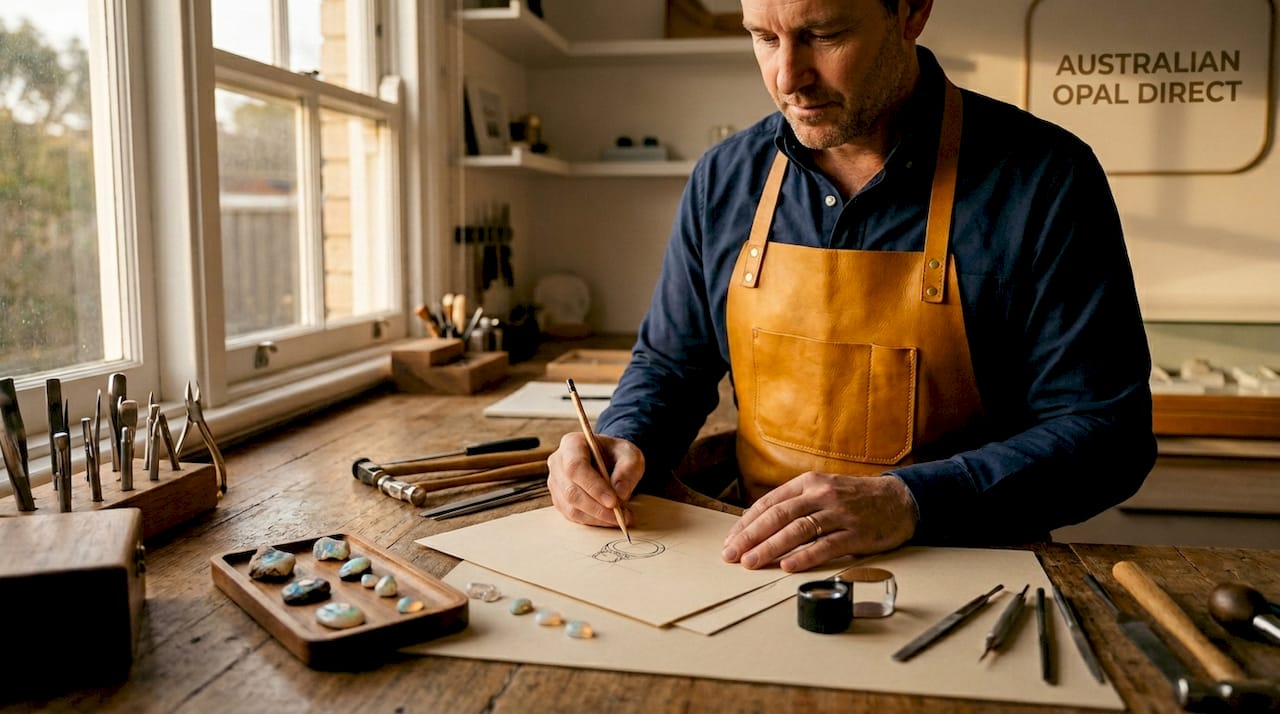
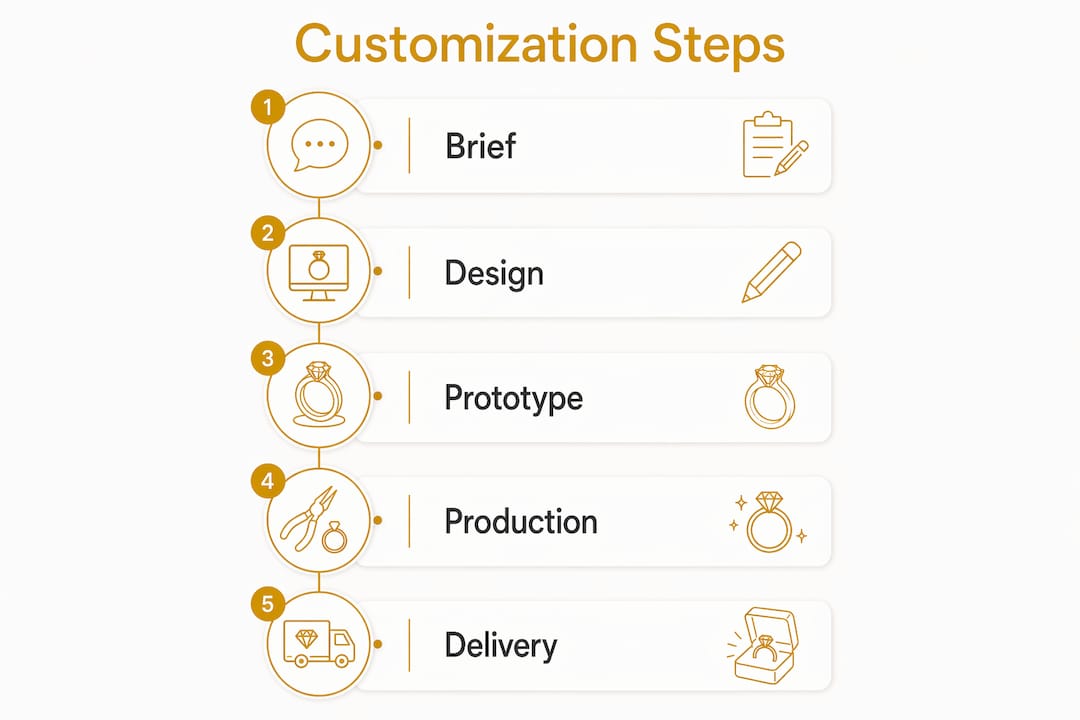
Step by step jewelry customization is the process of transforming a personal vision into a handcrafted, lasting piece through collaborative design, precise modeling, and skilled manufacturing. Known in the trade as bespoke jewelry creation, this process moves through defined phases: consultation, design briefing, CAD modeling, prototype approval, and production. Whether you are drawn to the kaleidoscopic play-of-color in a Lightning Ridge opal or the quiet elegance of a platinum band set with ethically sourced gemstones, the custom jewelry process gives you authorship over every detail. This guide walks you through each stage with the specificity and honesty you need to arrive at a piece that is genuinely yours.
What tools and materials do you need for jewelry customization?
The custom jewelry process begins long before a single gram of metal is melted. Your jeweler relies on a layered toolkit that spans digital design and physical manufacturing, and understanding these tools helps you ask better questions and make smarter decisions.
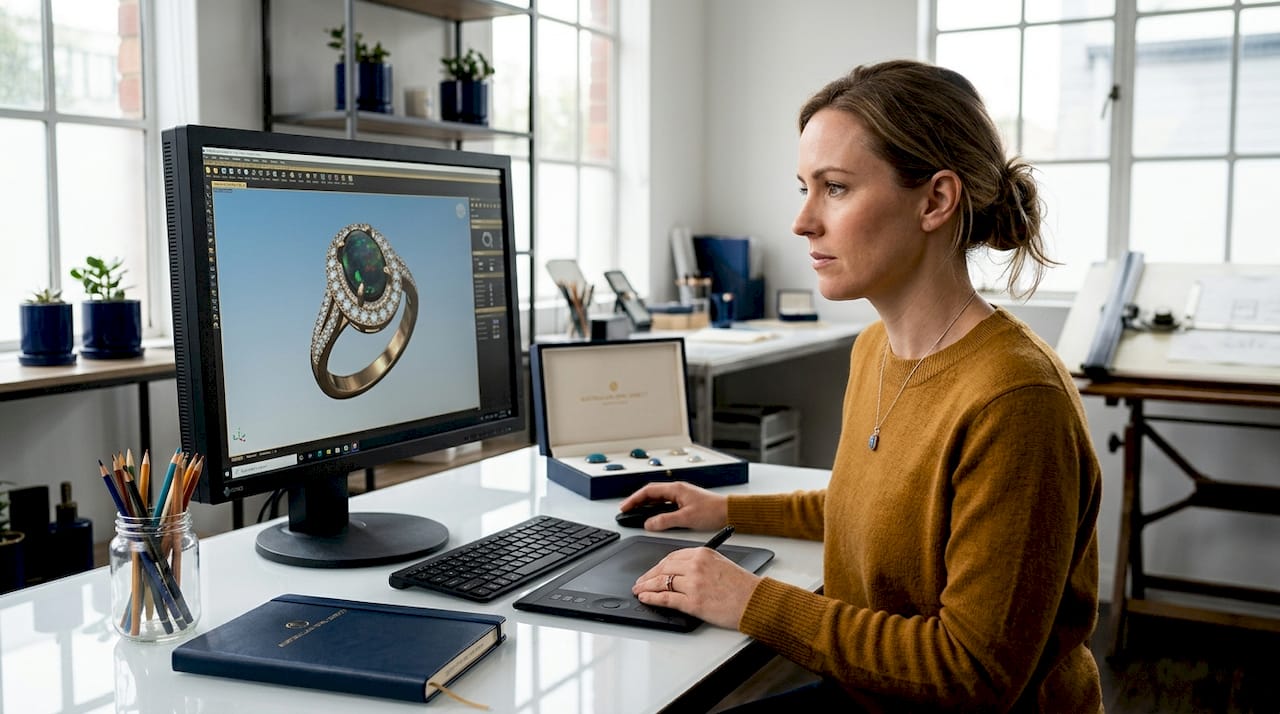
On the design side, the workflow moves from hand sketching to CAD software such as Rhino 3D or Matrix, and then to 3D wax printing or resin printing for physical prototypes. These tools allow precise control over dimensions, stone seat angles, and prong geometry before any irreversible work begins. CAD modeling typically takes 5 to 7 days, which means the digital phase is often faster than clients expect.
Material selection shapes both the aesthetics and the durability of the finished piece. Precious metals like 18k gold, 14k gold, and platinum remain the most popular choices. Alternative materials including titanium and meteorite have grown in demand for their visual drama and lightweight wear. Gemstone selection adds another layer: diamonds, sapphires, and Australian opals each carry different hardness ratings, setting requirements, and sourcing timelines.
A structured design brief with measurable specifications reduces manufacturing errors significantly. A strong brief includes ring size, metal type and karat, gemstone dimensions, surface finish preferences, and any engraving details. Vague inspiration boards alone are not enough.
| Tool or Material | Role in the Process |
|---|---|
| Sketching and hand rendering | Captures initial concept and proportions |
| CAD software (Rhino 3D, Matrix) | Produces precise 3D digital model for review |
| 3D wax or resin printing | Creates physical prototype for fit and proportion checks |
| Precious metals (gold, platinum) | Primary structural material for the finished piece |
| Alternative metals (titanium, meteorite) | Specialty options for unique aesthetics or weight preferences |
| Gemstones (opals, diamonds, sapphires) | Central decorative and symbolic elements |
How do you develop and communicate your custom jewelry design?
Great custom jewelry begins with a clear idea, but it becomes great through precise communication. The design development phase is where your concept either sharpens into something buildable or dissolves into costly misunderstandings.
Start by gathering design inspiration from multiple sources: photographs of pieces you admire, sketches of shapes you have imagined, meaningful symbols, or even textures from nature. A Lightning Ridge opal’s shifting spectral fire, for example, might inspire a setting that frames the stone like a window rather than caging it with heavy prongs. Bring these references to your first consultation.
From there, translate inspiration into a written design brief. The brief should specify:
- Metal type and karat (e.g., 18k yellow gold, 950 platinum)
- Gemstone details (species, carat weight, cut, color grade, origin)
- Dimensions (band width, stone seat depth, overall height)
- Surface finish (high polish, brushed, hammered, or oxidized)
- Engraving or personalization text with exact font preferences
Collaborative design with iterative feedback ensures you see and approve the exact design before production begins. Most jewelers offer two to three rounds of CAD revisions as part of the standard process. Each revision cycle tightens the model and reduces the risk of surprises at the casting stage.
Pro Tip: When reviewing a CAD rendering, rotate the model through every angle and zoom into the prong tips, gallery, and underside of the setting. Details that look fine from the top view often reveal proportion issues from the side.
What does the production phase involve from prototype to final piece?
Once you approve the final CAD model, the piece enters physical production. This phase is where digital precision meets the hands of a skilled craftsperson, and understanding each step helps you appreciate both the timeline and the cost.
-
Wax model creation. The approved CAD file is printed or carved into a wax replica. This physical model lets you verify fit, comfort, and proportions in your hand. The final approved wax prototype marks the last opportunity to request changes before casting begins. Once the wax is invested and burned out, the design is locked.
-
Investment casting. The wax model is encased in a plaster-like investment material, then heated in a kiln to burn out the wax and leave a precise cavity. Molten metal is poured or centrifugally cast into that cavity. Platinum requires higher casting temperatures than gold, which adds time and cost.
-
Metal cleanup and refinement. After casting, the raw metal piece is removed from the investment, sprues are cut away, and the surface is filed, sanded, and refined by hand. This stage corrects any minor casting imperfections.
-
Stone setting. Gemstones are set by hand using techniques matched to the design: prong setting for opals and center stones, pavé or channel setting for accent diamonds, and bezel setting for a more protective hold. Opal, with a Mohs hardness of 5.5 to 6.5, requires a gentler touch than sapphire or diamond.
-
Polishing and finishing. The piece receives its final surface treatment, whether a mirror polish, a brushed satin finish, or a combination of both. This step transforms a raw casting into a luminous, wearable object.
-
Quality inspection. A final check confirms stone security, metal integrity, dimensions, and finish consistency before the piece ships.
Pro Tip: Ask your jeweler for a photograph of the wax model before casting. A physical image gives you a more intuitive sense of scale than a digital rendering, and it is your last practical checkpoint.
Production generally runs 3 to 4 weeks post design approval, though pieces involving rare stone sourcing or complex metalwork can extend that window.
How long does custom jewelry take and what does it cost in 2026?
Timeline and budget are the two questions every client asks first, and both deserve honest, specific answers rather than vague ranges.
Custom jewelry lead times range from 3 to 4 weeks for simple pieces to 6 to 8 weeks for complex rings involving stone sourcing. The major time components are design finalization and material sourcing, not just the physical crafting. A simple gold band with no stones moves quickly. An opal engagement ring sourced from Coober Pedy, set in platinum with a custom gallery design, requires time at every stage.
Pricing ranges from $800 to $1,500 for simple pieces to $5,000 to $15,000 or more for high-end custom engagement rings. Cost is driven by metal weight and type, stone quality and origin, design complexity, and the number of revision rounds. Providing your own stones or existing metal can reduce costs meaningfully.
| Project type | Typical timeline | Approximate cost range |
|---|---|---|
| Simple band, no stones | 3 to 4 weeks | $800 to $1,500 |
| Solitaire ring, standard stone | 4 to 5 weeks | $1,500 to $4,000 |
| Custom opal pendant, gold setting | 4 to 6 weeks | $2,000 to $6,000 |
| Complex engagement ring, rare stone | 6 to 8 weeks | $5,000 to $15,000+ |
For weddings or anniversaries, communicate your deadline to the jeweler upfront at the very first consultation. This allows the jeweler to adjust design scope, prioritize stone sourcing, and build a realistic production schedule. Sharing a target date early prevents the rushed decisions that compromise quality.
What are the most common mistakes to avoid during jewelry customization?
Even experienced jewelry buyers make avoidable errors during the custom process. Knowing where others stumble is the clearest path to a smooth experience.
-
Rushing CAD approval. Rushing CAD approval is a leading cause of costly errors. Review every detail in the 3D model before signing off: prong count, stone orientation, band profile, and engraving placement. Changes after casting are expensive and sometimes impossible.
-
Providing low-quality reference images. Blurry or low-resolution photos of inspiration pieces leave too much open to interpretation. Use high-resolution images from multiple angles, or describe dimensions in writing.
-
Ignoring material properties. Opal requires more protective settings than diamond because of its lower hardness. Titanium cannot be resized after casting. Meteorite inlays need specific sealing to prevent oxidation. Understanding these properties before you commit saves frustration later. For guidance on durable custom ring design, material compatibility is the first consideration.
-
Skipping the prototype review. Some clients waive the wax model step to save time. This is a false economy. The wax model is the only moment you can hold the proportions in your hand and feel whether the ring sits comfortably on your finger.
-
Underestimating stone sourcing time. Rare opals from Lightning Ridge or Queensland are not warehouse items. Sourcing a specific play-of-color pattern or carat weight can add two to three weeks to any timeline. Build that buffer into your planning.
Pro Tip: When commissioning opal jewelry, ask your jeweler to show you the actual stone before setting begins. Opal’s play-of-color shifts dramatically under different lighting conditions, and approving the stone in person prevents disappointment after the piece is complete.
Key takeaways
Successful step by step jewelry customization requires a precise design brief, thorough CAD review, and a physical prototype inspection before any metal is cast.
| Point | Details |
|---|---|
| Start with a written brief | Specify metal, stone, dimensions, and finish before any design work begins. |
| Review CAD models thoroughly | Inspect every angle of the 3D model before approving to avoid costly post-casting changes. |
| Use the wax prototype | The physical model is your last chance to verify fit, proportion, and comfort before casting. |
| Plan for realistic timelines | Budget 3 to 8 weeks depending on complexity, and communicate deadlines to your jeweler immediately. |
| Understand material properties | Opal, titanium, and meteorite each carry specific setting, sizing, and care requirements. |
Why patience and precision define every great custom piece
I have watched clients arrive at consultations with a single blurry photograph and leave months later holding something that made them catch their breath. That transformation does not happen by accident. It happens because someone slowed down at every decision point and refused to let excitement override precision.
The moment I see clients rush through CAD approval is the moment I know a revision is coming. The digital model looks abstract on a screen, and it is easy to nod along without truly interrogating the proportions. But that model is a contract. Every prong, every millimeter of band width, every degree of stone tilt is captured there. Approving it without scrutiny is like signing a lease without reading the terms.
What I find genuinely moving about custom jewelry, particularly pieces built around Australian opals, is that the stone itself has already done something extraordinary. A Queensland boulder opal carries millions of years of geological history in its silica matrix. The colors that dance across its surface were formed by ancient water moving through ironstone. When you commission a piece around a stone like that, you are not just designing jewelry. You are deciding how that history will be worn and remembered.
The clients who end up most satisfied are those who treat the process as a collaboration rather than a transaction. They ask questions. They push back on design suggestions that do not feel right. They take the time to hold the wax model and imagine wearing it for twenty years. That patience, combined with precise communication, is what separates a piece you treasure from a piece you merely own.
— Renee
Discover custom opal jewelry at Australianopaldirect
Australianopaldirect works directly with miners from Lightning Ridge, Coober Pedy, and Queensland to source opals of genuine rarity and character. The team guides you through every stage of the custom opal design process, from selecting a stone whose play-of-color speaks to you, to approving the final CAD model before a single gram of gold is cast. Whether you are creating an engagement ring, a memorial pendant, or a collector’s piece, Australianopaldirect combines direct-miner relationships with skilled craftsmanship to deliver something no catalog can replicate. Explore the full range of bespoke opal creations and begin your customization journey today.
FAQ
What is step by step jewelry customization?
Step by step jewelry customization is the structured process of creating a bespoke piece through sequential phases: consultation, design briefing, CAD modeling, prototype approval, and production. Each stage requires client approval before the next begins, ensuring the final piece matches the original vision.
How long does the custom jewelry process take?
Simple pieces take 3 to 4 weeks, while complex rings involving rare stone sourcing can take 6 to 8 weeks. Communicating your deadline at the first consultation gives your jeweler the best chance of meeting it without compromising quality.
What does custom jewelry typically cost in 2026?
Costs range from approximately $800 for a simple band to $15,000 or more for a high-end engagement ring with a rare center stone. Material choice, design complexity, and stone origin are the primary cost drivers.
Can I use my own stones in a custom piece?
Yes, and providing your own stones can reduce overall cost and shorten sourcing timelines. Your jeweler will assess the stone’s dimensions and condition to design a setting that protects and showcases it appropriately.
Why is the wax prototype so important?
The wax model is the final physical checkpoint before irreversible casting begins. It allows you to verify fit, proportion, and comfort in a way that no digital rendering can fully replicate.
Recommended
- How to Commission Opal Jewelry: A Step-by-Step Guide - Australian Opal Direct
- How to Design Custom Opal Rings for Luxury Jewelry Lovers - Australian Opal Direct
- How to Craft Opal Rings: Create Luxury Gemstone Jewelry - Australian Opal Direct
- Custom Opal Jewelry Workflow: Create Bespoke Designs Easily - Australian Opal Direct